

_29 One last small point remains to be dealt with: the Messiah Jesus had spoken of resurrection, so it is safer to place guards in front of the tomb. This is the request made to Pilate on the very day of the ; nothing stops these devout men. Matthew 27.62-66.
_30 The resurrection takes place on Sunday morning at dawn. We indeed have the 3 days and 3 nights according to the Jewish inclusive reckoning. Matthew 28.2-4 ; Mark 16.2-4 ; Luke 24.1-3. We take into account the night at midday.
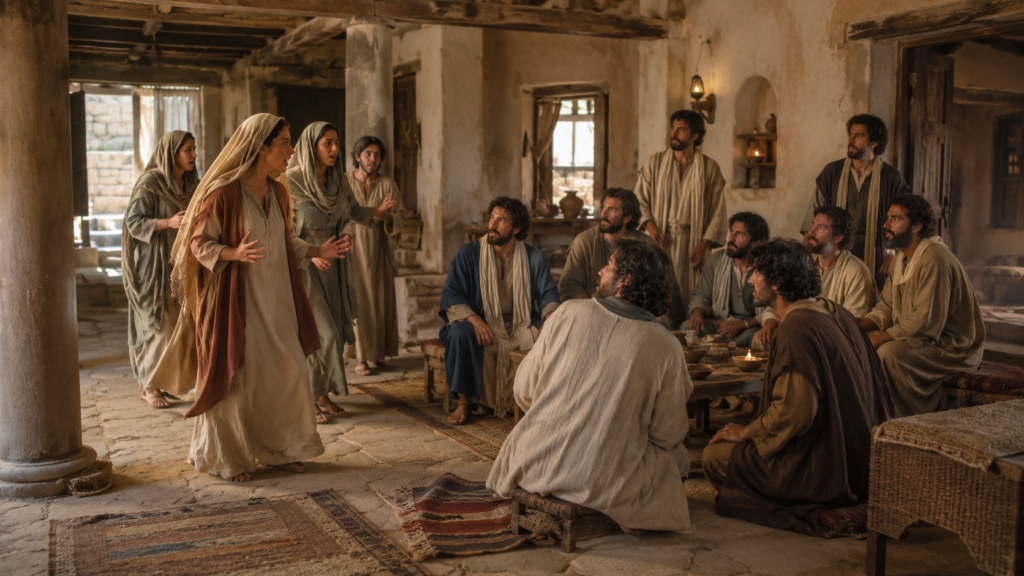
_31 Now come the various appearances of the living Messiah Jesus, starting on Sunday, April 3, AD 33, early in the morning. John 20.11-18 ; Matthew 28.8-10 ; Mark 16.8 ; John 20.24-34 ; Mark 16.13-14 ; Luke 24.13-35 ; Mark 16.14 ; Luke 24.36-49 ; John 20.26-31 ; John 21.1-14.
You can consult the complete chronology in the study ANN026 : The hour of the crucifixion.
Commentary:
1- An Apparent Difference Between the Accounts
A notable difference appears between the accounts of the Synoptic Gospels and that of John concerning the women’s state of mind on the morning of the resurrection.
Matthew reports that after receiving the angels’ message, the women leave the tomb “with fear and great joy” (Matthew 28.8). Mark also states that a young man dressed in white announces to them: “He has risen, he is not here” (Mark 16.5-6). Luke specifies for his part that two men in dazzling clothes remind the women of the words Jesus had spoken about his death and resurrection (Luke 24.4-8).
John’s account, however, seems to present a different situation. Mary Magdalene appears deeply distraught. When she reaches Peter and the beloved disciple, she mentions neither the angels nor the resurrection, but merely states: “They have taken the Lord out of the tomb, and we do not know where they have put him” (John 20.2). Later still, as she stands before the empty tomb, she weeps and repeats that she does not know where the body has been laid (John 20.11-13).
2- The Hypothesis of an Early Departure by Mary Magdalene
This apparent divergence can be explained by the hypothesis that Mary Magdalene separated from the group as soon as she arrived at the tomb.
After noting that the stone had been rolled away (John 20.1), she would have immediately concluded that Jesus’ body had been taken away and would have gone off to warn Peter and John without waiting any longer. The other women would then have continued their visit to the sepulchre and received the angels’ message (Matthew 28.5-7; Mark 16.5-7; Luke 24.4-8).
Although it cannot be demonstrated with certainty, this hypothesis has the advantage of explaining why Mary Magdalene continues to believe that the body has disappeared and why she conveys no announcement of the resurrection when she meets the two disciples.
3- Mary Magdalene’s Initial Ignorance
If Mary Magdalene had already heard the angels’ words declaring that Jesus had risen, her persistent incomprehension would be harder to explain.
Her testimony remains centered on the disappearance of the body: “They have taken the Lord out of the tomb, and we do not know where they have put him” (John 20.2). Even after Peter and John have left, she keeps weeping in front of the sepulchre and answers the angels, and then Jesus himself, that she is still looking for her Master’s body (John 20.11-15).
This attitude seems to show that she had not yet fully understood what had just happened, which moreover corresponds to the disciples’ general incomprehension of the repeated announcements of the resurrection (Luke 18.31-34; John 20.9).
4- The Question of the Movements of the Various Groups
Another difficulty is understanding how Peter and John could have gone to the tomb without meeting the women who had received the angels’ announcement.
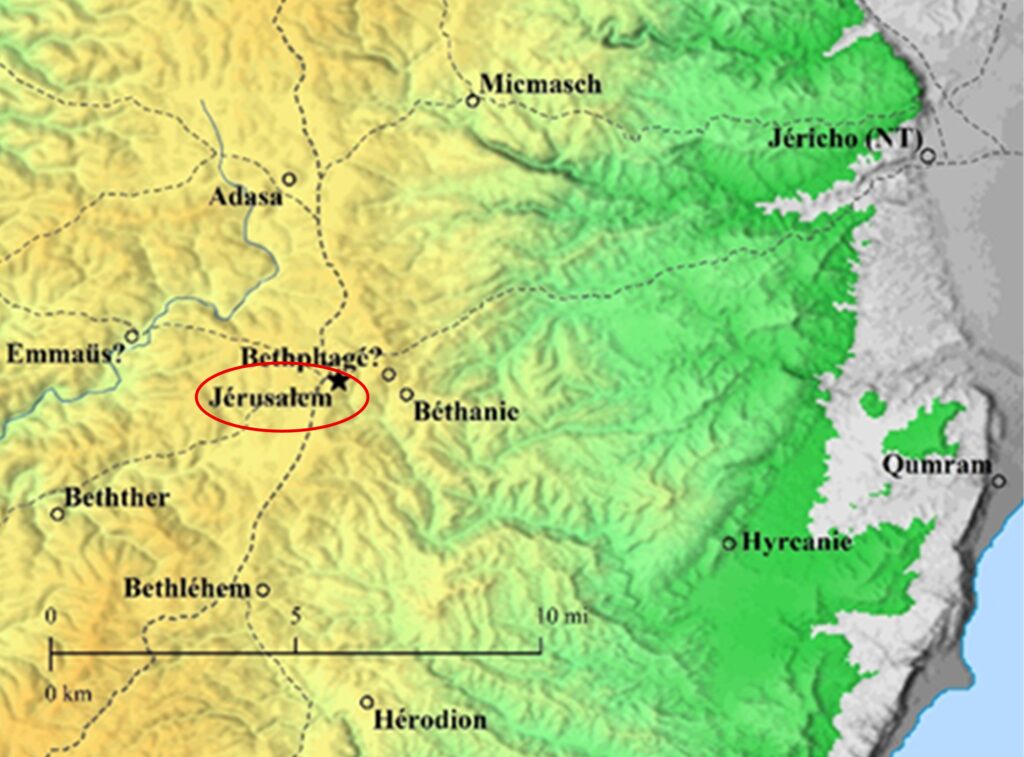
The Gospels give no precise details about the routes taken or about the exact time that elapsed between the various movements. Jerusalem was then particularly crowded because of the feast of Passover (John 19.31), and events may have followed one another rapidly.
Moreover, the disciples lived in fear of the religious authorities who had secured Jesus’ condemnation (John 20.19). It is therefore quite possible that the different groups took different paths or that they passed one another without meeting.
5- The Disappearance of the Angels
The Gospel accounts no longer mention the presence of the angels after their message to the women. Matthew simply states that they quickly left the tomb to announce the news to the disciples (Matthew 28.8). Mark stresses their emotion and distress (Mark 16.8), while Luke reports that they then informed the apostles of all that they had seen and heard (Luke 24.9-10).
It therefore seems likely that the angels disappeared before Peter and John arrived, which would explain their absence from the observations reported by these two disciples (John 20.3-10).
6- The Distinct Perspectives of Each Evangelist
Each evangelist emphasizes different persons and selects the elements that serve his purpose.
Matthew insists more on the group of women as a whole (Matthew 28.1-10). Mark presents a more condensed account and pays particular attention to Mary Magdalene (Mark 16.9). Luke mentions several women witnesses, among them Mary Magdalene, Joanna and Mary the mother of James (Luke 24.10). John, for his part, focuses his account mainly on Mary Magdalene’s personal experience (John 20.1-18).
These differences of perspective are not contradictions, but testify to the complementarity of the Gospel accounts.
7- The Other Women Before the Encounter with Jesus
At the moment they leave the tomb, the other women have not yet seen the risen Christ. They know only that the tomb is empty and that they have received the announcement of his resurrection from the angels (Matthew 28.5-7; Luke 24.6-8).
Only afterward will Jesus appear to them personally and they will bow down before him (Matthew 28.9-10).
Mary Magdalene, on the other hand, seems to have left the place before this first angelic announcement and will return to the tomb later, where she will in turn receive a particular revelation (John 20.11-18).
8- The Synthetic Character of Mark’s Account
It is also possible that Mark grouped several episodes together in a more synthetic account. He mentions the appearance of the risen Christ to Mary Magdalene (Mark 16.9) without detailing all the intermediate stages that John relates at greater length.
John clearly distinguishes Mary’s first visit, when she still believes the body has disappeared (John 20.2), from her second presence at the tomb, during which she sees the angels and then personally meets the risen Lord (John 20.11-18).
9- The Different Testimonies of the Women
Luke specifies that the women announced these events to the apostles (Luke 24.9-10). Among them was Mary Magdalene, but nothing requires us to think that she was with the group during the first report.
It is therefore possible that the other women informed the disciples before her, while Mary Magdalene, detained longer at the tomb by her personal encounter with the Risen One, later brought her own testimony: “I have seen the Lord” (John 20.18).
10- A Possible Harmonization of the Accounts
Thus, the hypothesis of an early departure by Mary Magdalene offers a coherent explanation of the differences in perspective observed among the four Gospels.
Without claiming to resolve all the chronological difficulties, it makes it possible to understand Mary Magdalene’s initial ignorance of the resurrection, her attitude of sorrow described by John, and the diversity of the testimonies reported by the evangelists.
Far from constituting irreconcilable contradictions, these differences of presentation rather testify to the independence and complementarity of the Gospel traditions, which all converge on one fundamental affirmation: the tomb is empty and Jesus has risen (Matthew 28.6; Mark 16.6; Luke 24.6; John 20.1-18).