

PER345

The release of a prisoner

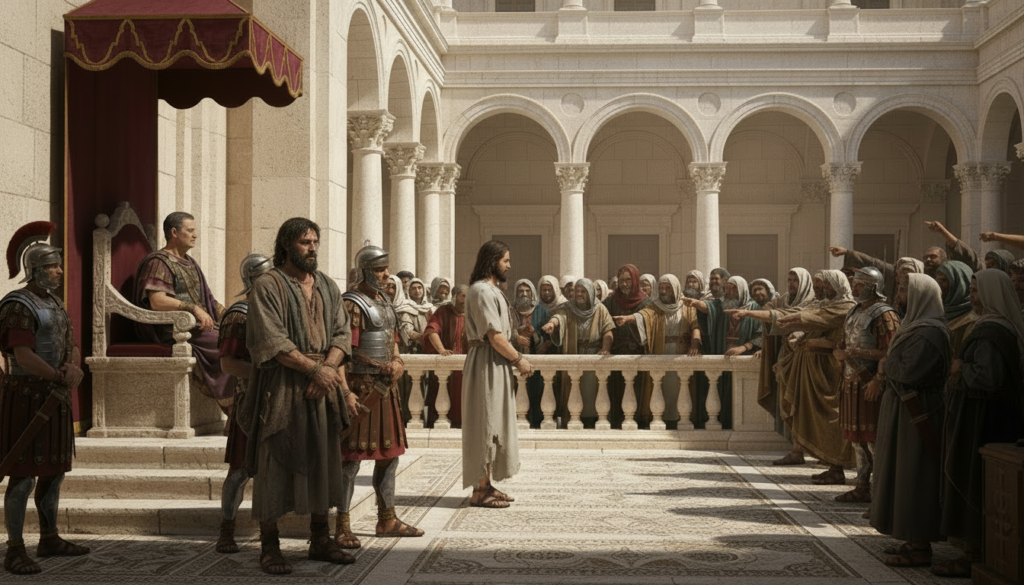
During the trial of Jesus before Pontius Pilate, the Roman governor tries to use the Passover custom of releasing a prisoner in order to avoid condemning Jesus. He offers the crowd a choice between Jesus and Barabbas, a notorious criminal, convinced that the people will make the right choice. His wife's intervention strengthens his hesitation. This scene, attested by all four gospels, illustrates the manipulation by the religious authorities and theologically prefigures redemptive substitution.

10 min Barabbas Pontius Pilate release of the prisoner Passover custom Passion of Jesus 16 verses 4 books

Resources

Biblical texts

Matthew
Matthew 27.15-19 (King James Version)

Now at that feast the governor was wont to release unto the people a prisoner, whom they would.

And they had then a notable prisoner, called Barabbas.

Therefore when they were gathered together, Pilate said unto them, Whom will ye that I release unto you? Barabbas, or Jesus which is called Christ?

For he knew that for envy they had delivered him.

When he was set down on the judgment seat, his wife sent unto him, saying, Have thou nothing to do with that just man: for I have suffered many things this day in a dream because of him.

Mark
Mark 15.6-12 (King James Version)

Now at that feast he released unto them one prisoner, whomsoever they desired.

And there was one named Barabbas, which lay bound with them that had made insurrection with him, who had committed murder in the insurrection.

And the multitude crying aloud began to desire him to do as he had ever done unto them.

But Pilate answered them, saying, Will ye that I release unto you the King of the Jews?

For he knew that the chief priests had delivered him for envy.

But the chief priests moved the people, that he should rather release Barabbas unto them.

And Pilate answered and said again unto them, What will ye then that I shall do unto him whom ye call the King of the Jews?

Luke
Luke 23.17-22 (King James Version)

(For of necessity he must release one unto them at the feast.)

And they cried out all at once, saying, Away with this man, and release unto us Barabbas:

(Who for a certain sedition made in the city, and for murder, was cast into prison.)

Pilate therefore, willing to release Jesus, spake again to them.

But they cried, saying, Crucify him, crucify him.

And he said unto them the third time, Why, what evil hath he done? I have found no cause of death in him: I will therefore chastise him, and let him go.

John
John 18.39 (King James Version)

But ye have a custom, that I should release unto you one at the passover: will ye therefore that I release unto you the King of the Jews?

Technical details

AD 33

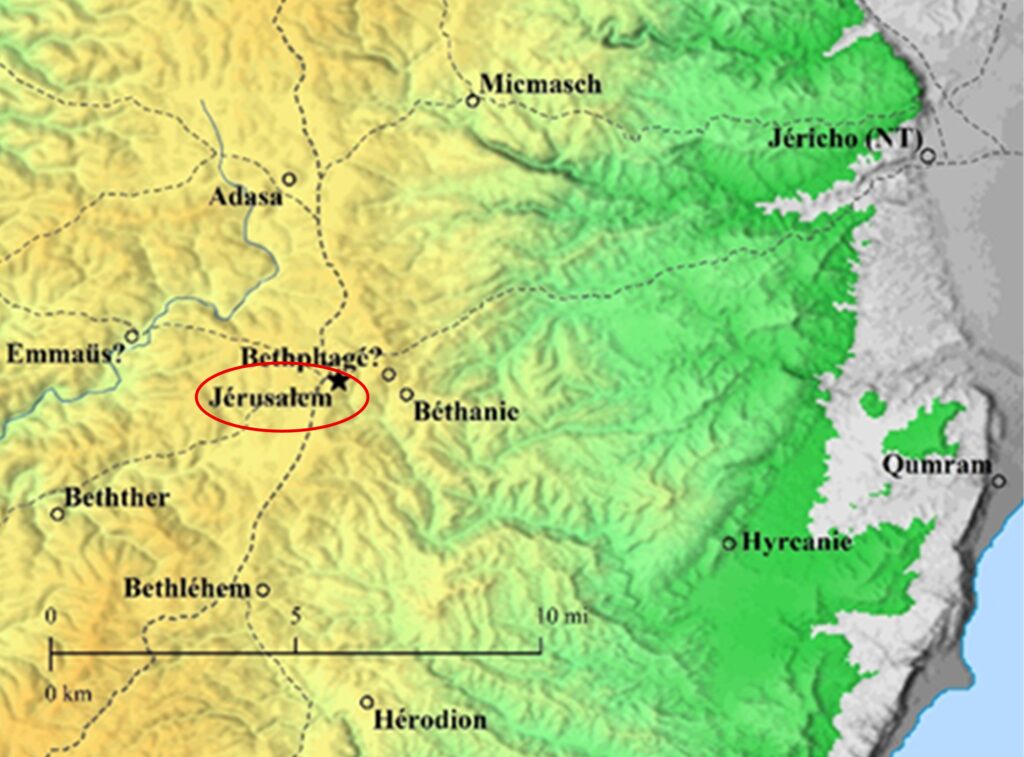
Location: The city of Jerusalem, the praetorium in front of Pilate’s palace

Date: Friday, April 1, early in the morning

Method: We now follow Luke

Note on the method: Matthew, Mark and John take up this information

Map of Jerusalem and Its Surroundings
Friday bar graph

Pontius Pilate looks for a way to avoid Jesus' death sentence.

Chronological details, according to our conclusions:

_20 The return to Pontius Pilate takes place around 8 a.m. Mark 15.6-19; Matthew 27.15-30; Luke 23.13-25; John 18.39-40; John 19.1-16.

_21 The crowd, gathered in front of Pontius Pilate’s palace, demands the crucifixion. Matthew 27.22 ; Mark 14.11-15 ; Luke 23.23 ; John 19.15.

You can consult the complete chronology in the study ANN026 : The hour of the crucifixion.

Commentary:

Pilate feels more and more manipulated by Caiaphas and the religious leaders. Offended, he cannot let his anger show before the crowd, but he has not said his last word. Knowing the custom that allowed a prisoner to be released at the feast of Passover, he sees in it an opportunity to get out of this impasse (Matthew 27.15).

In his eyes, the crowd could not reasonably prefer the release of a man like Barabbas, known for his crimes, to that of Jesus (Mark 15.7). He thus thinks he will obtain the release of Jesus and quickly close the matter. The intervention of his wife, who urges him to have nothing to do with this righteous man, further strengthens his hesitation (Matthew 27.19).

The choice proposed by Pilate then appears as a clever response to the pressure exerted by the members of the : who would agree to exchange a prisoner judged insignificant for a dangerous man? Convinced of the outcome, he still thinks he can prevail.