

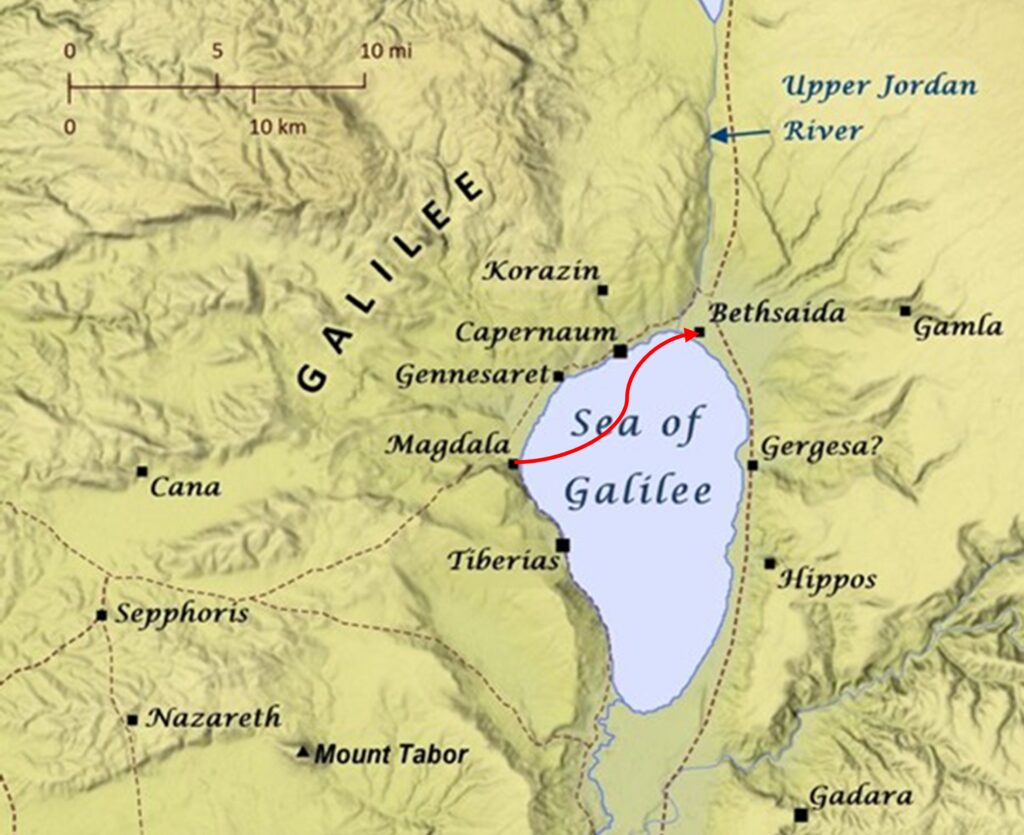
During the crossing from Magdala to , on the eastern shore of the Jordan, taking advantage of a calm sea, the Messiah Jesus is going to give teaching to his apostles. We shall measure the gap between their thoughts and those of the Master. We note that the authors do not try to play down the apostles’ lack of understanding.
Matthew and Peter, who works in collaboration with Mark, were present in this boat. They are therefore well placed to speak of this ignorance.
The whole problem stems from the fact that the disciples had forgotten to take bread. Mark specifies: only one loaf, which was far from enough for the group. The Messiah Jesus uses this fact to broach the theme of the leaven of the . On hearing the word “leaven,” they therefore conclude that the Master is going to rebuke them.
The Messiah Jesus is referring here to the teaching of the , which insidiously disturbs the minds of those who listen to them (Mark 8.15).
The Messiah Jesus understands that his apostles imagine he is speaking of the forgotten bread (Matthew 16.8). “You of little faith,” he says, thereby stressing that their worry about material things is directly linked to a lack of faith.
Comparison of the two texts
In Matthew 16.5-12, the Messiah Jesus warns his disciples against the leaven of the and of the . The disciples, preoccupied with the fact that they had not taken bread, do not immediately understand this warning. Jesus then reminds them of the miracles of the and urges them to grasp the spiritual import of his words, rather than worrying about material concerns.
In Mark 8.14-21, a similar situation occurs. The disciples worry about their lack of bread, and the Messiah Jesus challenges them about their lack of understanding. He recalls the earlier miracles, in which he fed crowds with a limited quantity of bread, and points out their difficulty in perceiving the spiritual teaching behind his actions. He asks them why their hearts seem hardened and why they do not grasp the importance of the leaven of the and of Herod Antipas.
These two passages therefore come very close in terms of their central theme: the Messiah Jesus uses the image of leaven to designate a corrupt doctrinal influence that can alter true faith. The notable difference between the two lies in the identity of the groups targeted: Matthew speaks of the and , whereas Mark mentions the and Herod. This nuance reflects the particular concerns of each gospel: Matthew stresses the religious tendencies opposed to Jesus, whereas Mark brings in a political element with the mention of Herod Antipas.
Finally, these texts illustrate the need for the disciples to have a deep spiritual understanding, rather than remaining focused on material needs. Jesus reminds them that the miracles they have seen should be enough to inspire their trust and to make them understand that his teaching goes far beyond earthly concerns.
They should have trusted the Master for this material need, hence the rebuke of lack of faith by the Messiah Jesus in Matthew 16.8. This rebuke also appears in Matthew 6.30, Matthew 8.26 and Matthew 14.31.