
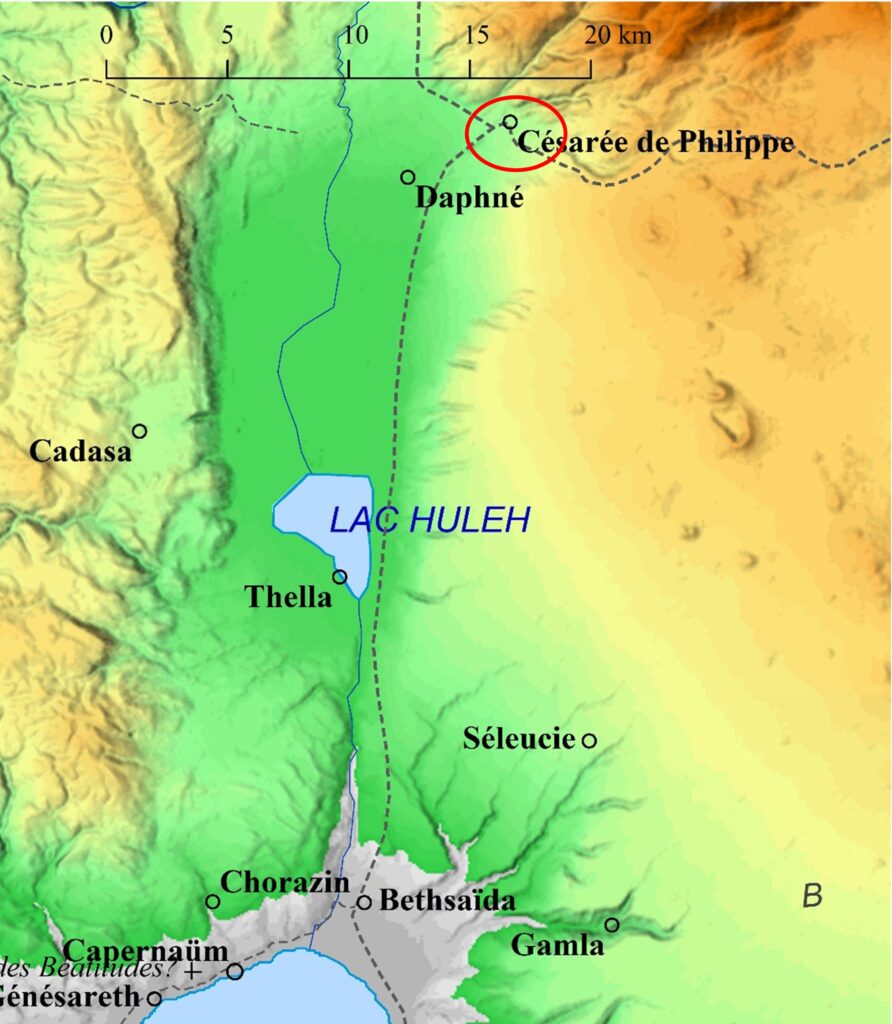
Matthew and Mark place this account in the villages near Caesarea Philippi, located at the foot of Mount Hermon in northern Galilee. This is where the Jordan has its main source. This city must not be confused with Caesarea, situated on the shores of the Mediterranean.
The Messiah Jesus, accompanied by his disciples, undertook a journey of about 45 km northward to evangelize the villages of this region.
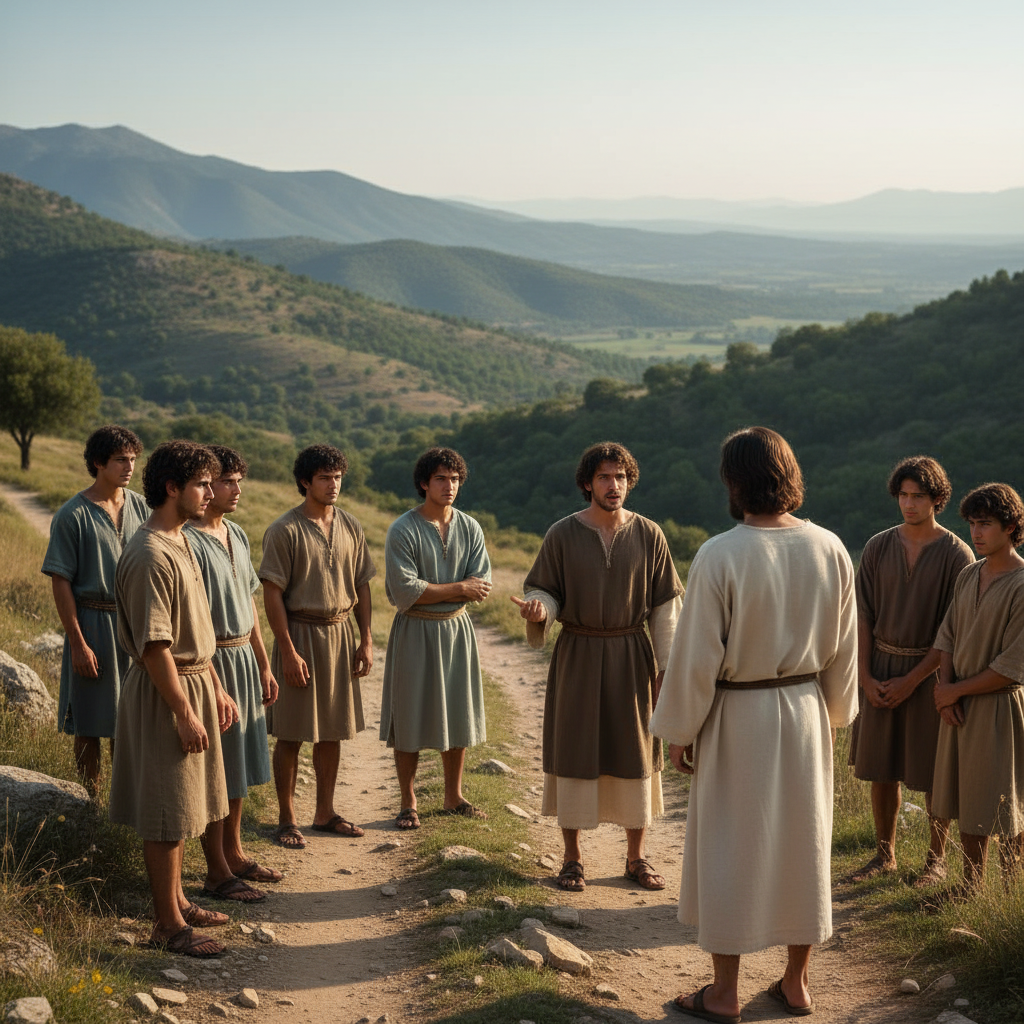
Luke reports that the Messiah Jesus and his disciples were in a secluded place, probably a mountain such as Mount Hermon. It seems that He was praying alone while the disciples stood at a distance.
All three authors record this question from the Master, important in their eyes: Who am I, according to people, I the Son of Man?
How did the crowd perceive the Messiah Jesus?
The result is disappointing despite the honorific titles attributed, and only Peter gives the expected answer: “You are the Messiah, the Son of the living God.” It seems that various peoples who witnessed Jesus’ miracles do not recognize him as the Messiah announced by the prophets.
Matthew alone specified in his text: the Son of the living God, yet he is addressing Jews, who do not understand and above all do not accept that God could have a Son! It seems that Matthew’s aim was to challenge the preconceived idea that God cannot have a son. The concept of the Trinity nevertheless remains complex to grasp.
In his Gospel, Matthew is the only one to use the expression “the Son of the living God.” This detail fits a particular context, in which the author addresses a Jewish audience for whom the idea of divine sonship remains difficult to conceive and to accept. It thus seems that Matthew’s aim was to challenge established conceptions, opening a reflection on the theological possibility of a filial relationship between God and Jesus. However, the doctrine of the Trinity remains a complex notion, requiring an in-depth approach to fully grasp its theological and philosophical implications.
The Master’s instruction not to proclaim his messiahship, which we find in Mark 8.30 and Luke 9.21, may seem surprising. We find this statement in Matthew 16.20. Was this not what He expected? He wished that the crowd, by observing the miracles He performed, would recognize his messiahship without any need to announce it explicitly.
The messiahship of Jesus should be evident to everyone, given that no one else could have performed the miracles He accomplished. However, it was under the influence of the Holy Spirit that Peter proclaimed him Messiah. Thus it is essential that divine power act directly on the so that it may understand the true identity of the Messiah Jesus.