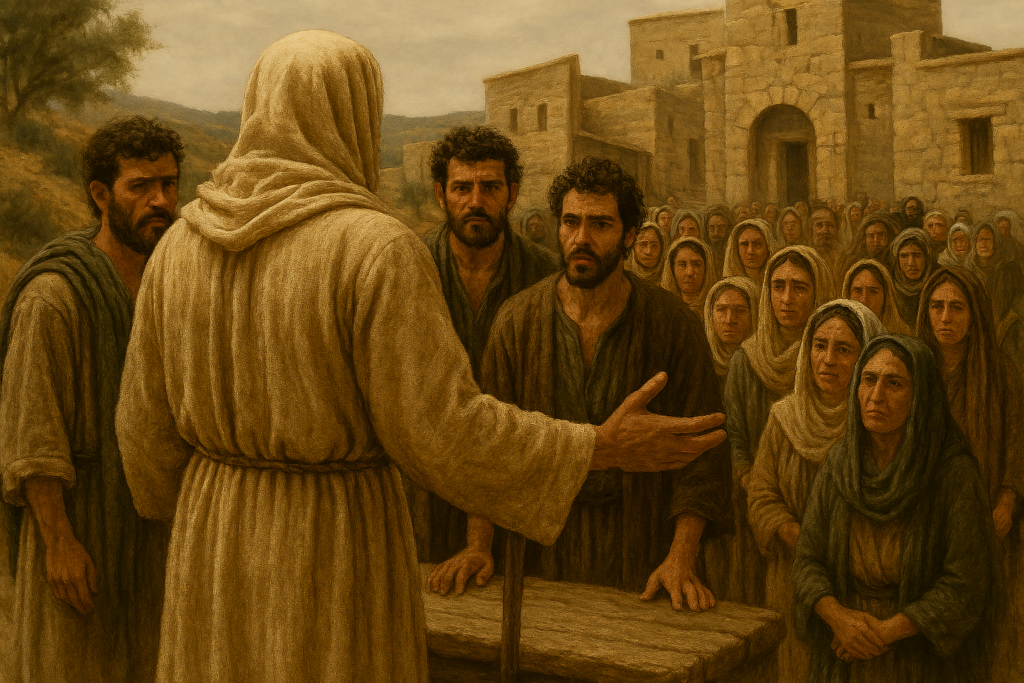

This kind of language is rarely associated with Jesus the Messiah, but these words were indeed spoken.
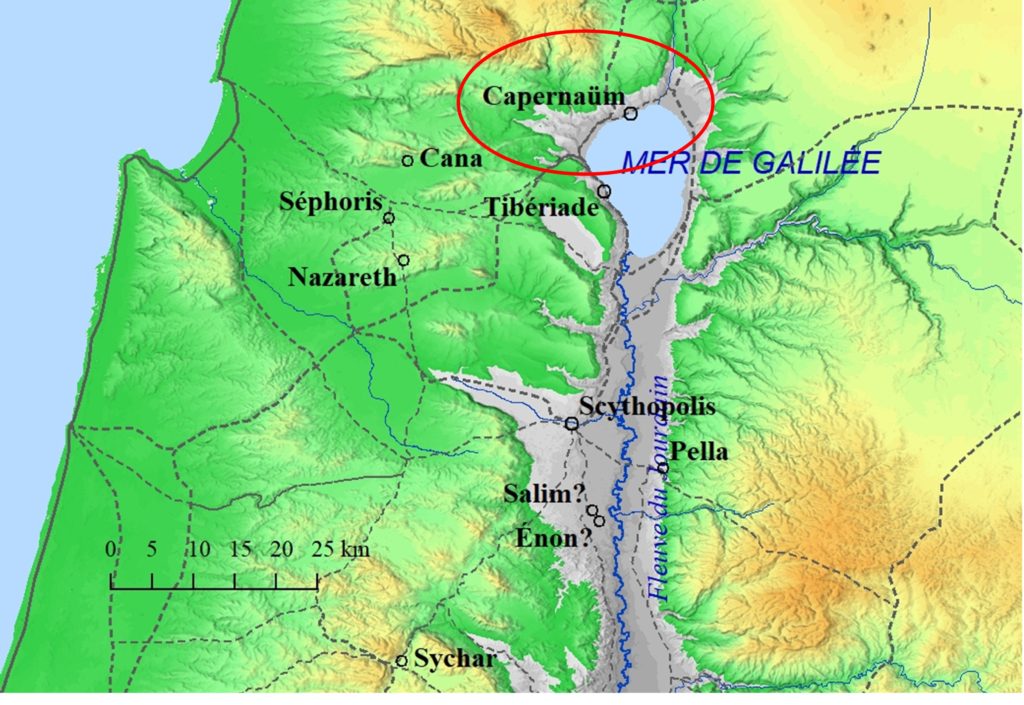
The first places concerned are Chorazin and .
The Gospels mention no miracle performed in Chorazin. This does not mean that none ever took place, but simply that Matthew, Mark, Luke and John chose not to recount events taking place in this town.
In , Jesus performed impressive miracles. In Mark 8.22-26, he restores a blind man’s sight by applying mud to his eyes and praying twice. After the first prayer, the man sees people like trees walking; after the second, his vision becomes clear. is also where Jesus fed 5,000 people with five loaves and two fish (Mark 6.30-44).
Reading through the Gospels, we do not get the impression that Chorazin and were hostile towards Jesus the Messiah, unlike Nazareth. In fact, the Master denounces the lack of repentance in these towns. Although the inhabitants probably appreciated this new Master’s miracles and teachings, they did not agree to follow his precepts, unlike those in Sychar in Samaria (PER047: the village of Sychar).
Mark 7.24-31 recounts a journey by Jesus the Messiah to the city of Tyre, on the Mediterranean coast, and then to Sidon, farther north in present-day Lebanon. In Tyre, a Syrophoenician woman was healed.
These, then, are all the details we have about these towns. What could be the reason for such a condemnation? And why is Nazareth, where the residents had tried to throw him off a cliff (PER050: Difficulties in Nazareth), not mentioned?
It is essential to understand these words of cursing in the light of the revelation these people received (Luke 12.48). Clearly, Jesus the Messiah brought a major revelation to the towns of Chorazin and , leaving their inhabitants no excuse for their lack of faith. Moreover, the pagans of Lebanon seem more receptive. However, Jesus the Messiah mainly addressed the (Matthew 15.24).
He then addresses the case of Capernaum, his main place of residence, where many miracles were performed in the town and its surroundings (Matthew 8.5-13, Mark 2.1-12, Matthew 8.14-15, Mark 1.21-28, etc.).
Thus, this town was a privileged witness to the actions of Jesus the Messiah, observing the divine power manifested through the Master’s deeds. Today, a sign in this town reads: ‘the town of Jesus’.
When it is said that Capernaum will be brought down to Hades, this concerns the inhabitants who persisted in their unbelief.
Matthew records Jesus the Messiah’s words and states that if the miracles performed in Capernaum had taken place in Sodom, that city would have renounced its sins.
Although the new town was rebuilt nearby, the ancient town of Capernaum is nothing but ruins today.
Luke concludes this section with another declaration by the Lord: whoever listens to you listens to me; whoever rejects you rejects me; and whoever rejects me rejects the one who sent me. This warning is of the utmost importance.