
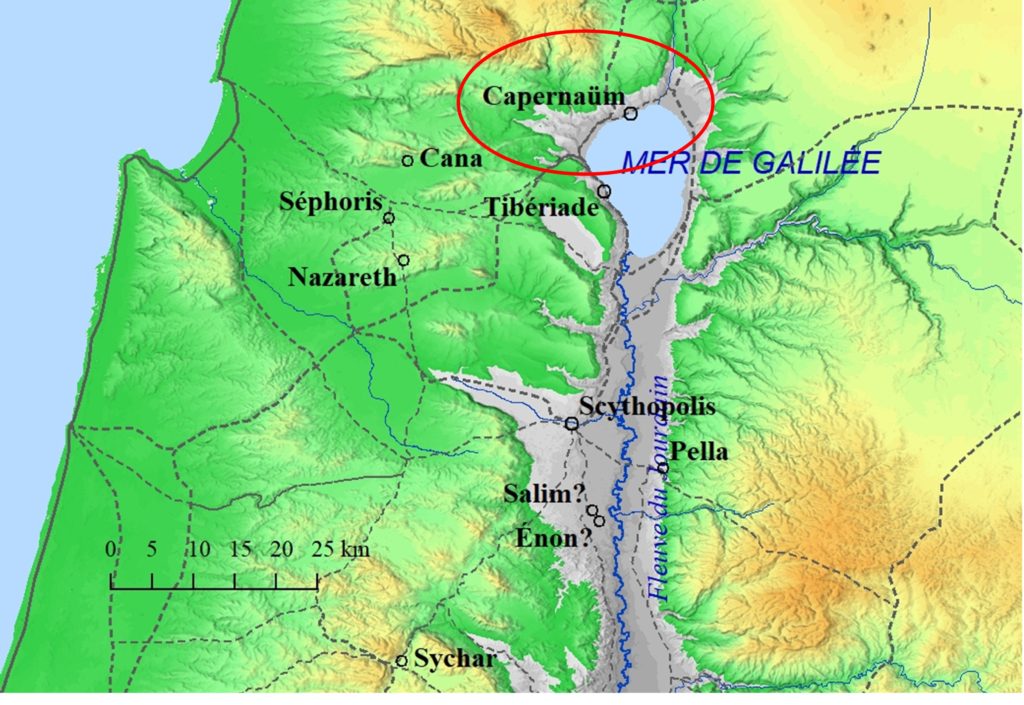
Jesus the Messiah has recently spoken words of condemnation against several towns whose inhabitants remained unbelieving despite the many miracles performed among them. This specifically concerns the residents of these places who did not repent.
Now the tone changes and Jesus the Messiah expresses his joy. Analysing the situation, he observes that religious scholars do not convert despite their thorough knowledge of religious teachings, whereas ordinary people, often illiterate and despised by the ruling class, understand the Messiah’s message and are converted.
Matthew seems to contrast the inhabitants of the unbelieving towns with ordinary people whose conversion condemns those villagers. Indeed, if some are converted, why have others not done so?
We could say the same of the religious authorities and teachers of the law, as well as all those who teach the people.
We arrive at the following paradox: it is the unlearned among the people, despised by the intelligent and knowledgeable religious leaders of the time, who best understand Jesus the Messiah’s words. The religious leaders who consider themselves rich are actually poor, while ordinary people who possess nothing are actually rich, though they do not yet realise it.
Jesus the Messiah recognises that this situation results from the divine will.
Before inviting people to follow him, he declares his position as Son of God, an assertion the religious leaders might have considered blasphemous had they been present.
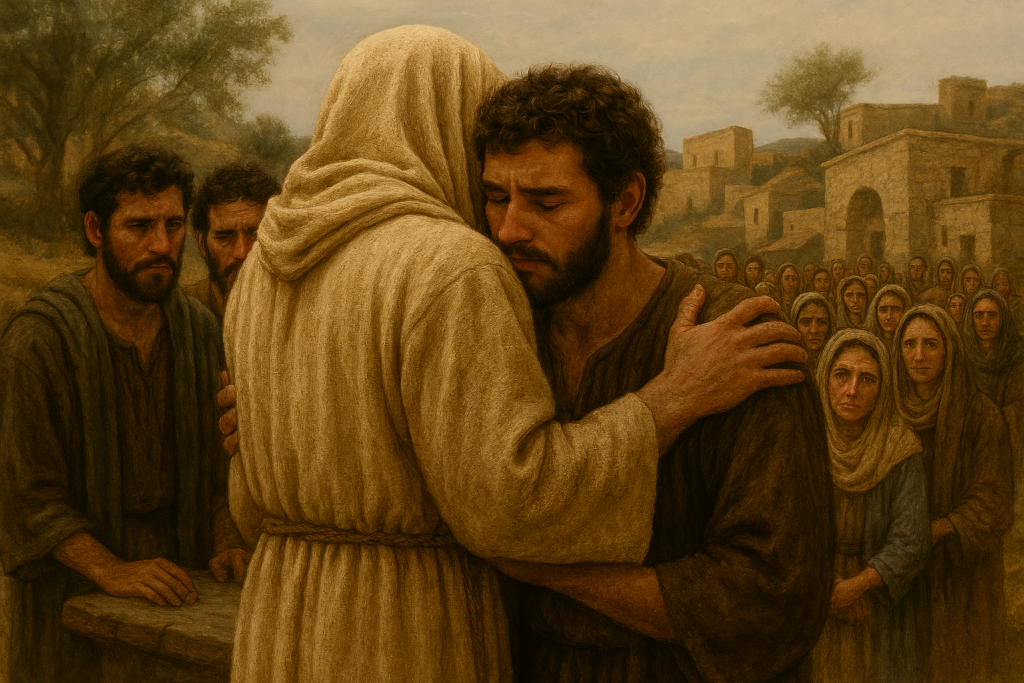
For his listeners, however, this declaration is encouraging and helps them understand his subsequent words. Indeed, he invites all who are weary and weighed down by heavy burdens to come to him and follow him, committing himself to care for them. Weariness and heavy loads were familiar to the people.
Jesus the Messiah invites these people to follow his precepts by using the of the yoke. Note that this yoke is carried by two; indeed, the Spirit of the Lord will be with them. They are unaccustomed to a Master who is gentle and humble in heart, having too often been in contact with the .
It seems clear that in speaking of the burden, he wished to refer to the sin that torments the soul.
Matthew does not mention the consequences of this discourse or the impact Jesus the Messiah had on these people. The initial joy reported by Luke suggests that several of them believed and were converted that day.
We observe the effect of unbelief on Jesus the Messiah, manifested in deep sadness. Conversely, conversions brought him great satisfaction. This exceptional compassion appears regularly throughout his ministry (Matthew 9.36, Mark 1.41, Luke 7.13). These moments clearly show Jesus’ deep empathy and love for people.
Luke presents this passage differently. In the same sequence, he mentions the rebuke against Chorazin, and Capernaum, then states that the Father has hidden spiritual truths from the wise and intelligent to reveal them to children. However, Luke also inserts another account: that of the 70 disciples sent to proclaim the good news.