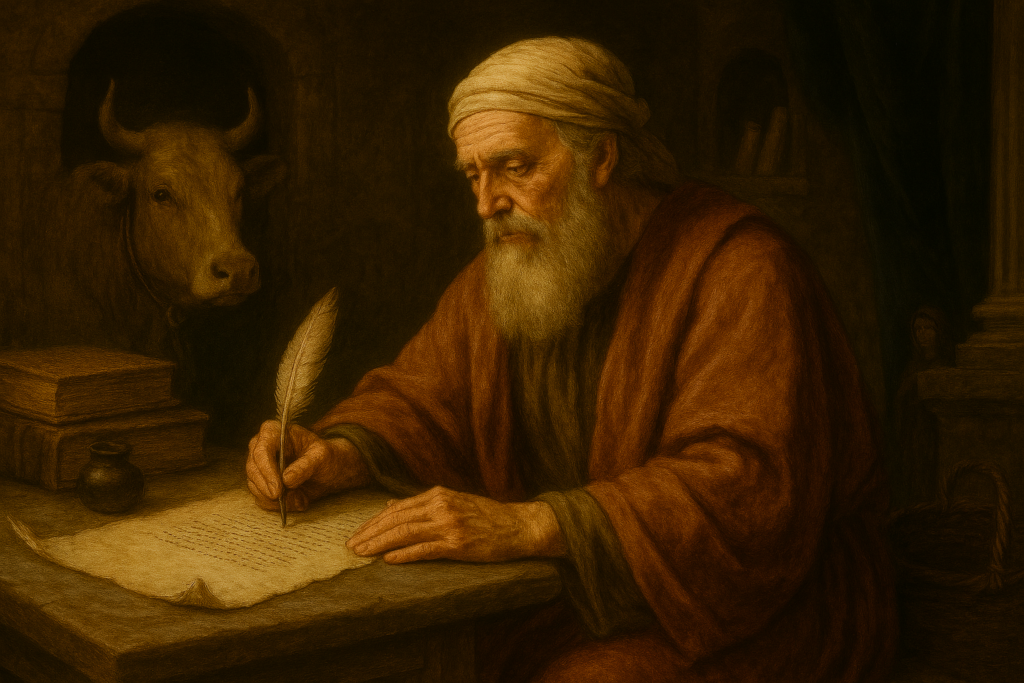
Luke and John open their accounts with a prologue, whereas Matthew begins straight away with the genealogy of Jesus the Messiah, and Mark deals with the beginning of the ministry of John the Baptist. In his introduction, Luke sets out his working method, which can be compared to that of a historian or a modern investigative journalist. Not being an eyewitness of the events he is about to relate, Luke spent several years researching the life of the Messiah Jesus.
He acknowledges that he is not the first to write an account of the life of the Messiah Jesus, having had access to many documents and testimonies. His narrative is thus a synthesis of this carefully checked information. He was also able to interview witnesses of the time to support what he says, producing an accurate and error-free text.
The second verse (Luke 1.2) says that several people — or “many”, according to the translation (NBS) — like Luke, relied on the accounts of eyewitnesses, notably the apostles, pillars of the Church, to write their accounts of the events. So Luke is not referring to the writings of Matthew and of Mark, who worked with Peter, but to other documents.
We understand that an abundant literature on this subject was developing without any control. This detail underlines the importance of sticking to historical facts in the accounts. It may well be that this encouraged Luke to write his text.
Luke’s work is the fruit of thorough, well-documented research. His book is dedicated to a certain Theophilus, whose identity remains a mystery. Without giving any details of his relationship with this man, we may suppose that Theophilus was a wealthy Christian who commissioned and financed Luke’s work, although Luke states that he himself took the initiative to write this account (Luke 1.3). The existence of a sequel, the Acts of the Apostles, also addressed to Theophilus, seems to confirm the idea of a commission.
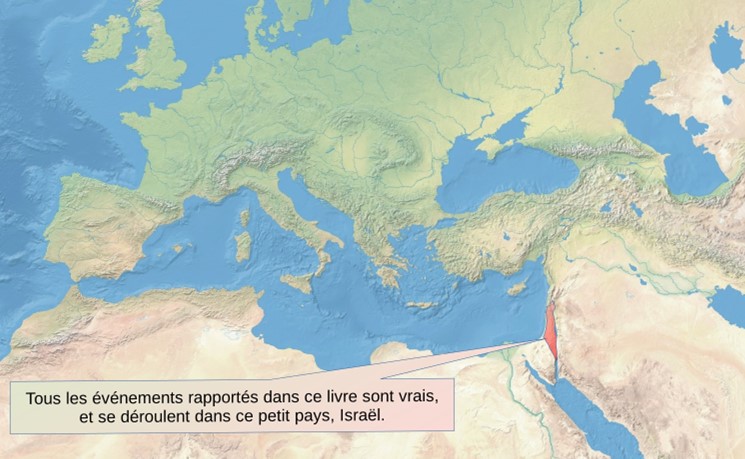
In his Gospel, Luke recounts the life of Jesus and places these events within the historical setting of the time. For him, there are not two separate epics — that of the world and that of the Bible — but a single universal history that naturally includes the account of the Gospels.
The historical references given by Luke provide reliable and credible information, which must be interpreted correctly.