The Writing and Compilation of the Texts of the Old Testament
This article examines the complex composition of the Old Testament, from oral transmission to written compilation. It covers various sections of the Hebrew Bible, such as the historical books recounting the history of Israel and the poetic books offering reflections on faith. The prophetic texts are also analyzed, highlighting the prophets' calls to repentance. The impact of these texts, at first limited to the Jewish people, is now worldwide.
14 min
Old TestamentwritingcompilationHebrew Biblehistorical books
9 verses
9 books
In the first section, we examined the composition of the Pentateuch. We will now turn to the other books of the , which are also found in our modern Bibles.
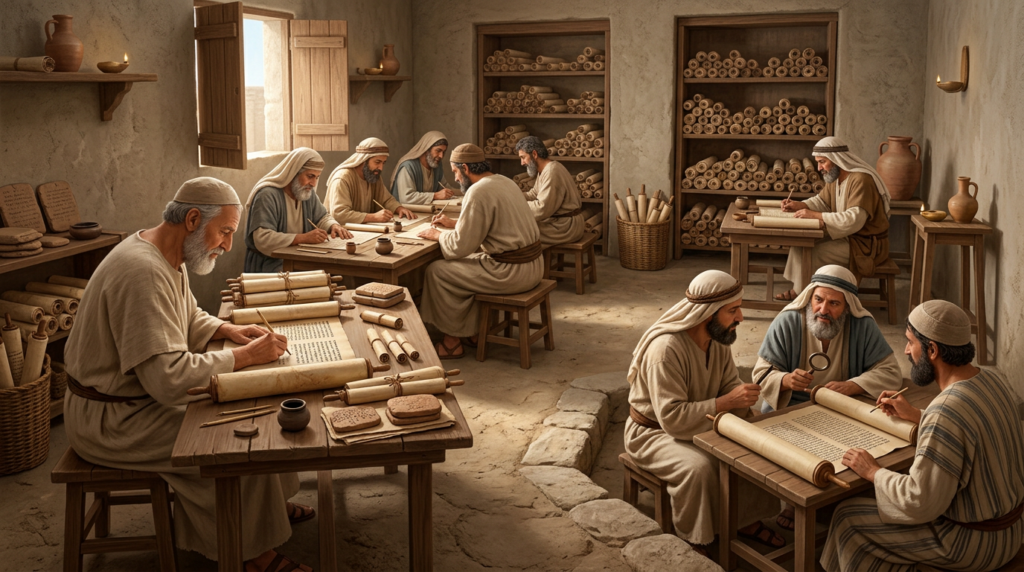
These works follow a similar process, beginning with a phase of oral transmission before moving on to writing. Some texts were written down directly and generally bear the name of their author.
At various moments in Jewish history, individuals recognized the importance of these texts for future generations, regarding them as divine messages. It was therefore essential to preserve them so that later generations could understand how God had influenced the history of the Jewish people.
Although they probably did not foresee the future worldwide impact of their writings, it must be acknowledged that this impact is plainly visible today.
I. Composition
Besides the Pentateuch, the other books of the Old Testament are also rich in theological, stylistic and historical diversity. Here is an overview of the main sections of the (the Old Testament of our present-day Protestant Bibles) and a few examples of the sources that may have influenced these texts.
II. The Historical Books
These books tell the history of the people of Israel from their entry into the Promised Land to the Babylonian exile and the return from exile.
Joshua: Recounts the conquest of under the leadership of Joshua.
Judges: Describes the cycles of disobedience, oppression, repentance and deliverance through the judges.
Ruth: A story of faithfulness and redemption in the time of the judges.
1 and 2 Samuel, 1 and 2 Kings: Relate the history of the kings of Israel and Judah, from Samuel, Saul and David to the destruction of Jerusalem.
1 and 2 Chronicles: These books retell the history recounted in Samuel and Kings, with a more pronounced priestly perspective.
Ezra and Nehemiah: Describe the return from exile and the rebuilding of Jerusalem and the Temple.
Esther: A story of the rescue of the Jews from destruction in Persia.
III. The Poetic and Wisdom Books
These books include poetry, proverbs and reflections on life and faith.
Job:A dialogue about human suffering and divine justice.
Psalms: A collection of hymns, prayers and poems attributed mainly to David.
Proverbs: Maxims of wisdom attributed mainly to Solomon.
Ecclesiastes (Qoheleth): Philosophical reflections on the meaning of life, attributed to Solomon.
Song of Songs: Love poems often interpreted allegorically.
IV. The Prophetic Books
These books include the major and minor prophets, who spoke in God's name to call people to repentance and to announce judgments and promises.
Isaiah: Announces the coming of the Messiah and the restoration of Israel.
Jeremiah:Prophesies the destruction of Jerusalem and the exile to Babylon.
Lamentations: A series of poems mourning the destruction of Jerusalem.
Ezekiel: Prophesies during the exile in Babylon, announcing the future restoration.
Daniel: Contains stories of life in Babylon and apocalyptic visions.
Hosea, Joel, Amos, Obadiah, Jonah, Micah, Nahum, Habakkuk, Zephaniah, Haggai, Zechariah, Malachi: Each minor prophet has a specific message for Israel or Judah, often calling for repentance and announcing divine judgments and promises.
V. Influence of the Sources
While the Pentateuch is often analyzed through the documentary hypothesis, the other books of the Old Testament also show various influences:
Deuteronomist Sources: Particularly present in the historical books (Joshua, Judges, Samuel, Kings), which reflect the theological themes of Deuteronomy.
Priestly Sources: Notable in books such as Leviticus, Numbers and Chronicles, where the emphasis is on rituals, worship and genealogies.
Prophetic Traditions: The prophetic books reflect the traditions and schools of thought of the prophets themselves.
The Old Testament is a complex and diverse collection of texts that were influenced by multiple sources and traditions over the centuries. This diversity enriches the theological and historical understanding of believers and scholars alike.
VI. The Authors of the Books of the Old Testament
The Old Testament is a collection of books written by several different authors over a period of many centuries. The exact number of authors is difficult to determine because of several factors:
Factors to Consider
Multiple Authors and Schools of Thought: Some books were written by several authors or schools of thought. For example, the Pentateuch is often attributed to four main sources: Yahwist (J), Elohist (E), Deuteronomist (D) and Priestly (P).
Anonymity:Many books of the Old Testament are unsigned. For example, the authors of the historical books such as Judges, Samuel and Kings are not specifically named.
Oral Tradition and Compilation: Several books were compiled from oral traditions and from documents written by different authors. For example, the Psalms are a collection of poems attributed to various authors, including David.
Here is a list of the confirmed or presumed authors who contributed to the writing of the books of the Old Testament.
Joshua (anonymous, often attributed to Joshua or to later scribes): Joshua
Anonymous authors (traditionally attributed to scribes or to schools of scribes): Judges, Ruth, 1 Samuel, 2 Samuel, 1 Kings, 2 Kings,
Ezra and Nehemiah (traditionally attributed to Ezra and/or Nehemiah): 1 Chronicles, 2 Chronicles, Ezra, Nehemiah.
The Poetic and Wisdom Books
David (principal author attributed for the Psalms): Psalms (with contributions from other authors such as Asaph, the sons of Korah, and other anonymous ones)
Solomon (traditionally attributed): Proverbs (with other possible contributions), Ecclesiastes, Song of Songs.
Job (unknown author, often attributed to an anonymous author or to Moses): Job
Various/anonymous authors: Esther (traditionally attributed to Mordecai or to an anonymous author), Lamentations (traditionally attributed to Jeremiah, but some scholars suggest an anonymous author), Daniel (traditionally attributed to Daniel, although some chapters are clearly written in the third person), Chronicles, Ezra, Nehemiah (some attributed to Ezra or to scribes of his school)
This list is neither exhaustive nor definitive, owing to the complex nature of the oral traditions and the multiple writings and revisions that the biblical texts underwent. Many books of the Old Testament are collective works, often attributed to historical figures by tradition rather than by historical certainty.
VII. Biblical Allusions to Writings
The Bible itself contains several references to the act of writing and to the use of writings. Here are some notable examples:
1. The Ten Commandments:
Exodus 31.18 (King James Version) :
And he gave unto Moses, when he had made an end of communing with him upon mount Sinai, two tables of testimony, tables of stone, written with the finger of God.
King James Version (1769), domaine public — texte : eBible.org
2. The Scroll of the Law (Torah):
Deuteronomy 31.24-26: Moses writes the words of this law in a book and commands that it be placed beside the ark of the covenant as a witness.
3. The Book of Kings:
1 Samuel 10.25 (King James Version) :
Then Samuel told the people the manner of the kingdom, and wrote it in a book, and laid it up before the LORD. And Samuel sent all the people away, every man to his house.
King James Version (1769), domaine public — texte : eBible.org
4. The Book of Chronicles:
2 Chronicles 34.14-15 (King James Version) :
And when they brought out the money that was brought into the house of the LORD, Hilkiah the priest found a book of the law of the LORD given by Moses.aNoteby: Heb. by the hand ofbNoteto thy…: Heb. to the hand of, etccNotegathered together: Heb. poured out, or, melteddNoteit: Heb. in iteNoteAbdon: or, AchborfNoteHasrah: also called, HarhasgNotewardrobe: Heb. garmentshNotein the college: or, in the school, or, in the second partAnd Hilkiah answered and said to Shaphan the scribe, I have found the book of the law in the house of the LORD. And Hilkiah delivered the book to Shaphan.
King James Version (1769), domaine public — texte : eBible.org
5. The Prophets:
Jeremiah 36.2 (King James Version) :
Take thee a roll of a book, and write therein all the words that I have spoken unto thee against Israel, and against Judah, and against all the nations, from the day I spake unto thee, from the days of Josiah, even unto this day.
King James Version (1769), domaine public — texte : eBible.org
God commands Jeremiah to write all the prophetic words on a scroll (see the whole of Jeremiah 36), which was then burned by King Jehoiakim but rewritten by Jeremiah.
Habakkuk 2.2 (King James Version) :
And the LORD answered me, and said, Write the vision, and make it plain upon tables, that he may run that readeth it.
King James Version (1769), domaine public — texte : eBible.org
6. The Poetic Writings:
Psalms 102.17 (King James Version) :
He will regard the prayer of the destitute, and not despise their prayer.
King James Version (1769), domaine public — texte : eBible.org
7. The New Testament:
John 20.31 (King James Version) :
But these are written, that ye might believe that Jesus is the Christ, the Son of God; and that believing ye might have life through his name.
King James Version (1769), domaine public — texte : eBible.org
:
Luke 1.1-4 (King James Version) :
Forasmuch as many have taken in hand to set forth in order a declaration of those things which are most surely believed among us,Even as they delivered them unto us, which from the beginning were eyewitnesses, and ministers of the word;It seemed good to me also, having had perfect understanding of all things from the very first, to write unto thee in order, most excellent Theophilus,That thou mightest know the certainty of those things, wherein thou hast been instructed.
King James Version (1769), domaine public — texte : eBible.org
The evangelist Luke explains that he undertook to write an orderly account of the events of the life of Jesus.
These references show that writing was an essential means of preserving, transmitting and sharing the teachings, laws and religious experiences of the Israelites and the first Christians.
Conclusion
We have studied the process by which the various writings of the Old Testament were composed and transmitted over the centuries, leading to the compilation of the Septuagint translation and of the . We will now analyze in detail how this compilation was carried out through the Septuagint translation and, finally, with the canonization of the .
Next, we will examine the formation of the New Testament in order to reach the major stage of the canonization of the books of the Bible as we know them today.
We believe that this teamwork, spread over several centuries, does not rest solely on human will, but that providential events contributed to these books being written, transmitted and finally compiled into a single work: the Bible.
A title, a person, a place, a reference (“Luke 15”)…
opens in a new window
Bible reference
INF039
Information note
INF039 - The Catholic Bible
The Catholic Bible
The Catholic Bible is made up of two major sections: the Old Testament and the New Testament. Here is an overview of its makeup:
Old Testament
The Old Testament of the Catholic Bible contains 46 books, including the following: Pentateuch: Genesis, Exodus, Leviticus, Numbers, Deuteronomy. Historical books:Joshua, Judges, Ruth, 1 Samuel, 2 Samuel, 1 Kings, 2 Kings, 1 Chronicles, 2 Chronicles, Ezra, Nehemiah, Tobit, Judith, Esther, 1 Maccabees, 2 Maccabees. Poetic and wisdom books: Job, Psalms, Proverbs, Ecclesiastes (Qoheleth), Song of Songs, Wisdom, Sirach (Ecclesiasticus).
Prophetic books: Isaiah, Jeremiah, Lamentations, Baruch, Ezekiel, Daniel, Hosea, Joel, Amos, Obadiah, Jonah, Micah, Nahum, Habakkuk, Zephaniah, Haggai, Zechariah, Malachi.
New Testament
The New Testament of the Catholic Bible contains 27 books: Gospels: Matthew, Mark, Luke, John. Acts of the Apostles: History of the early days of the Christian Church. Epistles of Paul:Romans, 1 Corinthians, 2 Corinthians, Galatians, Ephesians, Philippians, Colossians, 1 Thessalonians, 2 Thessalonians, 1 Timothy, 2 Timothy, Titus, Philemon. Catholic Epistles: Hebrews, James, 1 Peter, 2 Peter, 1 John, 2 John, 3 John, Jude. Revelation: The Book of Revelation, or the Apocalypse of John.
Distinctive features of the Catholic Bible
Deuterocanonical books: The Catholic Bible includes certain books called deuterocanonical that are not present in the Hebrew Bible or in Protestant versions, such as Tobit, Judith, Wisdom, Sirach, Baruch, and the additions to Esther and Daniel. Canonization: The canon of the Catholic Bible was fixed at the Council of Trent in the 16th century, in response to the Protestant Reformation.
The Catholic Bible offers a rich collection of sacred, historical, poetic and prophetic texts, each bringing a unique perspective to the faith and religious practice of Catholics.
INF040
Information note
INF040 - The Protestant Bible
The Protestant Bible
The Protestant Bible consists of the Old Testament and the New Testament, just like the Catholic Bible, but there are some notable differences in the canon. Here is an overview:
Old Testament
The Protestant Bible follows the Hebrew canon of the Old Testament, which comprises 39 books: Pentateuch: Genesis, Exodus, Leviticus, Numbers, Deuteronomy. Historical books: Joshua, Judges, Ruth, 1 Samuel, 2 Samuel, 1 Kings, 2 Kings, 1 Chronicles, 2 Chronicles, Ezra, Nehemiah, Esther. Poetic and wisdom books: Job, Psalms, Proverbs, Ecclesiastes (Qoheleth), Song of Songs. Prophetic books: Isaiah, Jeremiah, Lamentations, Ezekiel, Daniel, Hosea, Joel, Amos, Obadiah, Jonah, Micah, Nahum, Habakkuk, Zephaniah, Haggai, Zechariah, Malachi.
New Testament
The New Testament of the Protestant Bible is identical to that of the Catholic Bible and comprises 27 books: Gospels: Matthew, Mark, Luke, John. Acts of the Apostles: History of the early days of the Christian Church. Epistles of Paul:Romans, 1 Corinthians, 2 Corinthians, Galatians, Ephesians, Philippians, Colossians, 1 Thessalonians, 2 Thessalonians, 1 Timothy, 2 Timothy, Titus, Philemon. Catholic Epistles: Hebrews, James, 1 Peter, 2 Peter, 1 John, 2 John, 3 John, Jude. Revelation: The Book of Revelation, or the Apocalypse of John.
Key differences from the Catholic Bible
Deuterocanonical books: The Protestant Bible does not include the deuterocanonical (or apocryphal) books found in the Catholic Bible, such as Tobit, Judith, Wisdom, Sirach, Baruch, and the additions to Esther and Daniel. Canon: The canon of the Protestant Bible is based on the Hebrew version of the Tanakh for the Old Testament, whereas the Catholic Bible includes additional books based on the Septuagint, an ancient Greek translation of the Hebrew Scriptures.
These differences reflect the theological and historical divergences that emerged during the Protestant Reformation in the 16th century.
INF043
Information note
INF043 - The Deuteronomist Source
The Deuteronomist Source
The Deuteronomist (or Deuteronomic) source, often abbreviated as D, is one of the four hypothetical sources of the Torah according to the documentary hypothesis. Here are some essential points:
Origin and Definition
Documentary Hypothesis: This hypothesis proposes that the Torah is composed of four distinct sources: Yahwist (J), Elohist (E), Deuteronomist (D) and Priestly (P).
Name: The Deuteronomist source is so named because of its close association with the Book of Deuteronomy.
Characteristics
Style and Theme: It is characterized by a homiletic style and a theological perspective centered on faithfulness to the covenant between God and Israel, with an emphasis on laws and religious reforms. Attributed Passages: Besides Deuteronomy, Deuteronomistic influences are often attributed to the historical books such as Joshua, Judges, 1 Samuel, 2 Samuel, 1 Kings and 2 Kings.
Dating and Origin
Dating: The Deuteronomist source is generally dated to the 7th century BCE, in the time of King Josiah of Judah. Composition: It may have been written by priests and scribes close to the Temple in Jerusalem, as part of Josiah's religious reforms aimed at centralizing worship in the Temple in Jerusalem.
Validity and Acceptance
Validity: Although widely accepted by many scholars, the existence of the Deuteronomist source remains a hypothesis, and other models have also been proposed to explain the formation of the Torah.
The Deuteronomist source is thus an important theoretical component for understanding the structure and development of the biblical texts, particularly with regard to the laws and the covenant.
INF036
Information note
INF036 - Examples of the Deuteronomist source
Examples of the Deuteronomist source
The Deuteronomist source (D) is mainly characterized by specific theological and legislative themes, as well as by a distinct style. It is mainly associated with the book of Deuteronomy, but its influence is also found in the historical books of Joshua, Judges, 1 and 2 Samuel, and 1 and 2 Kings. Here are some examples of passages attributed to the Deuteronomist source:
Deuteronomy 5.1-22:the Ten Commandments: This passage reiterates the Ten Commandments given to the people of Israel, stressing the importance of following the divine laws. Deuteronomy 6.4-9: Shema Israel: "Hear, O Israel: the the Eternal our God, the the Eternal is one." This passage underscores the uniqueness of God and the importance of love and obedience to his commandments. Deuteronomy 12.1-14: centralized place of worship: The passage insists that worship must be centralized in a single place that God will choose, probably Jerusalem. Deuteronomy 28.1-68: blessings and curses: This passage describes the blessings for obeying God's commandments and the curses for disobedience. Joshua 1.1-9: call of Joshua: After the death of Moses, God speaks to Joshua, reminding him to be strong and courageous and to follow the law given by Moses. 1 Samuel 12:Samuel's speech: Samuel reminds the people of God's deeds, urges them to follow the commandments and warns of the consequences of disobedience. 2 Kings 22.1-20: Josiah's reform: This passage describes the religious reform of King Josiah after the discovery of the book of the law in the temple, which is often associated with the rediscovery of Deuteronomy. Judges 2.11-23: cycle of judgment: This passage describes the cycle of disobedience, oppression, repentance and deliverance that characterizes the book of Judges, reflecting a Deuteronomistic theology of reward and punishment based on faithfulness to the covenant.
These examples show how the Deuteronomist source emphasizes the law, the covenant, the centralization of worship, and the consequences of obedience or disobedience to God.
INF044
Information note
INF044 - The Priestly Source
The Priestly Source
The Priestly source (or P, for "Priestly") is one of the four hypothetical sources of the Torah according to the documentary hypothesis. Here are the key points to know:
Origin and Definition
Documentary Hypothesis: This hypothesis proposes that the Torah is composed of four distinct sources: Yahwist (J), Elohist (E), Deuteronomist (D) and Priestly (P). Name: The Priestly source is so named because of its close connection with the interests and perspectives of the priests (sacrificers) of Israel.
Characteristics Style and Content: The Priestly source is characterized by a formal, structured and repetitive style. It emphasizes laws, rituals, genealogies, and cultic concerns. Theology: It presents God as transcendent and majestic, often distant, with a particular concern for ritual purity and the rules of worship.
Attributed Passages: Sections such as the creation account in Genesis 1, the Levitical laws and the detailed descriptions of ceremonies in the book of Leviticus are attributed to this source.
Dating and Origin
Dating: The Priestly source is generally dated to the period of the Babylonian exile or the post-exilic period (6th-5th century BCE). Authors: It is thought to have been written by priests and scribes of the Temple community in Jerusalem, with the intention of codifying cultic practices and priestly traditions.
Validity and Acceptance
Validity: As with the other sources of the documentary hypothesis, the validity of the Priestly source is debated among contemporary scholars. Some prefer alternative models to explain the composition of the Torah.
In summary, the Priestly source is an important theoretical component for understanding the emphasis on rituals and laws in the biblical texts.
INF037
Information note
INF037 - Examples of the Priestly source
Examples of the Priestly source
The Priestly source (P) is distinguished by its concern for ritual, religious laws, genealogies, and a formal, structured style. It frequently uses the divine name Elohim in the early chapters, then Yahweh after Exodus 6. Here are some examples of passages attributed to the Priestly source in the Bible:
Genesis 1.1-2: the Creation account: This passage describes the creation of the world in seven days. It is characterized by a formal, repetitive structure, with phrases such as "And God said" and "There was evening, and there was morning". Genesis 5: genealogy from Adam to Noah: A genealogical list detailing the descendants of Adam down to Noah. This type of genealogy is typical of the Priestly source. Genesis 17: covenant of circumcision: This passage describes God's covenant with Abraham, marked by the practice of circumcision. The formal style and ritual details are characteristic of the Priestly source. Exodus 25-31: instructions for building the Tabernacle: These chapters provide detailed instructions for building the Tabernacle, the priestly garments, and the rituals. The attention to detail and the emphasis on ritual are typical of the Priestly source. Leviticus, the whole book:Leviticus is mainly attributed to the Priestly source. It contains laws about sacrifices, ritual purity, holy days, and various regulations for the priests and worship. Numbers 1-10: censuses and organization of the camp: These chapters describe the censuses of the tribes of Israel, the organization of the camp around the Tabernacle, and the responsibilities of the Levites. Numbers 16-17:Korah's rebellion: This story underscores the importance of priestly authority and rituals. It shows how God confirms the priesthood of Aaron and his descendants.
These examples illustrate the concerns of the Priestly source for religious structures, rituals and genealogies, as well as its distinctive style.
INF063
Information note
INF063 - The Jewish Prophetic Tradition
The Jewish Prophetic Tradition
The Jewish prophetic tradition is an essential part of Jewish religion and history, marked by the writings and teachings of the prophets. Here are some key elements:
Characteristics of the Prophetic Tradition
Prophets: The prophets are individuals chosen by God to convey his messages to the people of Israel. They often serve as social critics, spiritual guides and visionaries. Messages: Their messages focus on the call for justice, repentance, and faithfulness to the covenant with God. They denounce social injustice, idolatry and the sins of the people. Prophetic Writings: The prophetic books of the Hebrew Bible include Isaiah, Jeremiah, Ezekiel, and the Twelve Minor Prophets (such as Hosea, Joel, Amos).
Role and Impact
Social Criticism: The prophets often play the role of social critics, denouncing injustice and calling the leaders and the people to keep the divine laws. Hope and Consolation: Besides their criticism, the prophets also offer messages of hope and consolation, promising the restoration and redemption of the people of Israel. Eschatological Vision: They often have eschatological visions (of the end times), describing an ideal future in which justice and peace will reign.
Influence Theological Influence: The prophetic tradition has profoundly influenced Jewish theology, emphasizing morality, social justice, and the covenant with God. Literary Legacy: The prophetic writings are among the most powerful and poetic texts of the Hebrew Bible, offering literary and spiritual richness.
The Jewish prophets have therefore played a crucial role not only in the religion and spirituality of Judaism, but also in shaping the ethical and moral values of society.
INF041
Information note
INF041 - The Jahwist source
The Jahwist source
The Jahwist source (or Jahwist), often abbreviated as J, is a hypothetical source of the Torah (the first five books of the Hebrew Bible) according to the documentary hypothesis. Here are some key points:
Origin and Definition
Documentary hypothesis: This hypothesis, developed in the 19th century by scholars such as Julius Wellhausen, proposes that the Torah is a compilation of four distinct sources: Jahwist, Elohist, Deuteronomist and Priestly. Divine name: The Jahwist source is so named because it frequently uses the divine name YHWH (or Yahweh) for God.
Characteristics
Style and theology: The Jahwist source is characterized by an anthropomorphic style, describing God with human traits. It emphasizes the relationship between God and human beings, as well as the land and human corruption1. Attributed passages: Passages such as the creation of man and woman (Genesis 2:4b-25), the fall of man (Genesis 3), and the call of Moses at the burning bush (Exodus 3:1-15) are attributed to this source.
Dating and validity
Dating: Scholars have proposed different periods for the writing of the Jahwist source, ranging from the monarchic period (10th century BCE) to the exilic/post-exilic period (6th-5th century BCE). Validity: The documentary hypothesis, including the Jahwist source, is no longer widely accepted by contemporary scholars, who prefer other models to explain the composition of the Torah.
The Jahwist source is therefore an important concept in the study of the Hebrew Bible, although its existence and importance are debated among scholars.
INF042
Information note
INF042 - The Elohist source
The Elohist source
The Elohist source (or Elohist), often abbreviated as E, is a hypothetical source of the Torah according to the documentary hypothesis. Here are some key points about it:
Origin and Definition
Documentary hypothesis: This hypothesis, developed in the 19th century, proposes that the Torah is made up of several distinct sources: Jahwist (J), Elohist (E), Deuteronomist (D) and Priestly (P).
Divine name: The Elohist source is so named because it frequently uses the divine name Elohim for God, rather than YHWH.
Characteristics
Style and theology: The Elohist source is characterized by a more transcendent view of God, avoiding anthropomorphisms. It often emphasizes prophecy and divine revelation through dreams and visions. Attributed passages: Certain accounts, such as the call of Abraham (Genesis 20), Jacob's dream at Bethel (Genesis 28.10-22), and parts of the story of Joseph are attributed to this source.
Dating and validity
Dating: Scholars estimate that the Elohist source was written during the time of the northern kingdom of Israel, between the 9th and 8th centuries BCE. Validity: Like the Jahwist source, the validity of the Elohist source and of the documentary hypothesis in general is debated among contemporary scholars, some of whom prefer other models to explain the composition of the Torah.
In summary, the Elohist source is a theoretical component of the critical study of biblical texts, offering a particular perspective on the relationship between God and human beings.
INF031
Information note
INF031 - The Torah
The Torah
The Torah is the central and most sacred text of Judaism. It is made up of the first five books of the Hebrew Bible, also known as the Pentateuch. These books are:
Law and teaching: The word "Torah" means "instruction" or "law" in Hebrew. It contains the laws, teachings and narratives that are fundamental to Jewish faith and practice. Liturgy:The Torah is read and studied regularly in the synagogues. Portions of the Torah are read aloud during religious services, especially on the Shabbat and on festival days.
Holy Scripture: The Torah is regarded as the divine word revealed to Moses on Mount Sinai.
Influence and interpretation
Exegesis: The Torah has been interpreted and commented on by generations of rabbis and scholars, giving rise to a rich tradition of rabbinic literature, including the Talmud and the Midrash. Ethics and morality: The teachings of the Torah form the basis of Jewish ethics and morality, guiding believers in their daily lives.
The Torah is therefore far more than a mere religious text; it is at the heart of the spiritual and cultural life of the Jewish people.
INF032
Information note
INF032 - The Pentateuch
The Pentateuch
The Pentateuch is a term that designates the first five books of the Jewish and Christian Hebrew Bible. Here is a brief description of each book:
Genesis: This book tells of the creation of the world, the story of Adam and Eve, Noah's flood, and the stories of the patriarchs Abraham, Isaac, Jacob and Joseph.
Exodus:It describes the departure of the Hebrews from Egypt under the leadership of Moses, and includes the Ten Commandments given at Mount Sinai.
Leviticus:This book contains laws and ritual regulations for the priests and the people of Israel.
Numbers: It narrates the journey of the Israelites in the wilderness for forty years and the various censuses that were taken.
Deuteronomy: This last book is a series of speeches by Moses reiterating and summarizing the laws for the people of Israel before they enter the Promised Land.
The Pentateuch is therefore fundamental to the Jewish and Christian traditions, laying the legal, moral and narrative foundations of these religions.
INF033
Information note
INF033 - Difference between the Pentateuch and the Torah
Difference between the Pentateuch and the Torah
The Pentateuch and the Torah are two closely related but not entirely synonymous terms. Here are the key differences:
Pentateuch
Origin of the term: It comes from the Greek "Pentateuchos," meaning "five books". Content: It specifically designates the first five books of the Jewish and Christian Hebrew Bible: Genesis, Exodus, Leviticus, Numbers, and Deuteronomy. Usage: Often used in an academic or Christian context to refer to this section of the Bible.
Torah
Origin of the term: It comes from the Hebrew "Torah," meaning "instruction" or "law". Content:In Judaism, the Torah refers to the same five books as the Pentateuch but also carries a broader connotation of divine instruction and law. Usage: Used mainly in a Jewish context to designate not only these five books, but also all the teachings and laws they contain.
Common points
Identical books: The five basic books are the same in both terms. Religious importance: Both are fundamental to Judaism and Christianity, providing the narrative and legal foundations of these religions.
In summary, the Pentateuch and the Torah designate the same set of books, but the Torah has a broader connotation in Judaism, encompassing divine instruction and law.
INF012
Information note
INF012 - The different Bible versions
The different Bible versions
There are not several Bibles, whether Protestant, Catholic or otherwise. There are different translations, all of which have the same origins: Greek texts for the New Testament and Hebrew texts for the Old Testament.
The Hebrew Bible contains only the Old Testament.
It is important to note that the so-called New World Translation is subject to criticism, particularly because certain translation choices were made to bring it into line with Jehovah's Witnesses' theology. Some scholars regard these choices as dishonest and indefensible.
The meanings of our words change over time, and some words disappear. It therefore becomes necessary to use terms that readers can understand, hence the successive adaptations.
These are often merely revisions, as we see with the different versions of Louis Segond's or Augustin Crampon's translations. Catholic Christians have added seven further books to their translations, exclusively in the Old Testament. These books are called deuterocanonical or apocryphal.
INF011
Information note
INF011 - The land of Canaan
The land of Canaan
The land of Canaan mentioned in our Bibles corresponds approximately to the present-day territories of Israel, Palestine, Lebanon and parts of Jordan and Syria.
This region is called ‘the most beautiful of all lands’ four times in the Bible. Ezekiel 20.6 (S21)
On that day, I pledged to bring them out of Egypt into a land I had sought out for them, a land flowing with milk and honey, the most beautiful of all lands.
(Louis Segond translation S21) In antiquity, several ethnic groups inhabited Canaan, including the Canaanites, Amorites, Hittites and Philistines. The Bible mentions this region as the land promised to the people of Israel.
We observe two stages, separated by approximately 470 years, that led the Hebrews to take possession of this territory.
The first begins with Abraham's arrival, and the second continues with Joshua's conquest, after the period of captivity in Egypt and the forty years of wandering in the wilderness.