This article analyzes the development and compilation of the Hebrew Bible, or Tanakh, focusing on its three sections: the Torah, the Nevi'im and the Ketouvim. It highlights the historical processes and scholarly decisions that led to its final form.
The various writings produced over the centuries were gathered into a single volume: the . This process unfolded over several centuries, and it was not until the end of the first century that the list of books making up the was definitively established.
We have therefore explored the creation and preservation of these texts. We will now examine their compilation into a single volume, which would become the supreme reference for the Jewish people and also form the basis of our modern Bibles.
I. The Hebrew Bible
The , also known as the Tanakh, is the canon of the sacred Scriptures of Judaism. It is made up of three main sections: the Torah (the Law), the Nevi'im (the Prophets) and the Ketouvim (the Writings). The term Tanakh is an acronym formed from the first letters of these three sections.
II. The Torah (The Law)
The Torah comprises the first five books of the Bible, also known as the :
Genesis (Bereshit): Account of the creation, the patriarchs and matriarchs, and the beginnings of the people of Israel.
Exodus (Shemot):Account of the exodus from Egypt and the first laws given at Mount Sinai.
Leviticus (Vayikra): Laws concerning worship, sacrifices and ritual purity.
Numbers (Bamidbar):Account of the 40 years spent in the wilderness.
Deuteronomy (Devarim): Repetition and recapitulation of the laws given by Moses before the entry into the .
III. The Nevi'im (The Prophets)
The Prophets are divided into two subsections: the Former Prophets and the Latter Prophets.
Former Prophets: Joshua, Judges, 1 and 2 Samuel, 1 and 2 Kings.
Latter Prophets: Isaiah, Jeremiah, Ezekiel, and the twelve Minor Prophets (Hosea, Joel, Amos, Obadiah, Jonah, Micah, Nahum, Habakkuk, Zephaniah, Haggai, Zechariah, Malachi).
IV. The Ketouvim (The Writings)
This section includes various types of literature, including poems, hymns, wisdom writings and narratives:
Poems and Hymns: Psalms, Song of Songs.
Wisdom: Proverbs, Job, Ecclesiastes (Qohelet).
Narratives: Ruth, Esther, Daniel, Ezra-Nehemiah, 1 and 2 Chronicles.
1. Initial Composition
V. Compilation of the Texts to Form the Hebrew Bible
The texts of the were written over several centuries, from the time of the patriarchs (around 2000 BCE) to the post-exilic period (around 500 BCE). These texts included laws, historical narratives, prophecies and poetic writings.
2. Liturgical Use and Recognition
The texts were used in the worship and liturgy of the Jewish communities, which helped establish their recognition and authority. They were often read aloud during religious ceremonies.
3. Gradual Canonization
The process of canonization extended over several centuries and was probably completed between the 5th and 2nd centuries BCE for most of the books. The canon was formally recognized by various religious authorities and included three main sections:
The Torah (Law): The first five books, attributed to Moses.
The Nevi'im (Prophets): The prophetic and historical books.
The Ketouvim (Writings): The other writings, including the Psalms, Proverbs, and the wisdom books.
4. Final Fixing of the Canon
The process of fixing the biblical canon was probably influenced by councils and synods, such as the (Yavneh) toward the end of the 1st century CE, although its exact role is debated among scholars.
One can speak of the once these texts had been compiled, used liturgically and finally recognized as part of the sacred canon of Judaism.
The consists of the Torah, the Nevi'im and the Ketouvim, and its process of canonization was long and complex, involving oral traditions, compositions, compilations and decisions made by religious authorities.
VI. The Hebrew Bible and the Septuagint
The Septuagint is a translation of the made before the official finalization of the text. The definitive list of authorized books would only be established at the end of the 1st century AD, at the , about three centuries after this translation. This suggests that Jewish religious literature was already firmly established before the creation of the Septuagint.
VII. What Distinguishes the Hebrew Bible from the Septuagint Translation?
There are several notable differences between the (Tanakh) and the Greek translation of the , known as the Septuagint (LXX). Here is an overview of the main differences:
1- Language
It is crucial to make a precise distinction between the compilation of the texts, which took place between the 8th century BC and the 2nd century BC, and their canonization, which took place at the end of the 1st century AD.
: Written mainly in Hebrew, with a few passages in Aramaic.
Septuagint: Translated into Greek, the common language of the Hellenistic period.
2- Canon
: Comprises 24 books, divided into three sections: the Torah (Law), the Nevi'im (Prophets) and the Ketouvim (Writings).
Septuagint: Includes several additional books, called apocrypha or deuterocanonical books, such as Tobit, Judith, Wisdom of Solomon, Ecclesiasticus (Sirach), Baruch and 1 and 2 Maccabees. These books are not found in the Hebrew canon but are included in the Greek and Latin versions of the Old Testament.
3- Order of the Books
: The books are arranged in three distinct sections (Law, Prophets and Writings), with the Prophets and the Writings ordered according to a specific Jewish tradition.
Septuagint: The books are often arranged differently, in a sequence closer to that found in the Christian Bible. For example, the Minor Prophets may appear after the historical books.
4- Textual Differences
Translation Variants: The Septuagint sometimes shows textual differences from the Hebrew Bible, owing to variations in translation and in the manuscripts used. Some passages may differ in length, have added or omitted phrases, or show varying shades of meaning.
Quotation in the New Testament: The authors of the New Testament often quote the Septuagint rather than the Hebrew text, which may explain certain divergences in biblical quotations.
5- Theological Influence
Interpretation:The Septuagint sometimes reflects theological interpretations specific to the Hellenistic translators, which may differ from traditional Jewish interpretations.
Liturgical Use: The Septuagint was widely used by the early Christians and influenced Christian theology, whereas the Hebrew Bible remained the central sacred text of Judaism.
The Hebrew Bible and the Septuagint are two important versions of the Scriptures, each with its own characteristics and its impact on religious traditions. The differences in language, canon, order of the books and textual variations show how each version influenced the development of Judaism and Christianity.
The quotations from the Old Testament made by Jesus, mainly recorded by Matthew, come mostly from the Septuagint and not from the Hebrew Bible.
VIII. Transmission of the Hebrew Bible
The transmission of the Hebrew Bible was a rigorous and meticulous process, aimed at preserving the accuracy and integrity of the sacred text:
Oral Tradition: Before being written down, the narratives and laws were transmitted orally. This oral tradition played a crucial role in preserving the religious teachings.
Copying of Manuscripts: The scribes, or soferim, were responsible for copying the texts. They followed strict rules to avoid any error and counted the letters and words to ensure accuracy.
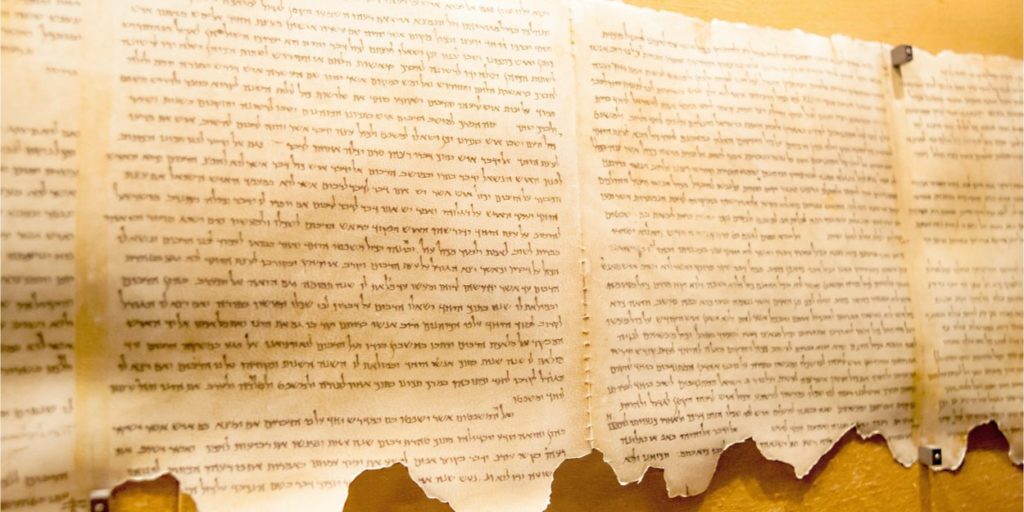
The Dead Sea Scrolls: Discovered in 1947, these manuscripts, dating from 250 BC to AD 68, contain copies of almost all the books of the Hebrew Bible. They confirmed the fidelity of the transmission of the texts.
The : Between the 6th and 10th centuries AD, the introduced systems of punctuation and vocalization to fix the pronunciation of the Hebrew texts. The Aleppo and the Leningrad are among the most famous Masoretic manuscripts.
The Septuagint: The first translation of the Hebrew Bible into Greek, produced between the 3rd and 1st centuries BC, mainly for Greek-speaking Jews. It played a crucial role in spreading the Jewish Scriptures in the Hellenistic world.
The Hebrew Bible, or Tanakh, is a collection of sacred texts of Judaism, made up of the Torah, the Nevi'im and the Ketouvim. Its transmission was ensured by oral traditions, devoted scribes, ancient manuscripts and translations such as the Septuagint, thus guaranteeing the preservation of these texts down the ages.
1- The Formation of the Hebrew Bible
IX. The Formation of the Hebrew Bible
The Hebrew Bible, or Tanakh, took shape gradually over several centuries. Here is an overview of the main stages of its formation:
2- Writing and Compilation of the Texts
Oral Tradition: The narratives and laws were first transmitted orally before being put into writing. This oral transmission ensured that the traditions and stories were memorized and handed down from generation to generation.
Composition of the Texts: The first books, such as the Torah (), were written between the 10th and 5th centuries BCE. The historical, poetic and prophetic books followed, each adding a layer of theological and literary richness.
3- Recognition and Liturgical Use
Communal Use: The texts were first used in the worship and liturgy of the Jewish communities. Their regular use in religious contexts played a crucial role in their recognition as sacred texts.
Authority of the Prophets and Scribes: The prophets, priests and scribes exercised significant influence in the recognition of the texts. Their religious authority helped determine which writings were considered inspired and worthy of inclusion in the canon.
4- The Role of Synods and Councils
:Toward the end of the 1st century CE, the (or Yavneh) is often mentioned as a key reference point for the canonization of the Hebrew Bible. Although the exact role of this synod is debated, it contributed to the discussion and recognition of the sacred books.
5- Criteria for Canonization
Divine Inspiration: The texts had to be regarded as inspired by God.
Antiquity:The writings had to have a recognized antiquity and be linked to important figures in the history of Israel.
Liturgical Use: The texts had to be widely used in worship and liturgy.
Agreement with Doctrine: The writings had to be in agreement with the fundamental doctrines and teachings of the Jewish faith.
6- Manuscript Transmission
Scribes and Manuscripts: The scribes played a crucial role in copying and preserving the texts. The Dead Sea Scrolls and other archaeological discoveries show how the texts were carefully transmitted over the centuries.
: Although later, the contributed to the stabilization and standardization of the texts through their meticulous work of copying and notation.
The formation of the Hebrew Bible was a complex process involving oral tradition, composition, recognition by religious authorities, and the liturgical use of the texts. The criteria of canonization and the faithful transmission of the manuscripts ensured that the sacred texts were preserved and accepted into the canon.
X. The Development of the Hebrew Bible
The Hebrew Bible has been translated and, in some cases, modified over the course of its history. Here are some key points on this subject:
1- Translations
The Septuagint (LXX):
Translation into Greek: Made between the 3rd and 1st centuries BCE, mainly for Diaspora Jews who spoke Greek. This translation includes books that are not in the Hebrew canon, called apocrypha or deuterocanonical books.
The :
Translation into Latin: Made by Jerome at the end of the 4th century AD. It is based on the Septuagint and on the available Hebrew manuscripts. The became the official Bible of the Roman Catholic Church.
Modern Translations:
: The Hebrew Bible has been translated into many modern languages, including English, French, German, and many others, from the Masoretic texts and other ancient manuscripts.
2- Modifications and Developments
Transmission of the Manuscripts:
Textual Variants: As with any ancient text, the repeated copying of manuscripts led to minor textual variants. The scribes sometimes made errors or adjustments to clarify or harmonize the texts.
Masoretic Manuscripts:
Standardization:
The , active between the 6th and 10th centuries AD, standardized the Hebrew text of the Bible. They added signs of vocalization and cantillation to fix the pronunciation and interpretation of the texts.
Discoveries of the Dead Sea Scrolls:
Comparison of Texts: The Dead Sea Scrolls, discovered in 1947, revealed minor variations between the Masoretic texts, the Septuagint and other ancient manuscripts. These discoveries helped in understanding the development and transmission of the biblical texts.
The Hebrew Bible has been translated into several languages over the centuries, and it has undergone minor modifications due to manuscript transmission. However, preservation and standardization efforts, such as those of the , have helped maintain great fidelity to the original texts.
XI. The Distinction Between the Hebrew Bible and the Old Testament of the Bible
We must distinguish the Bibles of Catholic tradition, which contain or deuterocanonical books.
Tobit; Judith; Additions to the Book of Esther (chapters 10:4 to 10:13 and chapters 11 to 16); Wisdom of Solomon; Ecclesiasticus (Sirach); Baruch; Letter of Jeremiah (often included as chapter 6 of the Book of Baruch); Additions to the Book of Daniel: History of Susanna (introduction to chapter 13), The Prayer of Azariah and the Song of the Three Young Men (chapter 3), Bel and the Dragon (chapter 14); 1 Maccabees; 2 Maccabees
These books are also included in the Septuagint, the Greek translation of the Hebrew Bible used by the early Christian communities.
The Protestant Bibles do not contain this list of books. They therefore follow the same canon but in a different order.
Nevi'im (Prophets): Historical books (Joshua, Judges, 1 and 2 Samuel, 1 and 2 Kings) and Prophets (Isaiah, Jeremiah, Ezekiel, and the 12 Minor Prophets).
Ketouvim (Writings): Poetic books (Psalms, Proverbs, Job), Five Scrolls (Song of Songs, Ruth, Lamentations, Ecclesiastes, Esther), and others (Daniel, Ezra-Nehemiah, 1 and 2 Chronicles).
2- The Canon of the Protestant Bible
Contains the same books as the Hebrew Bible, but arranged differently and divided into 39 books.
Although the and the Septuagint share many books, the Septuagint contains some additional books and different versions of texts that are not always included in the .
Three Maccabees, Four Maccabees, and Odes: These books are included in some versions of the Septuagint but are not included in the standard Catholic canon.
Psalm 151:Included in the Septuagint but not in the .
A convergence is thus observed between the and the Septuagint, and another convergence between the and the Hebrew Bible.
We note that both the Jews of the late first century and the Christians of that time chose to exclude the apocryphal texts from their canon. They thus drew a distinction between the texts they considered inspired by the Spirit of God and those they judged too marked by human influence.
Conclusion
The Hebrew Bible, also called the Tanakh, has evolved over the centuries. It is a compilation of the founding texts of Jewish society. In the eyes of their authors, they are texts inspired by God and important for preserving the unity of Jewish society. From these texts Judaism would arise. In fact, the Hebrew Bible is the code that governs the functioning of this society.
The authority conferred on this book allowed its reproduction and transmission under exceptionally favorable conditions. Believers regarded this book as the Word of their God, and read it with deep respect. They also made copies of it to replace worn-out copies. Even these worn-out books were not thrown away like ordinary waste; they were placed in a “genizah.”
This practice illustrates the seriousness with which these individuals copied and transmitted these texts to future generations. The quality of these copies remained strictly faithful to the original.
We therefore have texts of remarkable quality. Some suggest that this transmission was divinely orchestrated, guaranteeing universal access to the same document.
A title, a person, a place, a reference (“Luke 15”)…
opens in a new window
Bible reference
INF045
Information note
INF045 - The Tanakh
The Tanakh
The Tanakh is the collection of the sacred texts of Judaism, corresponding to what Christians call the Old Testament. The term "Tanakh" is an acronym based on the three main sections of these writings:
Three Sections of the Tanakh
Torah (Law): Includes the first five books, also called the Pentateuch: Genesis, Exodus, Leviticus, Numbers, Deuteronomy.
These books contain the accounts of creation, the stories of the patriarchs, the exodus from Egypt, and the laws given to Moses.
Nevi'im (Prophets): Divided into two parts: the Former Prophets (Joshua, Judges, Samuel, Kings) and the Latter Prophets (Isaiah, Jeremiah, Ezekiel, and the Twelve Minor Prophets such as Amos, Hosea, Jonah).
These books recount the history of Israel and the words of the prophets calling for faithfulness to God.
Ketuvim (Writings):Contains poetic and wisdom books such as Psalms, Proverbs, and Job, as well as historical books such as Daniel, Ezra, and Nehemiah, and particular texts such as the Song of Songs, Ruth, Lamentations, Ecclesiastes, and Esther.
These writings cover a variety of literary genres and offer theological, moral and poetic perspectives.
Importance of the Tanakh
Canon: The Tanakh constitutes the Hebrew canon of the Scriptures, serving as the theological and moral foundation of Judaism. Language: Most of the texts of the Tanakh are in Hebrew, with a few passages in Aramaic.
The Tanakh is thus a rich and diverse collection of texts that play a central role in Jewish faith and practice.
INF031
Information note
INF031 - The Torah
The Torah
The Torah is the central and most sacred text of Judaism. It is made up of the first five books of the Hebrew Bible, also known as the Pentateuch. These books are:
Law and teaching: The word "Torah" means "instruction" or "law" in Hebrew. It contains the laws, teachings and narratives that are fundamental to Jewish faith and practice. Liturgy:The Torah is read and studied regularly in the synagogues. Portions of the Torah are read aloud during religious services, especially on the Shabbat and on festival days.
Holy Scripture: The Torah is regarded as the divine word revealed to Moses on Mount Sinai.
Influence and interpretation
Exegesis: The Torah has been interpreted and commented on by generations of rabbis and scholars, giving rise to a rich tradition of rabbinic literature, including the Talmud and the Midrash. Ethics and morality: The teachings of the Torah form the basis of Jewish ethics and morality, guiding believers in their daily lives.
The Torah is therefore far more than a mere religious text; it is at the heart of the spiritual and cultural life of the Jewish people.
INF033
Information note
INF033 - Difference between the Pentateuch and the Torah
Difference between the Pentateuch and the Torah
The Pentateuch and the Torah are two closely related but not entirely synonymous terms. Here are the key differences:
Pentateuch
Origin of the term: It comes from the Greek "Pentateuchos," meaning "five books". Content: It specifically designates the first five books of the Jewish and Christian Hebrew Bible: Genesis, Exodus, Leviticus, Numbers, and Deuteronomy. Usage: Often used in an academic or Christian context to refer to this section of the Bible.
Torah
Origin of the term: It comes from the Hebrew "Torah," meaning "instruction" or "law". Content:In Judaism, the Torah refers to the same five books as the Pentateuch but also carries a broader connotation of divine instruction and law. Usage: Used mainly in a Jewish context to designate not only these five books, but also all the teachings and laws they contain.
Common points
Identical books: The five basic books are the same in both terms. Religious importance: Both are fundamental to Judaism and Christianity, providing the narrative and legal foundations of these religions.
In summary, the Pentateuch and the Torah designate the same set of books, but the Torah has a broader connotation in Judaism, encompassing divine instruction and law.
INF047
Information note
INF047 - A Genizah
A Genizah
A genizah is a space set aside in a synagogue or another Jewish building to temporarily store sacred documents and objects that are no longer usable. Here are some details about it:
Use and Meaning
Sacred Documents: Sacred texts and objects such as Torah scrolls, prayer books, and worn or damaged tefillin (phylacteries) are placed in a genizah to protect them. Respect: This practice aims to prevent the destruction or desecration of these sacred objects. They are treated with the greatest respect even after they have been used.
Final Destination Burial: The contents of a genizah are often buried in a Jewish cemetery after having been stored for a certain time. This may include books, papers and ritual objects. Protection:The burial of the objects of the genizah shows respect and reverence for these objects, in accordance with religious traditions.
Famous Examples
Cairo Genizah: One of the most famous genizot is the Genizah of the Ben Ezra synagogue in Cairo, discovered in the 19th century, which contained an immense quantity of documents dating back several centuries.
The genizah plays an important role in the preservation of sacred objects and in the continuity of respect for religious texts in the Jewish tradition.
INF046
Information note
INF046 - Difference Between Tanakh, Torah and Hebrew Bible
Difference Between Tanakh, Torah and Hebrew Bible
Tanakh
The Tanakh is the collection of the sacred texts of Judaism, made up of three main sections: Torah (Law): Includes the first five books (Genesis, Exodus, Leviticus, Numbers, Deuteronomy).
Nevi'im (Prophets): Includes the historical and prophetic books (for example, Joshua, Isaiah).
Ketuvim (Writings): Contains poetic books, wisdom books, and other texts (for example, Psalms, Job).
Torah
The Torah is a part of the Tanakh and consists specifically of the first five books, also called the Pentateuch. These books are regarded as the most sacred and are seen as containing the divine law revealed to Moses:
Genesis; Exodus; Leviticus; Numbers; Deuteronomy.
Hebrew Bible
The Hebrew Bible is another term for the Tanakh. It includes all of the Jewish sacred texts grouped in three sections: Torah, Nevi'im and Ketuvim.
In summary, the Tanakh and the Hebrew Bible are two interchangeable terms that designate the whole of the Hebrew Scriptures, whereas the Torah represents only the first five books of these Scriptures. The Torah is therefore part of the Tanakh.
INF012
Information note
INF012 - The different Bible versions
The different Bible versions
There are not several Bibles, whether Protestant, Catholic or otherwise. There are different translations, all of which have the same origins: Greek texts for the New Testament and Hebrew texts for the Old Testament.
The Hebrew Bible contains only the Old Testament.
It is important to note that the so-called New World Translation is subject to criticism, particularly because certain translation choices were made to bring it into line with Jehovah's Witnesses' theology. Some scholars regard these choices as dishonest and indefensible.
The meanings of our words change over time, and some words disappear. It therefore becomes necessary to use terms that readers can understand, hence the successive adaptations.
These are often merely revisions, as we see with the different versions of Louis Segond's or Augustin Crampon's translations. Catholic Christians have added seven further books to their translations, exclusively in the Old Testament. These books are called deuterocanonical or apocryphal.
INF029
Information note
INF029 - The Apocryphal Writings
The apocryphal books
The apocryphal books are religious writings that are not included in the official canon of the Jewish or Christian Hebrew Bible, but which have historical, theological or literary value. The term "apocryphal" means "hidden" or "secret" in Greek. Here is an overview of some of the best-known apocryphal books:
1. The Old Testament Apocrypha
These books are included in the Septuagint and the Latin Vulgate, but not in the Hebrew canon. They are sometimes called "deuterocanonical" in the Catholic and Orthodox traditions.
Tobit: The story of a young man guided by the angel Raphael on a quest to recover a family fortune and cure his father of blindness.
Judith: The story of a Jewish widow who saves her people by seducing and beheading the Assyrian general Holofernes.
1 and 2 Maccabees: Accounts of the Jewish revolts against the Seleucids and the story of Judas Maccabeus.
Wisdom of Solomon: A wisdom book dealing with justice and the immortality of the soul.
Ecclesiasticus (Sirach): A collection of practical advice and reflections on life and faith.
Baruch: A book attributed to Baruch, Jeremiah's scribe, containing prayers and exhortations to repentance.
2. The New Testament Apocrypha
These writings are associated with Christian traditions but are not included in the canonical New Testament.
Gospel of Thomas: A collection of 114 sayings attributed to Jesus, often regarded as Gnostic.
Gospel of Philip: A Gnostic text that explores sacred mysteries and the relationship between Jesus and Mary Magdalene.
Acts of Peter: An account of the miracles and martyrdom of the apostle Peter.
Apocalypse of Peter: A description of the apostle Peter's visions of heaven and hell.
Gospel of Mary (Magdalene): A Gnostic text attributed to Mary Magdalene, offering esoteric teachings of Jesus.
The apocryphal books, although they are not included in the official biblical canon, can sometimes contribute to the understanding of religious history and theological traditions. However, their accounts, especially those of the New Testament, often belong to the realm of the imagination and cannot be considered on the same level as the canonical texts of Scripture. Studying them makes it possible to distinguish these texts, rejected by the Church of the first centuries, from those found in our present-day Bibles.
INF040
Information note
INF040 - The Protestant Bible
The Protestant Bible
The Protestant Bible consists of the Old Testament and the New Testament, just like the Catholic Bible, but there are some notable differences in the canon. Here is an overview:
Old Testament
The Protestant Bible follows the Hebrew canon of the Old Testament, which comprises 39 books: Pentateuch: Genesis, Exodus, Leviticus, Numbers, Deuteronomy. Historical books: Joshua, Judges, Ruth, 1 Samuel, 2 Samuel, 1 Kings, 2 Kings, 1 Chronicles, 2 Chronicles, Ezra, Nehemiah, Esther. Poetic and wisdom books: Job, Psalms, Proverbs, Ecclesiastes (Qoheleth), Song of Songs. Prophetic books: Isaiah, Jeremiah, Lamentations, Ezekiel, Daniel, Hosea, Joel, Amos, Obadiah, Jonah, Micah, Nahum, Habakkuk, Zephaniah, Haggai, Zechariah, Malachi.
New Testament
The New Testament of the Protestant Bible is identical to that of the Catholic Bible and comprises 27 books: Gospels: Matthew, Mark, Luke, John. Acts of the Apostles: History of the early days of the Christian Church. Epistles of Paul:Romans, 1 Corinthians, 2 Corinthians, Galatians, Ephesians, Philippians, Colossians, 1 Thessalonians, 2 Thessalonians, 1 Timothy, 2 Timothy, Titus, Philemon. Catholic Epistles: Hebrews, James, 1 Peter, 2 Peter, 1 John, 2 John, 3 John, Jude. Revelation: The Book of Revelation, or the Apocalypse of John.
Key differences from the Catholic Bible
Deuterocanonical books: The Protestant Bible does not include the deuterocanonical (or apocryphal) books found in the Catholic Bible, such as Tobit, Judith, Wisdom, Sirach, Baruch, and the additions to Esther and Daniel. Canon: The canon of the Protestant Bible is based on the Hebrew version of the Tanakh for the Old Testament, whereas the Catholic Bible includes additional books based on the Septuagint, an ancient Greek translation of the Hebrew Scriptures.
These differences reflect the theological and historical divergences that emerged during the Protestant Reformation in the 16th century.
INF039
Information note
INF039 - The Catholic Bible
The Catholic Bible
The Catholic Bible is made up of two major sections: the Old Testament and the New Testament. Here is an overview of its makeup:
Old Testament
The Old Testament of the Catholic Bible contains 46 books, including the following: Pentateuch: Genesis, Exodus, Leviticus, Numbers, Deuteronomy. Historical books:Joshua, Judges, Ruth, 1 Samuel, 2 Samuel, 1 Kings, 2 Kings, 1 Chronicles, 2 Chronicles, Ezra, Nehemiah, Tobit, Judith, Esther, 1 Maccabees, 2 Maccabees. Poetic and wisdom books: Job, Psalms, Proverbs, Ecclesiastes (Qoheleth), Song of Songs, Wisdom, Sirach (Ecclesiasticus).
Prophetic books: Isaiah, Jeremiah, Lamentations, Baruch, Ezekiel, Daniel, Hosea, Joel, Amos, Obadiah, Jonah, Micah, Nahum, Habakkuk, Zephaniah, Haggai, Zechariah, Malachi.
New Testament
The New Testament of the Catholic Bible contains 27 books: Gospels: Matthew, Mark, Luke, John. Acts of the Apostles: History of the early days of the Christian Church. Epistles of Paul:Romans, 1 Corinthians, 2 Corinthians, Galatians, Ephesians, Philippians, Colossians, 1 Thessalonians, 2 Thessalonians, 1 Timothy, 2 Timothy, Titus, Philemon. Catholic Epistles: Hebrews, James, 1 Peter, 2 Peter, 1 John, 2 John, 3 John, Jude. Revelation: The Book of Revelation, or the Apocalypse of John.
Distinctive features of the Catholic Bible
Deuterocanonical books: The Catholic Bible includes certain books called deuterocanonical that are not present in the Hebrew Bible or in Protestant versions, such as Tobit, Judith, Wisdom, Sirach, Baruch, and the additions to Esther and Daniel. Canonization: The canon of the Catholic Bible was fixed at the Council of Trent in the 16th century, in response to the Protestant Reformation.
The Catholic Bible offers a rich collection of sacred, historical, poetic and prophetic texts, each bringing a unique perspective to the faith and religious practice of Catholics.
INF319
Information note
INF319 - The Various Languages
The Various Languages
This passage of Acts 2.8-11 is one of the most remarkable in the account of Pentecost. Several interpretations have been proposed, but the text itself provides important elements that make it possible to understand the nature of the phenomenon.
A Very Diverse Audience
Luke specifies that Jerusalem was then full of Jews and proselytes who had come from many regions of the known world (Acts 2.5). The list he gives covers practically the whole East and part of the West Roman:
the Parthians, Medes and Elamites in the east;
Mesopotamia;
Asia Minor (Cappadocia, Pontus, Asia, Phrygia, Pamphylia);
Egypt and Libya;
Rome in the west;
Crete and Arabia.
These pilgrims probably spoke several languages: Aramaic, Greek, Latin, as well as various local dialects.
A True Linguistic Miracle
The text insists on an essential fact:
“We hear them speaking in our own tongues the wonderful works of God” (Acts 2.11).
The emphasis is placed not on incomprehensible words, but on intelligible communication. The disciples proclaim “the wonderful works of God,” and each one understands the message in his own mother tongue.
The expression:
“each in our own language” (Acts 2.8)
is repeated several times (Acts 2.6, Acts 2.8, Acts 2.11), which underlines the importance of this detail.
1- A Miracle of Speech or of Hearing?
Two main interpretations are generally put forward.
The disciples miraculously speak different languages
This is the most widespread interpretation. The Holy Spirit enables the disciples to express themselves in languages they have never learned (Acts 2.4). The pilgrims then recognize their mother tongue.
This reading fits naturally with the remark:
“Are not all these who speak Galileans?” (Acts 2.7)
The astonishment comes precisely from the fact that simple men from Galilee suddenly master many foreign languages.
A miracle of hearing
Some have suggested that the disciples spoke a single language, but that each listener miraculously heard the message in his own language.
This hypothesis is possible, but it seems less consistent with Acts 2.4, which states:
“They began to speak with other tongues, as the Spirit gave them utterance.”
The miracle therefore seems to concern mainly the speakers rather than the hearers.
2- A Response to the Account of Babel
Several exegetes also see in Pentecost a kind of reversal of Babel (Genesis 11.1-9).
At Babel:
languages were multiplied;
people were scattered;
incomprehension brought about division.
At Pentecost:
the various languages remain;
but they become an instrument of communion;
the same message is understood by all.
Unity is therefore obtained not through uniformity, but through the action of the Holy Spirit.
3- Genuine Human Languages
The detailed list of peoples given by Luke strongly suggests that these were real human languages and not a heavenly or ecstatic language. Moreover, some witnesses understand the content of the message perfectly, while others, further away or less attentive, mock and accuse the disciples of being drunk (Acts 2.13).
4- Theological Significance
This miracle already announces the universal mission entrusted by Jesus:
“You will be my witnesses in Jerusalem, and in all Judea and Samaria, and to the ends of the earth” (Acts 1.8).
From the birth of the Church, God thus shows that the Gospel is not reserved for one people or one language. The diversity of the nations present in Jerusalem foreshadows the future expansion of Christianity toward all nations (Matthew 28.19-20).
From a historical perspective, this phenomenon appears as an extraordinary sign meant to authenticate the outpouring of the Holy Spirit and to show that the salvation proclaimed by the Messiah Jesus is henceforth intended for all humanity.
INF030
Information note
INF030 - The Synod of Jamnia
The Synod of Jamnia
The Synod of Jamnia (or Yavneh), which is said to have taken place toward the end of the 1st century AD, is often cited as a crucial moment in the history of Judaism. Here are some key points about it:
Historical background
Destruction of the Second Temple: After the destruction of the Second Temple in Jerusalem in AD 70 by the Romans, Judaism had to reorganize and reorient itself without the Temple as its center of worship. Reunification and reflection: Yavneh (Jamnia) became a center of learning and reflection for the rabbis, under the leadership of Rabban Yohanan ben Zakkai, an eminent Jewish sage.
Role and importance
Reorganization of rabbinic Judaism: This synod helped restructure Judaism around the study of the Torah and prayer, rather than around sacrifices at the Temple. Fixing of the canon:Although the Synod of Jamnia is traditionally associated with the fixing of the canon of the Hebrew Bible, this process of canonization was probably already well advanced before this meeting. The discussions may have dealt with certain controversial books, but it is unlikely that the complete canon was established exclusively on this occasion. Liturgical and legal decisions: The rabbis made important decisions concerning the liturgy, religious practices and the interpretation of Jewish law, which influenced rabbinic Judaism as we know it today.
Long-term impact Transition to rabbinic Judaism: The Synod of Jamnia marks a significant transition toward a Judaism centered on the synagogues, the study of the Torah and halakha (Jewish law). Preservation of the Scriptures: The discussions and decisions made contributed to the preservation and transmission of the Jewish sacred texts, ensuring their continuity despite the political and religious upheavals of the time.
Although the Synod of Jamnia is surrounded by debate among scholars concerning its exact role, it is undeniable that it played a crucial part in the reorganization of Judaism after the destruction of the Second Temple. Its impact on the fixing of the canon and on the structure of rabbinic Judaism was profound and lasting.
Jamnia, also known as Yavne, is located in the central district of Israel. It lies near the ruins of the ancient town of Yibna, about 20 km south of Jaffa and 15 km north of Ashdod. Today, the archaeological site of Tel Yavne lies to the east of the modern city.
Yavne has a rich history and is particularly important in Jewish history because of its role in the reconstitution of Judaism after the destruction of the Second Temple
INF011
Information note
INF011 - The land of Canaan
The land of Canaan
The land of Canaan mentioned in our Bibles corresponds approximately to the present-day territories of Israel, Palestine, Lebanon and parts of Jordan and Syria.
This region is called ‘the most beautiful of all lands’ four times in the Bible. Ezekiel 20.6 (S21)
On that day, I pledged to bring them out of Egypt into a land I had sought out for them, a land flowing with milk and honey, the most beautiful of all lands.
(Louis Segond translation S21) In antiquity, several ethnic groups inhabited Canaan, including the Canaanites, Amorites, Hittites and Philistines. The Bible mentions this region as the land promised to the people of Israel.
We observe two stages, separated by approximately 470 years, that led the Hebrews to take possession of this territory.
The first begins with Abraham's arrival, and the second continues with Joshua's conquest, after the period of captivity in Egypt and the forty years of wandering in the wilderness.
INF032
Information note
INF032 - The Pentateuch
The Pentateuch
The Pentateuch is a term that designates the first five books of the Jewish and Christian Hebrew Bible. Here is a brief description of each book:
Genesis: This book tells of the creation of the world, the story of Adam and Eve, Noah's flood, and the stories of the patriarchs Abraham, Isaac, Jacob and Joseph.
Exodus:It describes the departure of the Hebrews from Egypt under the leadership of Moses, and includes the Ten Commandments given at Mount Sinai.
Leviticus:This book contains laws and ritual regulations for the priests and the people of Israel.
Numbers: It narrates the journey of the Israelites in the wilderness for forty years and the various censuses that were taken.
Deuteronomy: This last book is a series of speeches by Moses reiterating and summarizing the laws for the people of Israel before they enter the Promised Land.
The Pentateuch is therefore fundamental to the Jewish and Christian traditions, laying the legal, moral and narrative foundations of these religions.
INF057
Information note
INF057 - The Masoretes
The Masoretes
The Masoretes were Jewish scholars who specialized in the transmission and preservation of the Hebrew biblical text. Here are some key facts about them:
History
Period:Their work began in the time of the Second Temple (from the 1st century BC to the 1st century AD) and continued until the 10th century. Purpose: They aimed to preserve the spelling, vocalization and pronunciation of the Scriptures, whose languages had become dead languages.
Contributions
Masorah: They developed a complex system of marks and critical notes, called the Masorah, to indicate how to read and pronounce each word. Masoretic Text: Their work led to the creation of the Masoretic Text, a version of the Hebrew Bible regarded as highly reliable and used as the basis for many later translations.
Importance
Transmission: The Masoretes played a crucial role in the faithful transmission of the biblical text down the centuries. Study: Their work is a primary source for textual criticism and the study of the Hebrew Scriptures.
The Masoretes thus contributed significantly to the preservation and transmission of the Hebrew Scriptures, ensuring that the text would be read and understood correctly through the generations.
INF068
Information note
INF068 - The Vulgate
The Vulgate
The Vulgate is a Latin translation of the Bible made mainly by Saint Jerome at the end of the 4th century. Here are some key details about this translation:
Origin and Background
Jerome: In 382, Pope Damasus I asked Saint Jerome to revise the older Latin translations of the Scriptures. Language: The Vulgate is written in Latin, which was the common language of the Western Church at that time.
Contents
Old Testament: Jerome translated directly from the Hebrew for the Old Testament, although he also used the Septuagint (the Greek version of the Old Testament) for some books. New Testament: He revised the existing Latin translations of the New Testament.
Importance
Standardization: The Vulgate became the standard version of the Bible for the Roman Catholic Church for more than a thousand years. Council of Trent: In the 16th century, the Council of Trent decreed that the Vulgate was the authentic edition of the Bible for the Catholic Church.
Legacy
Influence: It had a major influence on Western culture, literature and theology. Use: The Vulgate is still used today in some liturgies and theological studies, although more modern translations are often preferred for everyday reading.
The Vulgate is thus a monumental work of the Christian tradition, marking a turning point in the history of Bible translation.
INF048
Information note
INF048 - The Codex
The Codex
A codex is a type of handwritten book made of sheets of paper, parchment or vellum bound together along one side, which makes it a forerunner of modern books. Unlike scrolls, which were in use before the invention of the codex, the codex allows the text to be consulted more easily and more quickly.
Characteristics of the Codex
Format: Made up of individual leaves (called folios) that are bound together and can be turned, as in modern books. Materials: Mainly parchment (prepared animal skin), vellum (a finer form of parchment), or later paper. Use: Used for religious, legal, literary and scientific texts. The first codices were often copies of the Bible, classical works and official documents. Durability: More resistant and practical than scrolls, because the individual pages could be protected by a rigid cover.
History of the Codex
Origins: The codex appeared at the beginning of the Christian era (1st century AD), gradually replacing the scrolls used previously.
Adoption by the Christians: The early Christians adopted the codex for the transmission of the Scriptures, because it allowed quick access to different parts of the text. Development: Over time, the codex became the standard for manuscripts, developing with the introduction of paper and more advanced binding techniques.
Famous Examples
Codex Sinaiticus: One of the oldest complete manuscripts of the Greek Bible. Codex Vaticanus: Another important ancient manuscript of the Bible, held in the Vatican Library. Codex Alexandrinus: A manuscript of the Greek Bible, comprising the Old and New Testaments.
The codex was a major innovation in the history of the book and contributed to the spread and preservation of knowledge.