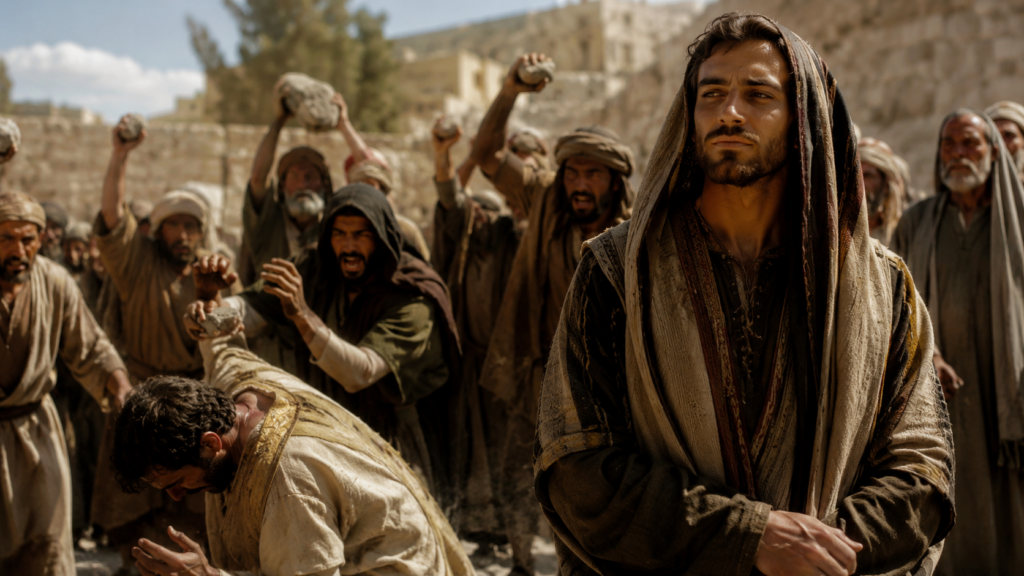
Luke now introduces a man destined to play a decisive role in the history of Christianity: Saul of Tarsus. Nothing in the attitude of this young Pharisee, approving of Stephen’s death, would lead anyone to imagine that this avowed enemy of the church would become one of its greatest missionaries and one of the leading figures of nascent Christianity. Yet the Lord had already settled his purpose and would make him “a chosen instrument” (Acts 9.15).
The note that Saul was “consenting” to Stephen’s death (Acts 8.1) is the first appearance of the man who would become the apostle Paul. Luke makes no attempt to soften his past. On the contrary, the information reported in Acts is confirmed by Paul’s own statements, in which he acknowledges having persecuted the church violently (Acts 22.4-5 ; Acts 26.9-11 ; Galatians 1.13 ; Philippians 3.5-6). The former persecutor never tries to excuse himself, but readily recalls what he was before his encounter with Christ.
2- Saul’s religious zeal
The had given the impression that some of the were relatively moderate toward the disciples (Acts 5.34-39). Luke shows here, however, that this attitude should not be generalized.
Saul, himself a Pharisee and a disciple of (Acts 22.3), appears as one of the chief architects of the persecution. Nothing, however, allows us to claim that he was acting in line with his teacher’s advice. On the contrary, had urged caution and advised against any hasty action against the apostles. Saul seems rather to act under the impulse of his own religious zeal, convinced that he was defending the Law and the traditions of his fathers (Galatians 1.14).
Later, Paul himself would acknowledge that he had acted with sincere, though misguided, conviction (Acts 26.9). His example shows how religious zeal, when it is not enlightened by the truth, can lead to the gravest errors.
3- The beginning of a great persecution
Stephen’s death clearly marks a turning point. Until then, the had mostly sought to intimidate the apostles by arrests and punishments (Acts 4.1-3 ; Acts 5.17-18 ; Acts 5.40). From now on, a wider persecution fell upon the church in Jerusalem.
It is possible that the religious authorities, seeing that Stephen’s execution had provoked no significant reaction among the people, judged that the time had come to step up their action against a movement they regarded as dangerous. Luke indeed speaks of a “great persecution” (Acts 8.1), which suggests that the measures taken went far beyond the earlier arrests.
However, the exact circumstances of this escalation elude us, and the account does not allow us to specify every detail.
4- The scattering of the believers
Except for the apostles, the majority of the believers were scattered throughout the regions of Judea and Samaria (Acts 8.1). This detail is remarkable. The Twelve remained in Jerusalem despite the dangers, probably bearing witness to their determination to maintain a Christian presence in the city where the church had been born.
What might have seemed a catastrophe would prove to be one of the means by which God would carry out the missionary program announced by Jesus before his ascension (Acts 1.8). The persecution thus helped carry the Gospel beyond the limits of Jerusalem.
5- Stephen’s funeral
Before continuing his account, Luke briefly mentions Stephen’s funeral. Devout men paid him their last respects and publicly expressed their deep grief (Acts 8.2).
This detail shows how highly Stephen was esteemed. His witness had deeply marked the believers, and his funeral was accompanied by great lamentation. The loss of the first martyr was surely a painful trial for the young church.
The disciples had probably hoped for his deliverance, but God had chosen to grant him the grace of remaining faithful unto death, in keeping with the promise made to persecuted believers (Revelation 2.10).
6- Saul, persecutor of the church
Luke then returns to Saul’s activity, presenting him as one of the chief agents of the persecution. He “was ravaging the church” (Acts 8.3). The verb used evokes an especially violent action and underlines the relentlessness of the future apostle against the disciples of Christ.
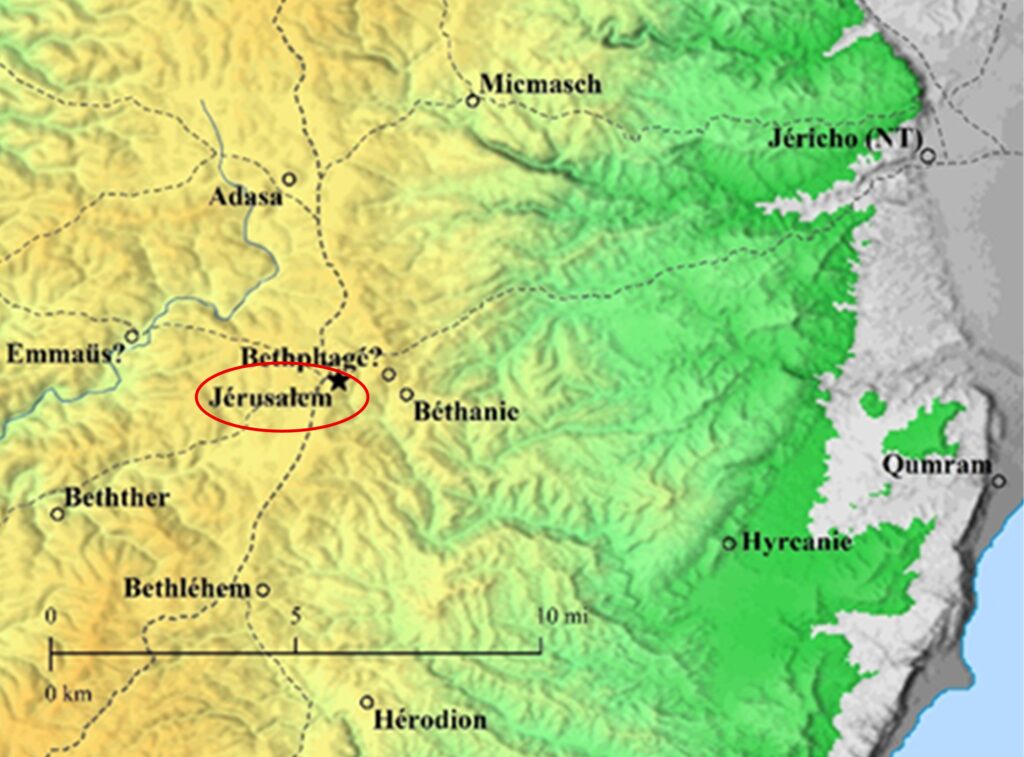
Saul is not content with approving of Stephen’s death. He enters house after house, drags off men and women from their families, and has them thrown into prison (Acts 8.3). His zeal would soon take him beyond Jerusalem, as far as Damascus (Acts 9.1-2).
The irony of history is plain: the one who seeks to destroy the church will soon become its most ardent defender.
7- An apparent defeat that becomes a victory
In just a few verses, Luke describes one of the darkest periods in the history of the early church. Yet this persecution would by no means cause its disappearance.
On the contrary, what seemed to be a defeat contributed to the spread of the Gospel beyond Jerusalem. In Luke’s perspective, human opposition cannot prevent the fulfillment of God’s purpose. Paradoxically, persecution becomes one of the means by which the Christian witness extends into new regions.
Thus the story of Saul and the scattering of the believers already prepare a new stage in the book of Acts, in which the Gospel will continue to advance according to the program announced by the Lord (Acts 1.8).
(Acts 1.8) – The missionary program announced by Jesus
(Acts 4.1-3) ; (Acts 5.17-18) ; (Acts 5.40) – The first persecutions against the apostles
(Acts 5.34-39) ; (Acts 22.3) – and his disciple Saul
(Acts 8.1) – The great persecution and the scattering of the believers
(Acts 8.2) – Stephen’s funeral
(Acts 8.3) ; (Acts 9.1-2) – Saul, persecutor of the church
(Acts 9.15) – Saul, an instrument chosen by God
(Acts 22.4-5) ; (Acts 26.9) ; (Acts 26.9-11) ; (Galatians 1.13) ; (Galatians 1.14) ; (Philippians 3.5-6) – Paul’s past as a persecutor and his religious zeal
(Revelation 2.10) – Faithfulness unto death
The
The
The
An