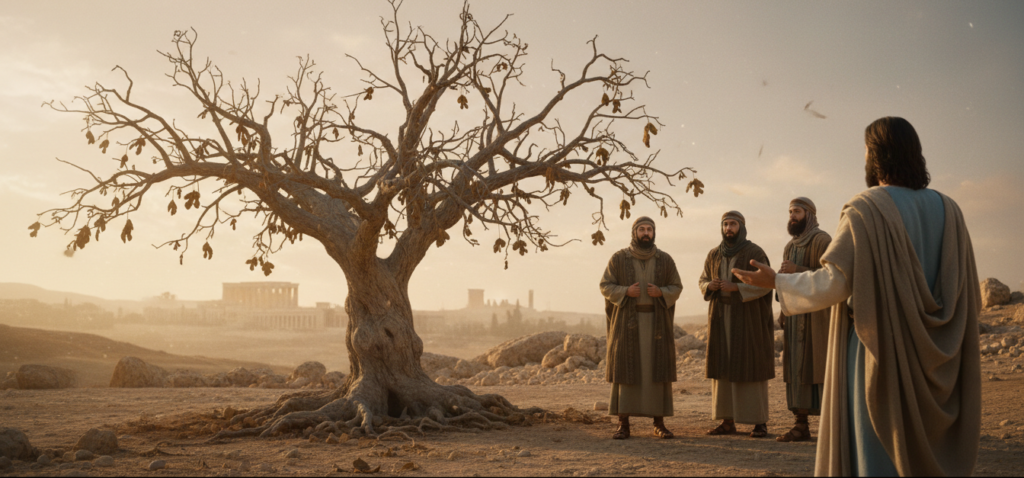


It was only the next morning that the disciples saw the fulfillment of their Master’s word: the was completely withered. The surprise was total, for they had never before witnessed such a sign. The Messiah Jesus then seized the opportunity to teach the power of faith and the importance of forgiveness, a theme that Peter emphasizes in particular in his testimony passed on by Mark (Mark 11.20-26).
Mark reports Peter’s questions, although he himself was not present at the scene; the Apostle, co-author of the Gospel, remembered precisely his own reactions and above all the Master’s answers. Matthew specifies that the withered immediately, whereas Mark notes that the disciples only noticed it the next day, probably because, the evening before, darkness still hid the effect of the judgment (Matthew 21.18-22).
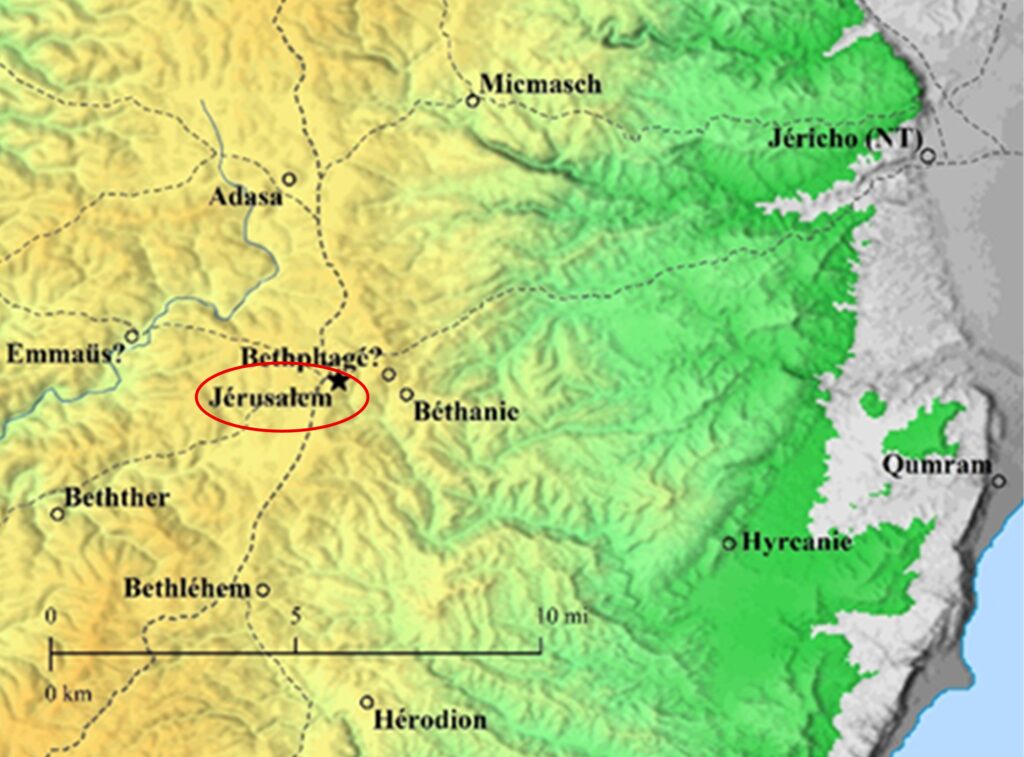
As we have already noted, the Messiah Jesus never performed miracles for the sole purpose of demonstrating his power. They always carry a spiritual meaning. Here it is a curse, which makes it an exceptional case. The “mountain” Jesus speaks of most likely refers to the , which they crossed every day on their way from Bethany and Bethphage, “the house of ,” where they had borrowed the donkey and her colt (Mark 11.1-3).
Beyond the teaching on faith and forgiveness, the disciples could not miss the symbolic significance: in the Scriptures, the represents Israel (Hosea 9.10, Joel 1.7). The withering of the thus evoked the judgment that would fall on the nation, a warning that would be fulfilled about forty years later with the destruction of the Temple and of the land and the fall of Masada.
Yet when everything would be destroyed, what the Messiah Jesus puts forward would remain: faith, and forgiveness.