
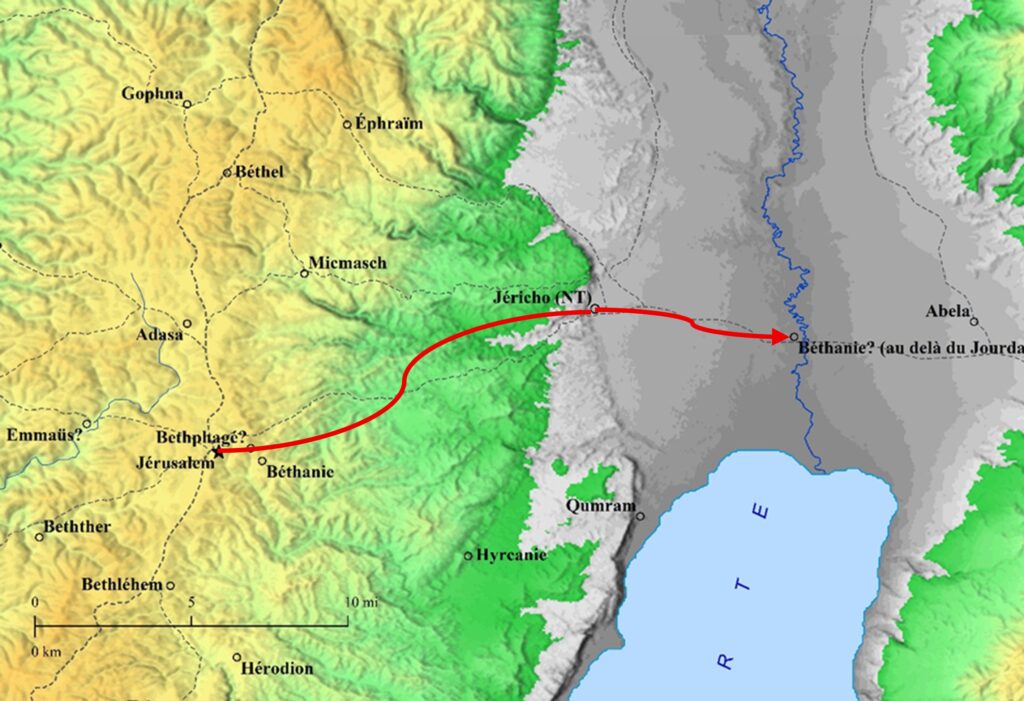
The healing of the man born blind in John 9.1-34 takes place in Jerusalem, probably near the . The close link between this healing and the Feast of Sukkot should imply that it took place during that feast, when the Messiah Jesus was in Jerusalem (PER206) in October AD 32.
Now, nothing says that the Messiah Jesus would perform healings in direct connection with current events. We can hardly imagine the Messiah Jesus timing healings according to the feast he was attending.
This is why we think John groups together here facts that follow a logic rather than a chronology. Thus this healing could very well have taken place after the Feast of Sukkot, between October and December AD 32.
The Messiah Jesus adjusted his discourses to the feast in order to give the story its true meaning, in connection with the prophetic sense, as we have mentioned.
But it is no coincidence that John places this discourse here, thus giving it an undeniable sense of prophetic fulfillment.
This context is essential for understanding the symbolic and theological significance of the account.
Geographical location: Jerusalem and the (John 9.7)
Starting point: the Messiah Jesus passes the blind man, probably in the streets of Jerusalem, where beggars settled to ask for alms.
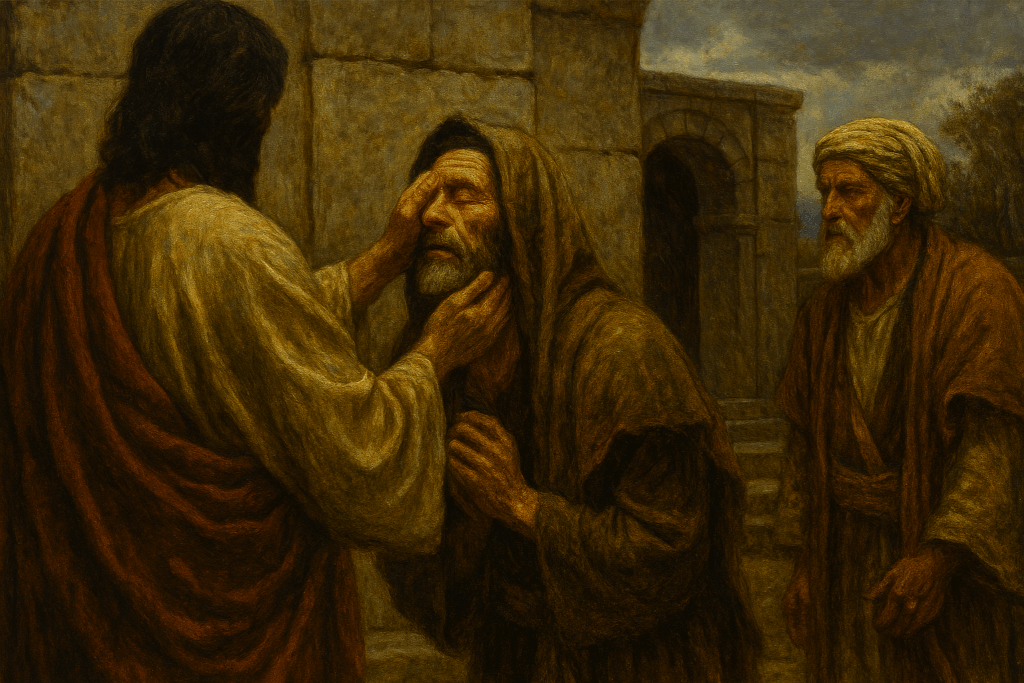
Act of healing: the Messiah Jesus makes mud with his , applies it to the man’s eyes, then tells him to go and wash in the (John 9.7).
Meaning of the place: The name Siloam means “sent,” which reinforces the link with the Messiah Jesus, the One sent by the Father. This pool was located south of Jerusalem, fed by Hezekiah’s tunnel, and used for ritual ablutions.
Temporal context: the Feast of Tabernacles
The account follows on from John 7.8-9 and John 7.14, where the Messiah Jesus teaches in the Temple during the Feast of Tabernacles (Sukkot), a celebration marked by symbols of light and water.
The Messiah Jesus declares:
This declaration is put into action in John 9.1-34, where he opens the eyes of a blind man, illustrating his mission as the light.
The account of John 9.1-34 belongs to a narrative sequence that begins with the Feast of Tabernacles (John 7.2) and continues to the (John 10.22). This suggests that John 9.1-34 takes place between these two feasts, most likely just before the , in the same geographical setting: Jerusalem.
Narrative and theological context
Debate about sin: The disciples ask whether the blind man is being punished for his own sins or those of his parents. The Messiah Jesus rejects this punitive logic and declares that it is so that the works of God may be displayed.
Controversy with the : After the healing, the man is questioned several times by the religious authorities, who refuse to believe the miracle and reject the Messiah Jesus.
Spiritual progress: The blind man moves from physical healing to spiritual revelation, affirming his faith in Jesus as the Son of God (John 9.38).
In summary
Place: Jerusalem, near the .
Time: between the Feast of Tabernacles (John 7.32) and that of Dedication; according to our analysis, this event takes place shortly before the latter (John 10.22).
Central theme: the Messiah Jesus, light of the world, heals a man born blind to reveal the power of God and denounce the spiritual blindness of the religious leaders.