
This passage sits poorly with the hostile climate described in John 8.59 around the Messiah Jesus. It seems unlikely that a Pharisee would have invited the Messiah Jesus to join him and his friends, when the latter was actively being sought for arrest, and the had already tried to have him stoned.
Placing this event here suggests that the had at first acted hastily, in the heat of anger, and were now devising a more considered strategy, still aimed at removing the Messiah Jesus. This period would be marked by a relative lull for him, and the invitation made by this Pharisee thus fits within this new plan.
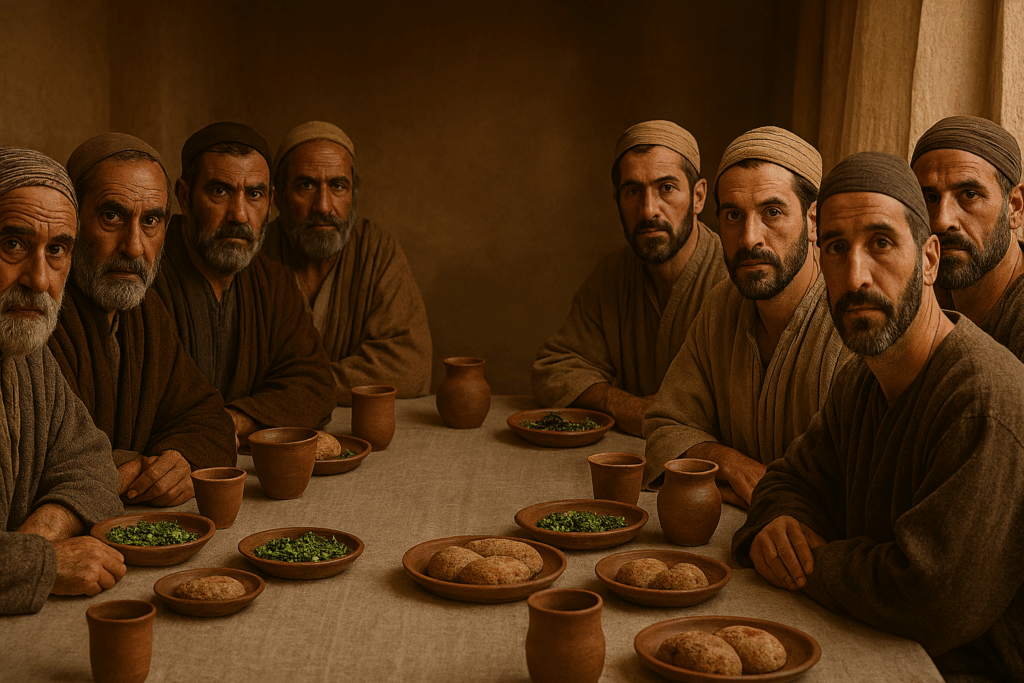
This lunch seemed to resemble a banquet to which the Messiah Jesus had been invited on the spur of the moment. This kind of meal could be regarded as a social or political act. It appears that the Pharisee and his guests saw this invitation as an opportunity to put the Master to the test, in order to gather material that could later justify an accusation before the , in the presence of a large number of witnesses.
It appears that the Messiah Jesus was fully aware of the inquisitorial nature of this meal, yet chose to accept it all the same. It is likely that several disciples were present at his side, but the central figure of the event remained the Messiah Jesus.
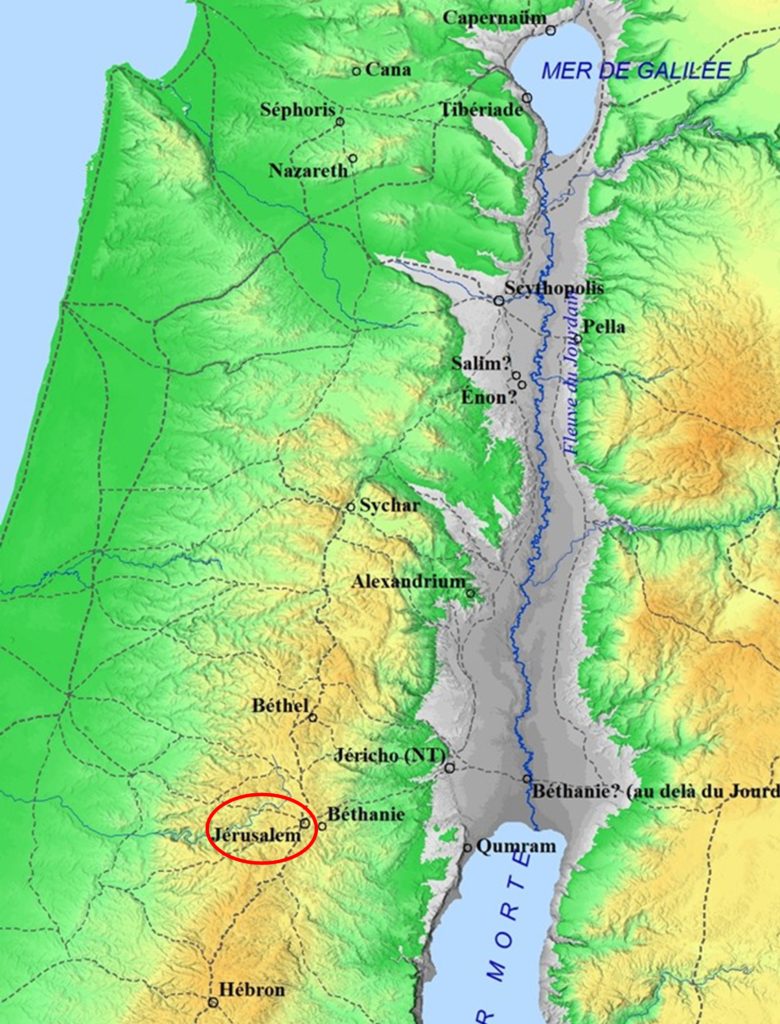
No precise information is given about the location, but the description suggests that the Pharisee's home was spacious, which probably rules out the surrounding villages. It is therefore plausible to place the scene in Jerusalem.
We have observed that went to Bethany, beyond the Jordan, to meet the Messiah Jesus (PER222). It is plausible to assume that an invitation was extended to him on that occasion, which could explain why, on his way to that meeting, probably one or two days early and accompanied by a few disciples, he took the opportunity to see Martha, Mary and Lazarus again. Indeed, Bethany, their village, lies on the road to Jerusalem.
It should be noted that, although some religious leaders envisaged a swift execution, not all the shared this view. A significant number of them insisted on the application of the law (see John 7.51). In this context, it is possible that a change of strategy was adopted, while the initial objective of putting the Messiah Jesus to death was maintained.
Moreover, the Messiah Jesus, well aware of the assassination attempt orchestrated by the , must have received assurances (PER219), surely spiritual ones, to contemplate this journey to Jerusalem. The stop in Bethany could also have been a way of confirming the change in attitude of these men, thanks to information from sympathizers of his cause.
The Messiah Jesus knew the hostile attitude of the religious authorities toward him, for the threats had been repeated regularly for more than a year and a half, particularly in Jerusalem. This assurance that we mention could be a spiritual revelation: he knew that his hour had not yet come.