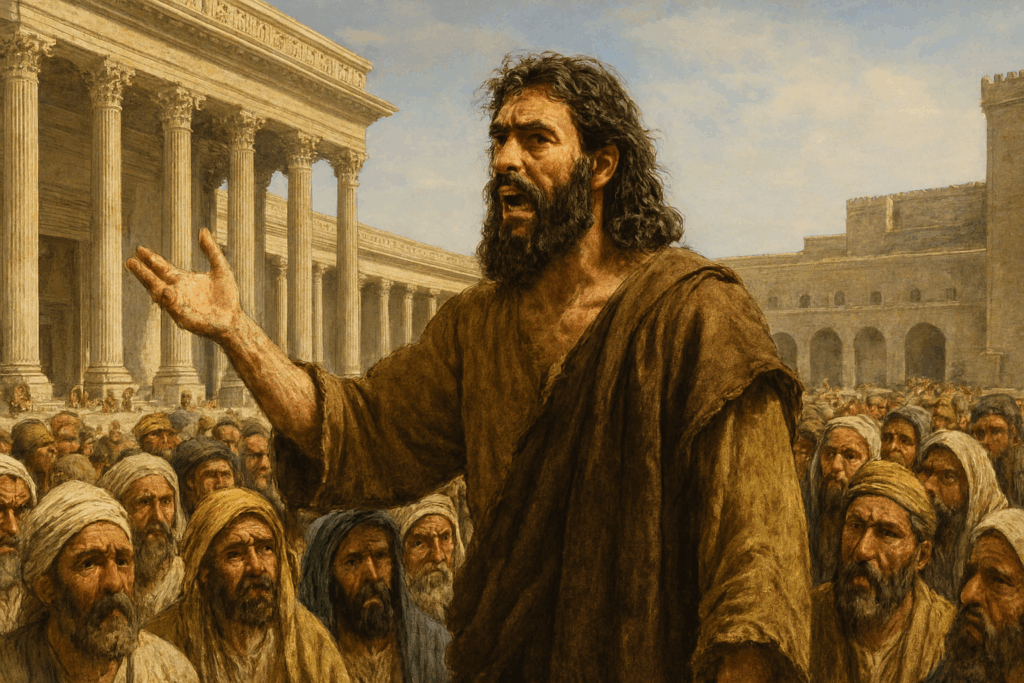

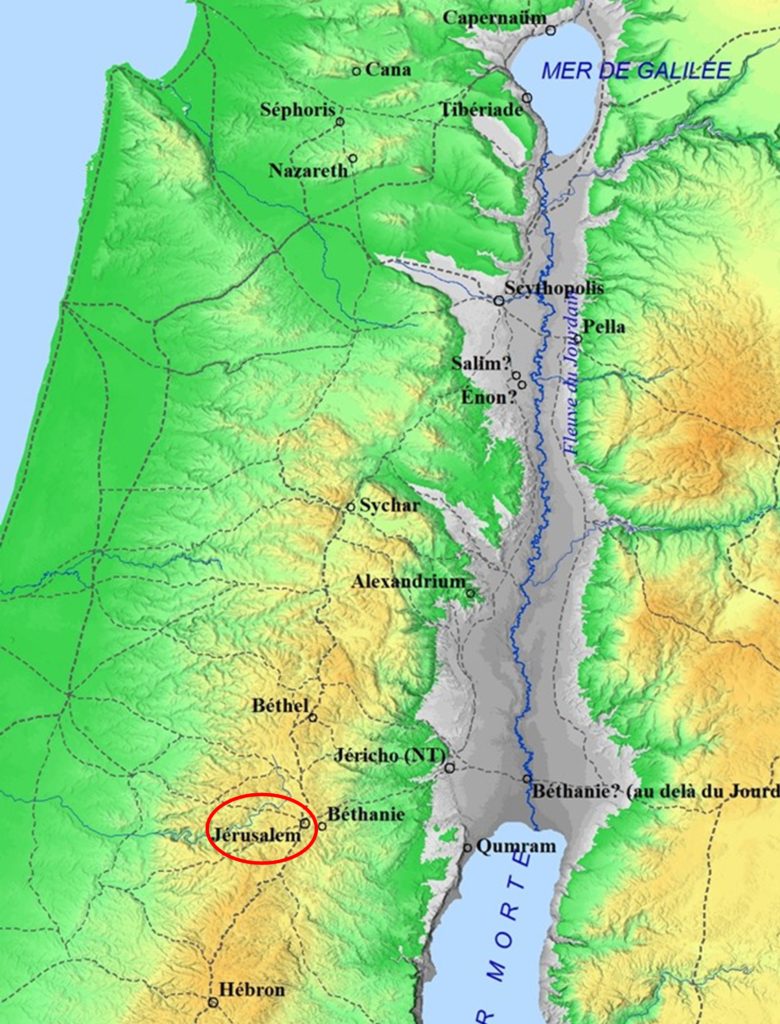
So we are in Jerusalem, most likely on the Temple Mount, a favorable place to meet the crowd but also, unfortunately, opponents.
Everything begins with the healing of a mute demoniac, and the crowd is amazed. However, a minority of that crowd, led by the , tries to turn the situation around and to discredit Jesus the Messiah.
It is by Beelzebul
Afterwards, this influential minority makes a request for a miracle (Luke 11.16), claiming that they want to believe in Jesus the Messiah. Yet their request aims more at obtaining an impressive spectacle than at nourishing a genuine step of faith. This shows that their request is not sincere, since they have already witnessed a concrete miracle: a mute man has just regained speech before their eyes. Rather than recognizing the spiritual significance of the event, they seek to divert attention and sow doubt around Jesus the Messiah.
They thus try to discredit Jesus the Messiah by urging him to produce a spectacular sign, convinced that he will refuse and that they can then call his legitimacy into question: “You see? He is not really a prophet.” This behavior reveals a strategy meant to preserve their religious authority and to avoid being challenged by the message of Jesus the Messiah. From then on, their attitude betrays a closedness to authentic faith, because they refuse to acknowledge the evidence already displayed before them.
Next, Luke 11.18-27 reports to us the . Witnesses of his miracles accuse him of collaborating with the devil. Jesus the Messiah, knowing their thoughts, answers with a series of logical and spiritual arguments.
The
Then a woman calls out to him (Luke 11.27-28).
The woman expresses a spontaneous word of praise to Jesus (Luke 11.27), glorifying his mother, Mary. It is a way of saying: “You are so extraordinary that your mother must be blessed!”
Jesus the Messiah does not reject the praise, but he redirects it (Luke 11.28). He affirms that true happiness comes not only from biological ties or motherhood, but from hearing and putting into practice the word of God.
This passage extends the blessing to all disciples. It shows that true closeness to Jesus the Messiah does not depend on birth, but on obedience to God.
Next, Jesus the Messiah answers those who still ask for a miracle (Luke 11.29-32).
The to those who ask for a miracle
Next, to conclude this discourse, Luke 11.33-36 relates a about the light that echoes the passage in Matthew 5.14-16, mentioned during the Sermon on the Mount delivered about a year and a half earlier in Galilee near Capernaum.
The
In conclusion, we would like to return to the development of the argument in this discourse of Jesus the Messiah, reported in Luke 11.14-36. We will show that there is a link between this argument and the teaching on prayer, presented to the disciples immediately before this discourse (Luke 11.1-13).
L’