ANN114

I will build my Church

This article analyzes the theological implications of the passage in Matthew 16.17-19, where Jesus speaks of “my Church”. It explores Peter’s role as a key to understanding ecclesial authority in the New Testament context, while stressing that the ultimate authority is that of Christ.

35 min Church Peter authority Matthew 16 exegesis 37 verses 11 books

Further information

Introduction

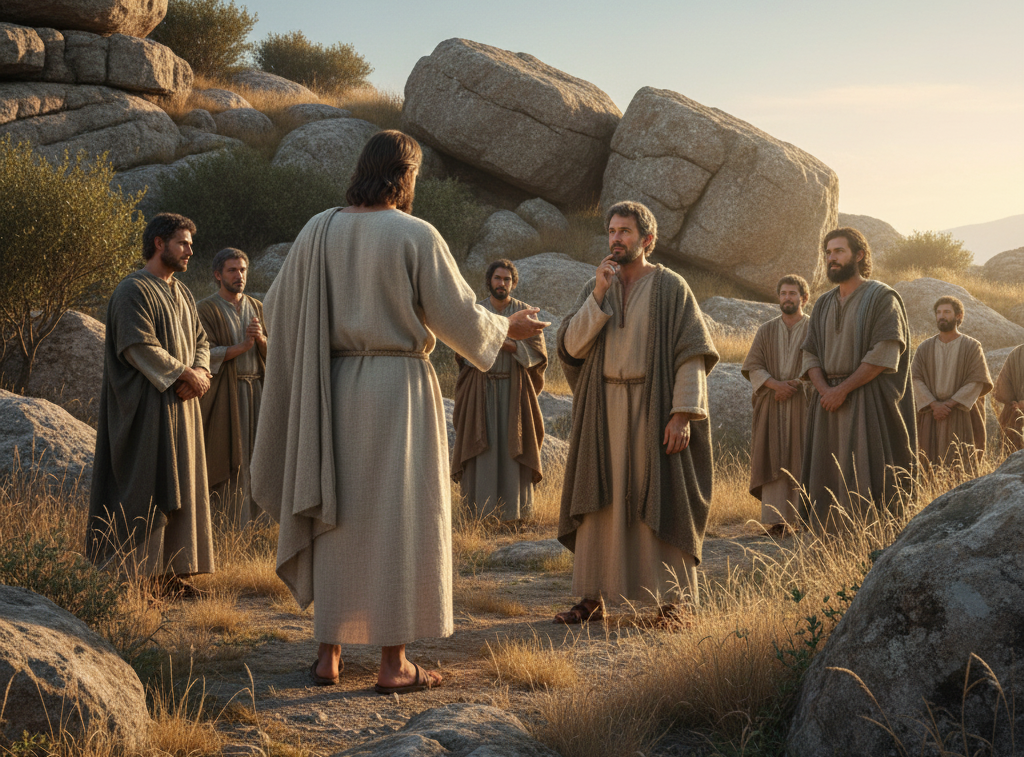
In Matthew 16.17-19, the Messiah Jesus speaks for the first time the expression “my Church” (ekklesia) and associates Peter with several major images: the rock, the keys of the kingdom of heaven, and the power to “bind” and to “loose”. This passage is one of the most debated texts of New Testament exegesis because of its important ecclesiological and doctrinal implications.

The aim of this study is precisely to define rigorously the role attributed to Peter in this passage and to better understand the exact scope of the words spoken by Jesus. The point is neither to minimize Peter’s importance in the beginnings of the early Church, nor to attribute to the text statements that it does not explicitly make. A careful analysis of the immediate context, of the vocabulary used and of the whole witness of the New Testament therefore appears necessary in order to place these declarations in their historical and theological setting.

The study of the Scriptures shows that Peter indeed holds a major function in the first developments of Christianity, notably in the initial proclamation of the Gospel and the opening of the Kingdom to the Jews and then to the nations (Acts 2.14-41 ; Acts 10.34-48). However, the New Testament affirms at the same time that the supreme authority remains that of Christ, presented as the and the head of the Church (Ephesians 2.20 ; Colossians 1.18). The authority entrusted to Peter thus appears real but derived, exercised within the framework of the apostolic mission and in accord with the divine will.

I. The text of Matthew

Here is the complete text. Neither Mark, nor Luke, nor John report these words of the Master.

In this passage, Jesus commends Peter for having recognized his true identity:

Matthew 16.16 (King James Version) :
And Simon Peter answered and said, Thou art the Christ, the Son of the living God.

He attributes this revelation to a divine source rather than to human understanding. Then the Messiah Jesus declares:

Matthew 16.18 (King James Version) :
And I say also unto thee, That thou art Peter, and upon this rock I will build my church; and the gates of hell shall not prevail against it.

He confers on him a particular authority by giving him “the keys of the kingdom of heaven”, with the power to bind and to loose on earth and in heaven.

Matthew 16.19 (King James Version) :
And I will give unto thee the keys of the kingdom of heaven: and whatsoever thou shalt bind on earth shall be bound in heaven: and whatsoever thou shalt loose on earth shall be loosed in heaven.

This text is interpreted in various ways by exegetes, and it must be acknowledged that its explanation remains complex. Consequently, a thorough study of these words of the Master, as well as of the context in which they were spoken, is indispensable in order to understand the intentions of the Messiah Jesus.

II. Let us now examine Matthew 16.17

Peter had just answered the question of the Messiah Jesus:

And here is his answer:

Peter speaks up, as often happens. However, do his words reflect the position of the group or only his personal opinion? In view of the Master’s answer, it seems more probable that Peter received a personal revelation, which was no doubt approved by the other disciples.

We are therefore in a particular context where the disciples’ understanding is enlightened under divine influence. This recalls the principle of the blind man of (see the pericope PER187 : The blind man of Bethsaida) who regained his sight in two stages. At this moment, the disciples together take a significant step. They manage to express their thoughts clearly. It is Peter who initiates this move.

One detail in the Master’s answer is noteworthy. He calls Peter by his birth name, Simon, instead of the name he had given him (John 1.42). Moreover, we learn that Simon’s father was named Jonah.

III. Let us now examine Matthew 16.18

We mentioned earlier that the Messiah Jesus had used Peter’s former name, Simon. Now he uses his new name, Cephas in Aramaic, which is translated Peter.

In Matthew 16.17, the Messiah Jesus uses the name Simon to recall Peter’s original identity before his apostolic mission. By calling him Simon, son of Jonah, he indicates that this revelation comes not from his human heritage, but from God.

Then, in Matthew 16.18, the Messiah Jesus uses the name Peter (Petros in Greek), which means rock, to mark a turning point in his role. This symbolizes the mission that the Messiah entrusts to Peter: to be a foundation for the Church. This method is common in the Bible, where a often accompanies a spiritual transformation (for example, Abram becoming Abraham in Genesis 17.5, or Jacob becoming Israel in Genesis 32.28 and Genesis 35.10).

In the translation, the term Peter is distinct from the term rock.

There is indeed a notable difference in the original Greek of the verse Matthew 16.18 between the terms Peter and rock.

Peter is translated from the Greek “Petros” (Πέτρος), which designates a stone or a pebble, often interpreted as a movable or detached stone.

Rock is translated from the Greek “Petra” (πέτρα), which designates a massive rock, a solid and unshakable foundation.

It is thus possible to consider that the Church rests on a solid foundation. However, this foundation is not Peter, who represents only a small part of the whole. Peter contributes to the building of the Church, without being its main pillar.

According to our conclusion, the Gospel of Matthew, intended primarily for a Jewish audience, was first written in Aramaic and then translated into Greek, perhaps by Matthew himself. In Aramaic, a play on words is clearly perceptible but becomes blurred in Greek.

Restored in Aramaic, the statement would sound like this: “You are Kepha, and on this kepha I will build my Church.” The same term (kepha) designates both the name given to Simon and the “rock”. It is therefore a unitary play on words: the proper name and the image of the foundation answer each other without any distinct nuance.

This Aramaic subtext (Kepha/kepha) shows that Jesus deliberately makes Peter’s name and the image of the rock coincide. He associates Peter with the foundation, not as the ultimate foundation—which remains Christ—but as an inaugural instrument serving the true foundation: the confession that Jesus is the Messiah, the Son of God. 1 Peter 2.6-8 Ephesians 2.20-22

The second part of this verse indicates that the Church founded by Jesus will not be overcome by death or the forces of evil. Here are some elements of explanation:

“The realm of the dead” (Hades in Greek) refers to the kingdom of the dead, often interpreted as symbolizing the power of death or the forces of evil.

“The gates” symbolize authority and power. In Antiquity, the gates of a city represented its government and its strength. The Messiah Jesus is the gate (John 10.9)

“Will not prevail” means that the Church will remain victorious despite the attacks of evil and trials.

The Master’s prediction has come true and continues to come true; the Church is frequently the target of attacks, yet it remains resilient and does not weaken. The term Church does not designate a religious movement.

In Matthew 16.18, the Greek word translated as “Church” is ἐκκλησία (ekklesia). This term is composed of “ek” (out of) and “klesis” (call), which literally means “those who are called out of”. At that time, ekklesia designated an assembly or a gathering of citizens. In the Christian context, it refers to the community of believers gathered in Christ.

This term can in no way be associated solely with a religious movement, although the latter is part of it.

IV. Let us now examine Matthew 16.19

We observe that the same wording appears later in the text, but this time addressed to all the disciples and not exclusively to Peter. It should be noted that the part concerning the keys of the kingdom is not explicitly repeated.

However, John deals with the problem of rebuking a member who is at fault and even of excluding him from the Church if he persists in his error, which could correspond to the idea of giving the keys of the kingdom.

The verse of Matthew 16.19 is notable because it seems to confer on Peter a particular authority. This declaration, also present in Matthew 18.1, indicates the concept of a spiritual authority granted by the Messiah Jesus to his disciples. Thus, it is reasonable to conclude that this authority is granted to every disciple and not only to Peter, as an isolated reading of Matthew 16.19 might suggest.

Here is some explanation:

_ Binding and loosing : In Jewish tradition, these terms were used by the rabbis to designate the authority to forbid or to permit certain practices. Jesus applies this principle to the Church, conferring on it a doctrinal and disciplinary responsibility.

_ An action in accord with heaven : The wording “shall have been bound in heaven” suggests that the decisions made on earth must be in harmony with the divine will. It is not man who dictates to God, but the Church that acts in accord with what is already established in heaven.

_ Practical application: This power concerns in particular teaching, ecclesiastical discipline and the forgiveness of sins (see John 20.23).

We will address the analysis of the text of John 20.23 later.

Concerning the concept of the keys of the kingdom, it is essential to understand that it is inconceivable for an individual to have the ability to determine the salvation or perdition of a person for eternity. This prerogative is exclusively reserved to the Messiah Jesus. The role and power of man, in particular of the disciple, are limited to ratifying the decisions of heaven.

Is this statement biblically valid?

Only the Messiah Jesus can save a person

In this context, it is relevant to ask why the Messiah Jesus announces to Peter that he will give him the keys of the kingdom of heaven. It should be noted that the verb used is in the future tense, thus indicating that this power is not present but will be conferred later. This declaration can be related to the passage of the apostle Paul:

The apostle Paul reminds believers that the saints will be called to judge the world and encourages them to settle their disputes among themselves rather than resorting to outside courts. Consequently, it is possible to consider this gift of the keys of the kingdom and this judgment in a similar manner.

The prophet Isaiah 22.22 speaks of an honorable man, Eliakim, to whom the keys of the house of David will be handed.

This key symbolizes the authority and power to open and close doors definitively. In the immediate context of the chapter, it concerns Eliakim, a faithful servant who replaces Shebna as steward of the royal palace.

This verse is also interpreted as a messianic prophecy, referring to the Messiah Jesus, who holds the keys of the Kingdom of heaven and whose authority is confirmed in Revelation 3.7.

Yet it is indeed a question of God giving the keys to men, to disciples. In fact, we can understand that the disciple exercises the function of a minister or ambassador of the Messiah Jesus and consequently represents him and defends his interests.

We could say that the disciple, in his role as ambassador, applies no more and no less the instructions of God.

V. The words of John 20.23

We have established that human authority, notably that of the disciples, is limited to ratifying heavenly decisions. No individual has the ability to forgive or to retain the sins of his fellow men; this power is exclusively reserved to God.

Consequently, it is possible to affirm that the Messiah Jesus entrusts to his disciples the mission of proclaiming the Gospel, which includes the announcement of the forgiveness of sins for those who believe. Their role therefore consists in declaring this forgiveness, and not in granting it directly. Some theologians indicate that this verse is related to preaching and the call to repentance.

In this context, what is the appropriate opinion concerning the priestly absolution practiced by the priests of the Catholic Church?

Priestly absolution is the forgiveness of sins granted by a priest within the sacrament of reconciliation. According to Catholic doctrine, only an ordained priest has received the authority to forgive sins in the name of Christ. This forgiveness is given after the confession of faults and an act of sincere contrition.

Absolution is a spiritual act in which the priest “looses” the penitent from his sins, in application of the words of Jesus to his disciples: “If you forgive the sins of any, they are forgiven them” (John 20.23). The formula of absolution pronounced by the priest invokes divine mercy and reconciliation with God.

No person, whether pastor, priest or other, holds the power to forgive the sins of others. He can only, on the basis of the experience and testimony of the individual concerned, confirm that his sins are forgiven by God.

VI. The Catholic interpretation

According to the Catholic Church, Peter is considered the first Pope, which confers on him a significant importance in this religious tradition. Consequently, Peter would be seen as the first leader of the Church.

However, according to the Bible, Jesus is the head of the Church. Several passages of the New Testament support this interpretation:

These verses illustrate that the Church is compared to a body of which the Messiah Jesus is the head, thus signifying that he is its supreme authority and spiritual guide.

In Catholic doctrine, the Messiah Jesus is considered the supreme head of the Church as founder and spiritual head. The pope, as successor of the apostle Peter to whom Jesus is said to have entrusted the mission of guiding the Church, is perceived as his representative on earth.

The pope exercises a primacy over the Catholic Church and plays the role of spiritual guide, guaranteeing the doctrinal and pastoral unity of the faithful. He is also the head of the College of Bishops, responsible for the transmission of the faith and the governance of the Catholic Church.

Thus, in Catholic theology, the Messiah Jesus is seen as the divine head, while the pope is his vicar, responsible for leading the Catholic Church on earth.

It is a fact that Protestants do not recognize the authority of the pope and consider that the only head of the Church is Jesus Christ. According to their interpretation, they maintain that Peter did not receive an exclusive and exceptional power, but that this authority is shared by all the disciples, in accordance with the various verses mentioned above.

VII. The foundations of the Church

It is relevant to examine in the Bible the principle of the building of the Church, which is built on a rock. Here are some notable references:

In this context, the Church is described as founded on the apostles and the prophets, with Jesus the Messiah as the .

This passage emphasizes that the true rock or foundation is embodied by the Messiah Jesus himself, as indicated in Deuteronomy 32.4 and Isaiah 26.4.

Peter indicates that believers are seen as living stones in the spiritual structure. He does not present himself as a particular foundation.

Various biblical exegetes interpret Matthew 16.18 as a recognition of Peter’s specific role within the Church, while others maintain that the term “rock” refers primarily to Jesus Christ. In light of the verses cited, it appears that Peter claims no particular position within the Church. On the contrary, he acknowledges the preeminence of the Messiah Jesus, regarded as the only true rock.

Conclusion

The analysis of Matthew 16.17-19 highlights the particular importance given to Peter in the beginnings of the early Church. His confession of faith—“You are the Christ, the Son of the living God” (Matthew 16.16)—is a decisive moment in the Gospel account and marks a major stage in the progressive revelation of Jesus’ messianic identity. The book of Acts then confirms Peter’s preeminent place in the first phases of the expansion of nascent Christianity, notably at Pentecost (Acts 2.14-41) and in the opening of the Gospel to non-Jews (Acts 10.34-48).

However, the examination of the New Testament data leads us to distinguish Peter’s historical and spiritual role from the later institutional developments relating to the papacy. Indeed, no biblical text explicitly affirms that Peter exercised a universal and permanent jurisdiction over the whole Church, nor that a papal succession was established as a mandatory doctrinal principle. Such a reading rests mainly on a theological and ecclesiological construction developed gradually over the course of Christian history, rather than on an explicit formulation of the Scriptures.

Moreover, the New Testament repeatedly stresses that the ultimate foundation of the Church remains the Messiah Jesus himself (1 Corinthians 3.11). The apostles appear collectively as the founding witnesses of the Christian faith (Ephesians 2.20), while Peter presents himself as “a fellow elder” rather than as supreme head of the universal Church (1 Peter 5.1-3). Likewise, the account of the council of Jerusalem (Acts 15.13-22) shows a collegial leadership in which several leaders take part in the doctrinal discernment, James also holding a decisive position in the conclusion of the assembly (Acts 15.13-19).

Thus, the biblical texts allow us to recognize in Peter a major function in the history of Christian origins without necessarily imposing his identification as the first pope in the institutional and doctrinal sense developed later. This distinction appears essential in order to differentiate what explicitly belongs to the scriptural data from what proceeds from later theological interpretations.