
PER112

Jesus the Messiah’s departure for other towns

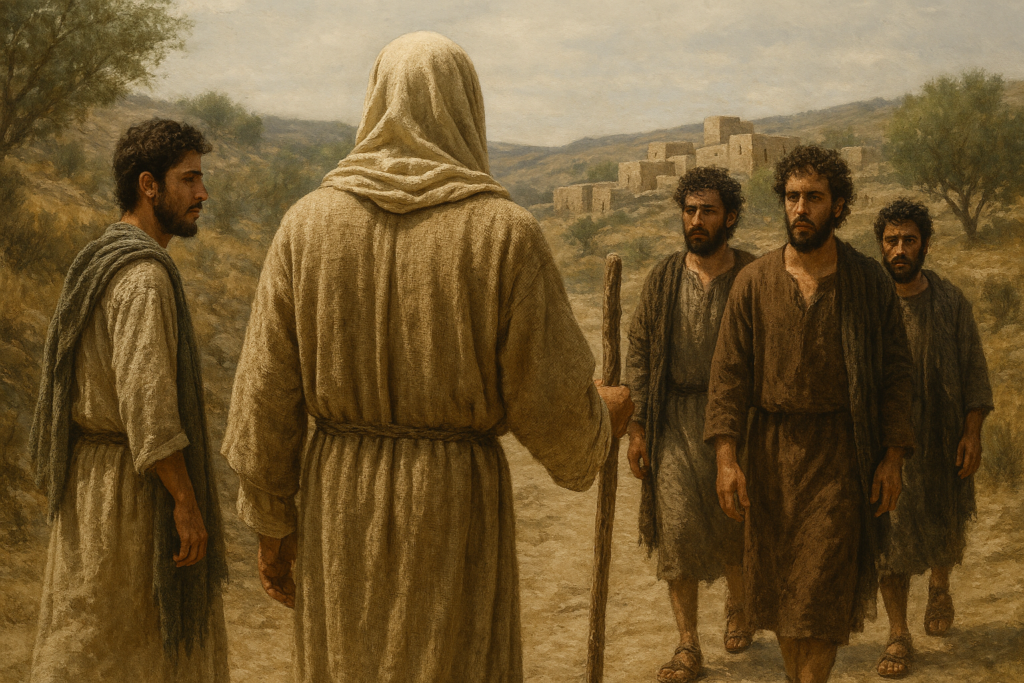
Pericope 112 analyses Jesus’ departure on a journey through the towns and villages of Galilee (Mt 11.1), dated to May–June AD31. Unlike John the Baptist, who remained in one place, Jesus actively travelled throughout the region to proclaim the Kingdom of Heaven, guided by the Holy Spirit, so as to reach even the poorest, who could not travel to him.

3 min Jesus’ departure itinerant missionary work Galilee Jesus’ ministry Kingdom of Heaven 1 verse 1 book

Resources

Biblical texts

Matthew
Matthew 11.1 (King James Version)

And it came to pass, when Jesus had made an end of commanding his twelve disciples, he departed thence to teach and to preach in their cities.

Mark
Mark (King James Version) not cited in the book
Luke
Luke (King James Version) not cited in the book
John
John (King James Version) not cited in the book

Technical details

Bar chart for the year 31

Place: The region of Galilee

Date: May or June AD31 (before the intense heat)

Method: We switch to Matthew

Note on the approach: Matthew specifies that Jesus the Messiah travelled throughout this region of Galilee

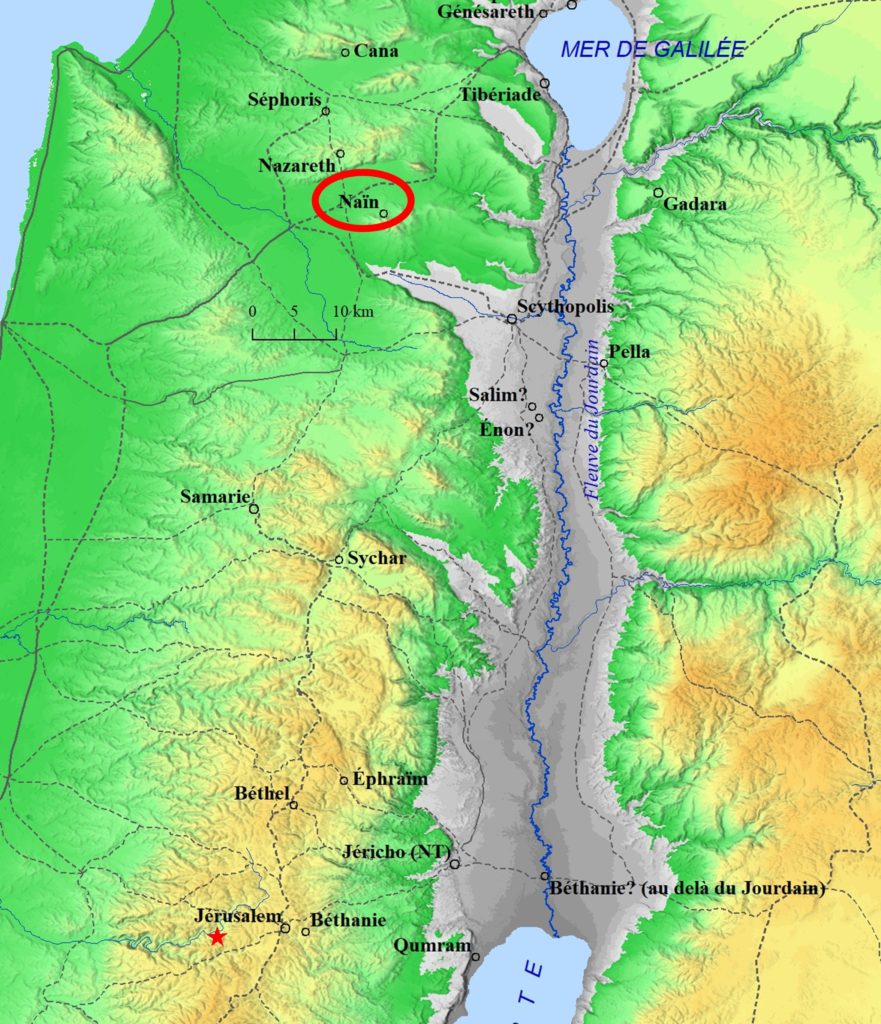
Map of Nain

After Nain, we understand that Jesus the Messiah travelled throughout the region before returning to Capernaum.

Jesus the Messiah’s departure for other towns

Jesus the Messiah’s departure for other towns

Comments

We have taken this verse out of its context because our deductions suggest that Jesus the Messiah did more than simply travel to Nain and back: he also used this journey to proclaim the good news of the Kingdom of Heaven throughout the region.

We observe that Jesus the Messiah did more than wait in Capernaum for the crowds to come to him. He went to the towns and villages of the region to proclaim his message there.

When examining the ministry of Jesus Christ, we notice several journeys in addition to the Passover pilgrimages to Jerusalem. Once winter was over and fine weather arrived, he would set out with his disciples and the women who handled the practical arrangements, visiting all the villages in the region and sometimes even beyond it.

We therefore see a clear difference from the ministry of John the Baptist, who had confined himself to Bethany or Aenon, depending on the waters of the Jordan needed to baptise people.

Was it really necessary for Jesus the Messiah to travel when large crowds were already flocking to him?

Our analyses suggest that he was guided by the Holy Spirit so that even the poorest, who could not afford to stop working in order to travel, could also receive his message.