
We have the impression that we are facing a declaration of war!
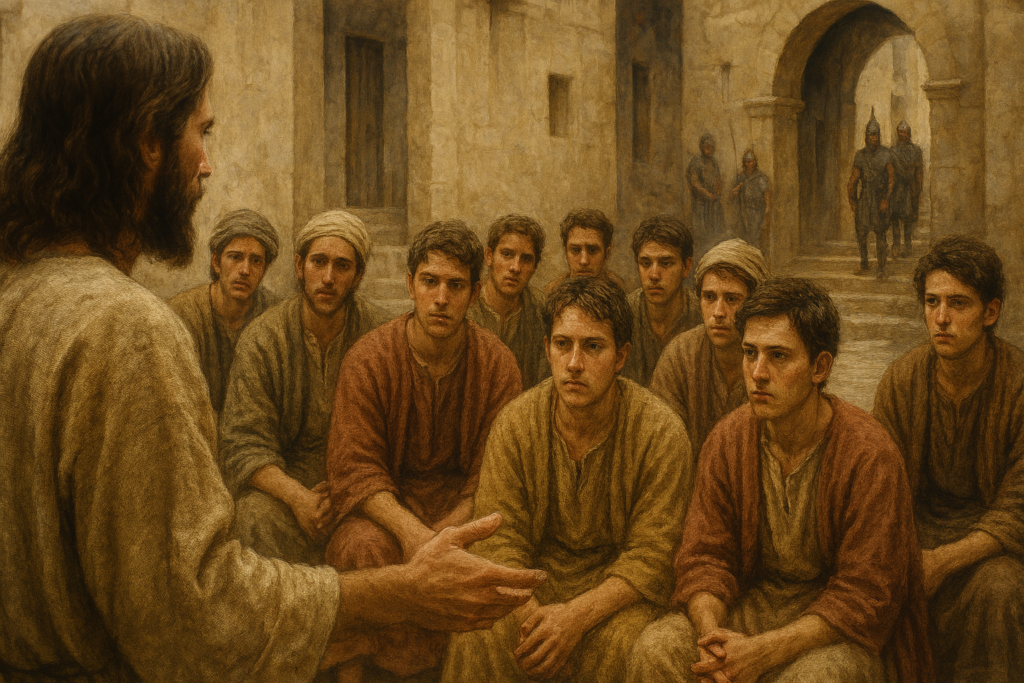
This long description brings to mind a final testament. Indeed, the apostles appear alone in this text. Matthew may have used this account of the apostles' appointment to add this entire discourse by Jesus the Messiah.
The rejoicing crowd, grateful people, praises and acclamations are in reality only the visible part of the work. The reality Matthew describes here evokes a fierce struggle, demonstrating the need for the Teacher's frequent times of prayer.
The apostles will reproduce everything their Teacher has done, drawing on his example to spread the message of salvation and perform miracles in God's name.
As part of their training, Jesus the Messiah describes here the difficulty of spiritual warfare. The deliverances, healings and jubilant crowds reported in these texts must not conceal this aspect. It is indeed a war!
We may imagine that this long list summarises various words of Jesus the Messiah spoken during evenings when these disciples received personal teaching (verse 38).
The role of apostle therefore demands total dedication. They could have refused this commitment and withdrawn, but they chose to commit themselves.
Judas Iscariot belonged to this group! We are convinced that he was present and, like his friends, committed himself to this path of service.
Jesus the Messiah will give his disciples and apostles a perfect model. His death on the cross will be the supreme example; indeed, several of these apostles will be martyred and murdered.
Could these words discourage disciples who are beginning their journey of faith?
This teaching, specifically intended for the disciples, aims to alert them to the reality of spiritual warfare. We do not live in a benevolent world eagerly awaiting God's grace. We are engaged in a struggle against the forces of evil, against Satan, and without the Holy Spirit's presence, the battle might seem unequal.
Matthew included these warnings from Jesus the Messiah after the selection of the twelve apostles. We may suppose that, following his usual practice of treating a subject fully rather than strictly following events chronologically, he gathered several of the Teacher's teachings here.
We therefore believe that Jesus the Messiah gradually warned his apostles of the difficulties they would encounter. When the Teacher chose them, they did not seem ready to hear such words.
It is important to remember that Matthew, the author of this Gospel, was one of the apostles and therefore heard all these words of Jesus the Messiah.