
PER048

The return to Galilee

The article describes Jesus’ return to Galilee, drawing on the Gospels and key locations such as Capernaum and Nazareth. It explains how these journeys marked the beginning of a more strategic and influential ministry.

9 min Jesus Galilee Capernaum disciples Nazareth 13 verses 3 books

Resources

Biblical texts

Matthew
Matthew 4.13 (King James Version)

And leaving Nazareth, he came and dwelt in Capernaum, which is upon the sea coast, in the borders of Zabulon and Nephthalim:

Mark
Mark (King James Version) not cited in the book
Luke
Luke 4.14-15 (King James Version)

And Jesus returned in the power of the Spirit into Galilee: and there went out a fame of him through all the region round about.

And he taught in their , being glorified of all.

John
John 4.43-45 (King James Version)

Now after two days he departed thence, and went into Galilee.

For Jesus himself testified, that a prophet hath no honour in his own country.

Then when he was come into Galilee, the Galilæans received him, having seen all the things that he did at Jerusalem at the feast: for they also went unto the feast.

Technical details

Bar chart for the year 31

Location: Galilee

Date: Arrival in January or February of the year 31

Method: We return to Matthew

Note on the method: Matthew, Luke and John give details of journeys in Galilee

Journeys in Galilee

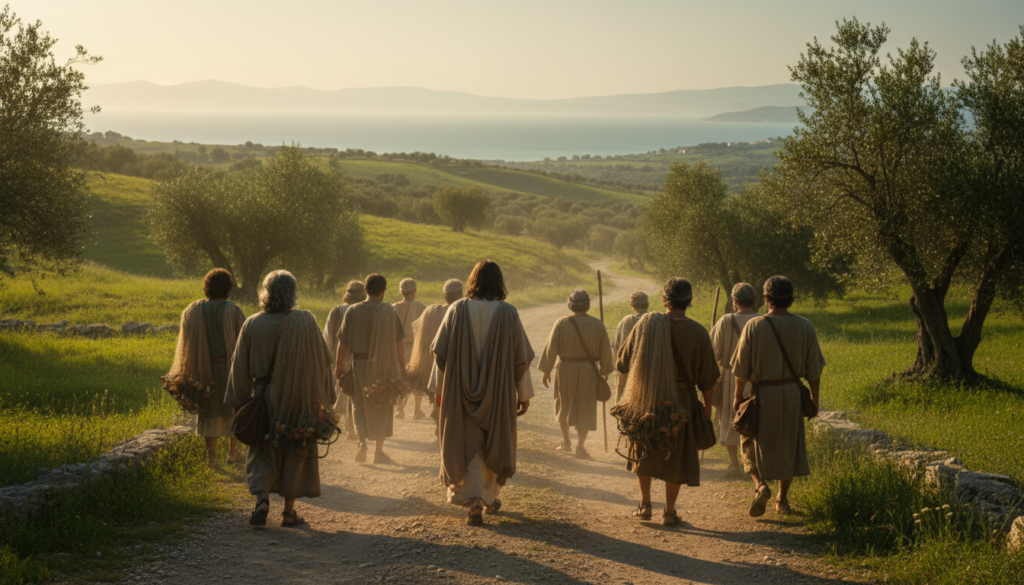
With John the Baptist under arrest, Jesus the Messiah travels to Galilee, his adopted homeland and, above all, that of his first disciples

Jesus the Messiah and his disciples arrive in Galilee

The return to Galilee

Comments

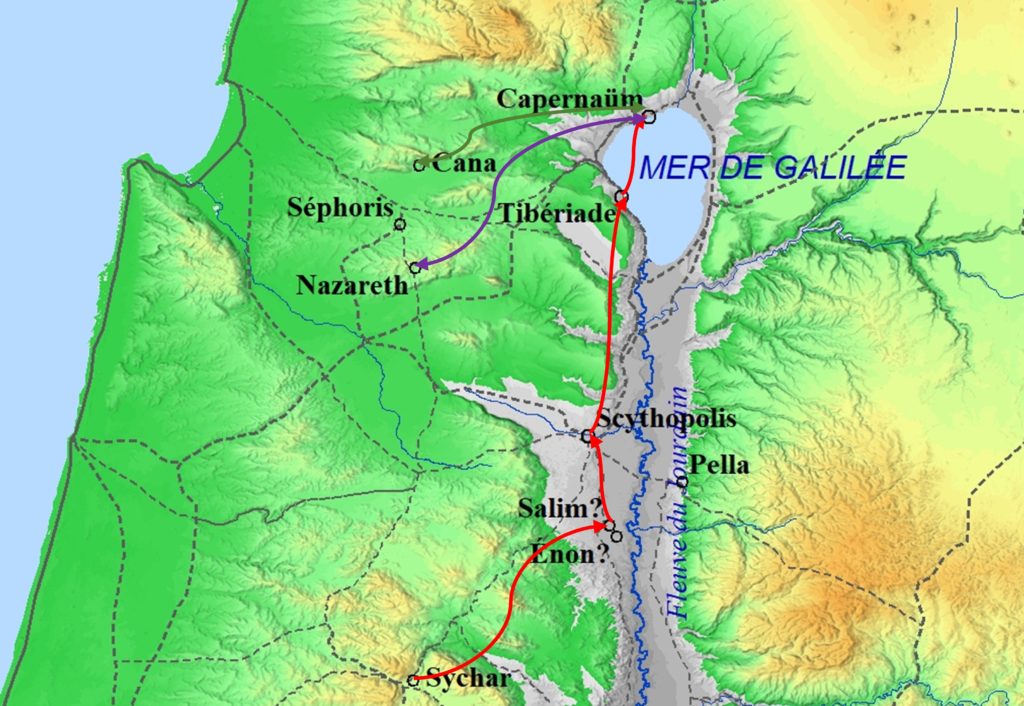
We are currently trying to establish precisely the order of towns Jesus the Messiah visited on returning to Galilee. After his stay in Sychar in Samaria, John mentions his departure for Galilee without further details. He reports these words of Jesus, spoken at Nazareth: ‘A prophet is not honoured in his own country’ (John 4.44).

During his visit to Nazareth, he refers to events in Capernaum (Luke 4.23). He therefore seems to have gone directly to Capernaum. This town is significant because most of the disciples have their families and work there. Jesus settles there and begins visiting neighbouring towns.

Matthew 4.13 tells us: ‘He left Nazareth and settled in Capernaum.’ This statement may seem to contradict Luke’s account of the miracles performed in Capernaum. According to Matthew, Jesus decided to live in Capernaum, a town he had already visited several times. Indeed, after the , he had stayed there with his family. He appears to have returned later and performed several miracles before going to Nazareth.

We can therefore establish the following chronology:

- Sychar (John 4.27-42)
- Capernaum (Luke 4.23)
- Nazareth (John 4.13-14 and John 4.44)
- Capernaum (John 4.13)
- (John 4.46)
- Capernaum (Matthew 4.18)

Capernaum thus becomes the centre of his activity. Jesus probably lived with Peter for a time. We can imagine that the disciples later lent him a house for greater privacy.