
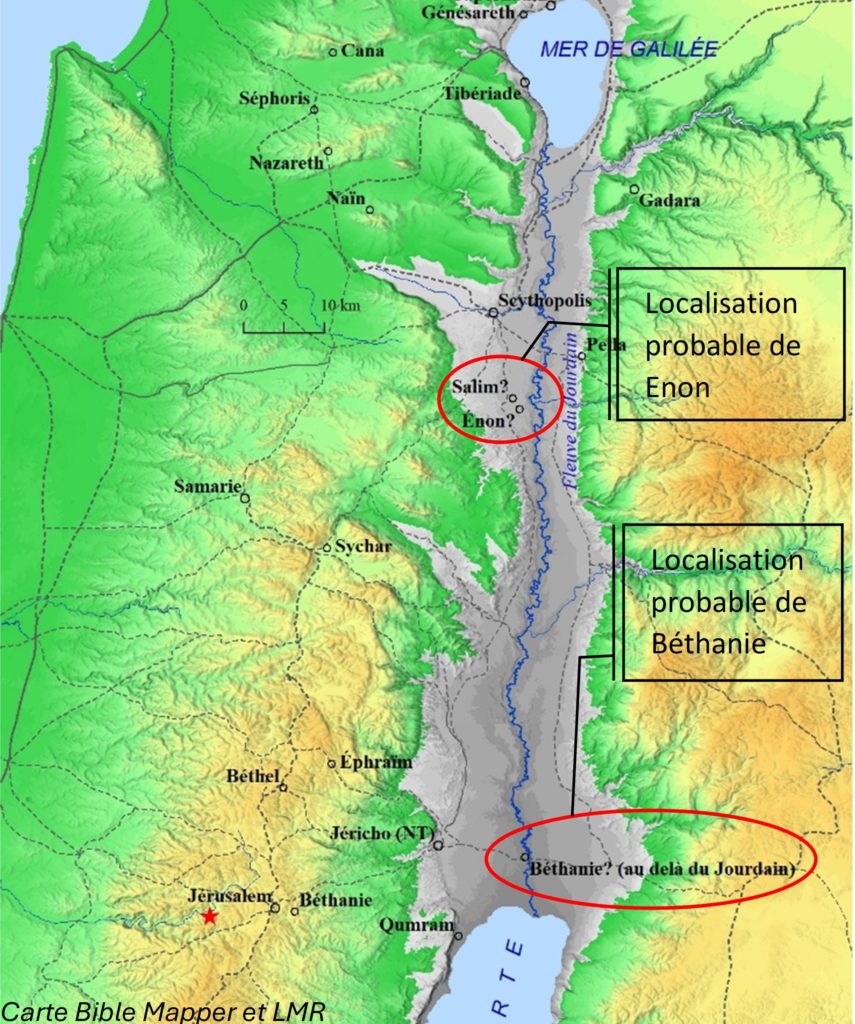
The disciples probably went to Jerusalem for the great festivals, as the law required. This habit changed, however, when they chose to follow John the Baptist. As mentioned earlier, John the Baptist seems to have stopped making pilgrimages to the Temple in Jerusalem, preferring to celebrate these festivals locally at Bethany.
John reports: ‘The next day Jesus decided to go to Galilee.’
In this context, where should we place the period of temptation that John does not mention? The text does not explicitly say that Jesus left for Galilee, only that he had made that decision. His plan was interrupted by a period of temptation. God’s Spirit led him to the Judean wilderness rather than Galilee.
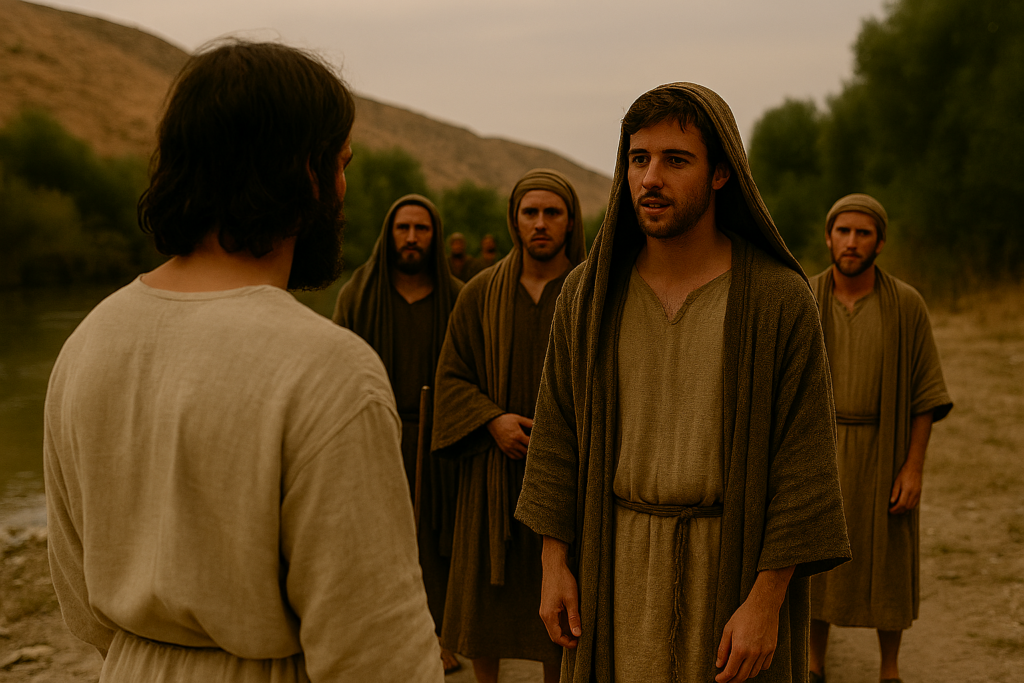
Before heading towards the Judean wilderness, he meets Philip, the fourth disciple. All these men, who would become Jesus’ disciples, had previously followed John the Baptist.
Can we therefore imagine that Jesus drew these men away from John the Baptist to make them his own disciples?
We know that Andrew, John, Simon Peter and Philip were waiting for the Messiah. In following John the Baptist, they knew they would one day have to leave him for the Messiah.
Could they have been disciples of both John the Baptist and Jesus at the same time?
Apparently not, because their main aim was to find the Messiah. John the Baptist himself did not view their departure as a personal betrayal, seeing himself more as a messenger announcing the Messiah’s coming than as a master.