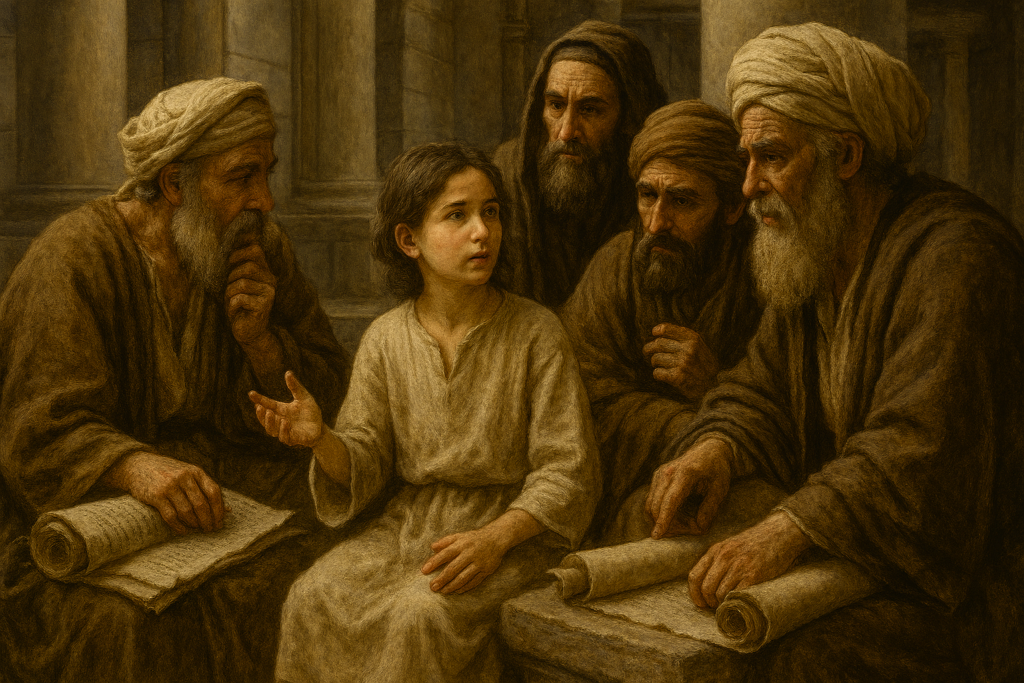
This passage, unique to Luke's Gospel, highlights the young Jesus' remarkable intelligence and abilities. Theophilus, the Gospel's recipient, must have been a learned man, making this detail particularly relevant to him. Looking at the account itself, we have reasons to be surprised:
How could parents not check sooner that their young child was with them?
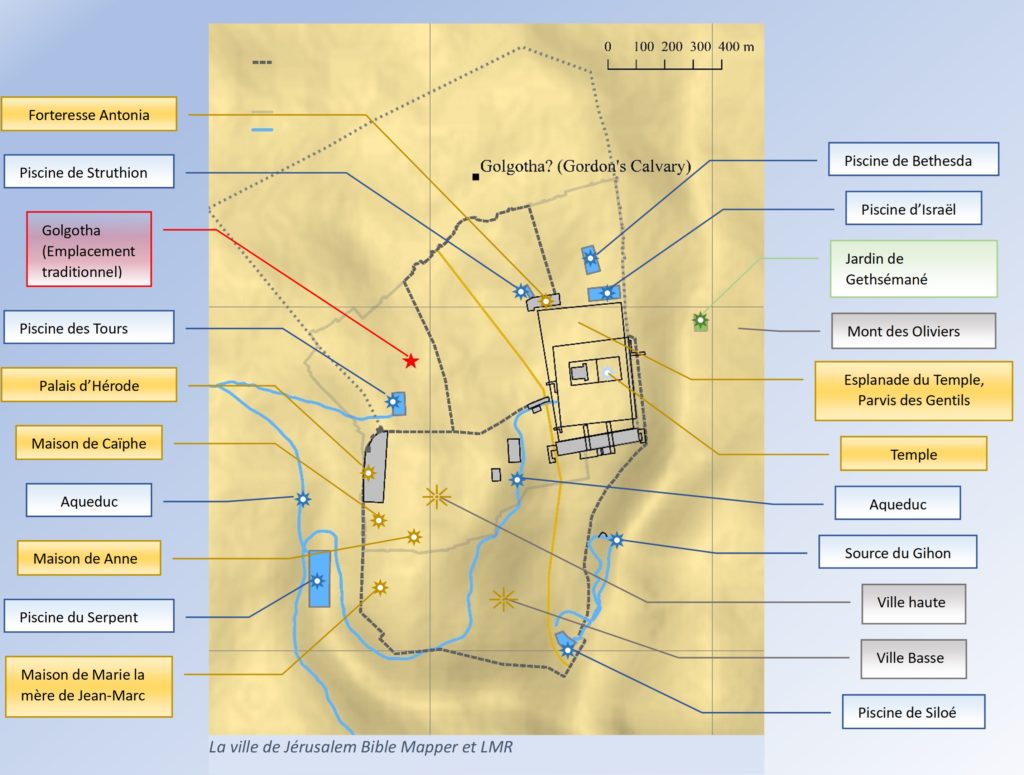
Indeed, on the return journey to Nazareth, at the end of the first day's travel, when everyone pitches their tents to sleep, Joseph and Mary discover Jesus is missing. To understand this account, we must consider the customs of the time. Jews travelled in groups to the Temple in Jerusalem, and the children played together.
In this atmosphere of trust, there was no reason to worry about the child's absence. They therefore had to turn back towards Jerusalem to look for Jesus, apparently during the night. The fact that the couple's other children are not mentioned does not mean they were not travelling with their parents. We believe the siblings were entrusted to relatives so as not to delay the return to Jerusalem.
It is on the third day that they find Jesus in the Temple.
Should we be surprised that his parents did not understand Jesus' explanation?
What does ‘being about my Father's business’ mean?
Mary and Joseph know that the child is exceptional, but in everyday life he is simply their eldest son. We note that the child Jesus distinguishes between his adoptive father Joseph and his true Father, God. He therefore knew where he came from and knew God's plan. At the end of his twelfth year, a boy attains religious adulthood. It is precisely then that Jesus is in the Temple.
Luke also notes that the child afterwards remains obedient to his parents and grows in wisdom, stature and favour before God. His physical and spiritual growth and development are thus like those of other children.
The child Jesus' discussion with Jewish religious teachers is important because it shows he knew Hebrew. A teacher of the law would never have begun a discussion of the law in Aramaic, still less with a Galilean child. Two points stand out: his knowledge of Hebrew and of the law!
Eighteen years will then pass without any details our writers.
Should we be surprised?
We have already explained these writers' aims, and information about those years would not have supported their arguments in any way.
With Luke's and Matthew's information, we now know that Jesus the Messiah did not suddenly and miraculously appear in history at thirty. Everything began as an ordinary life, with this difference: his true father is God himself.
Jesus the Messiah lives a life comparable to other Jews of his time. He worked as a carpenter with his father for several years to help provide for the family. Joseph's absence from the Gospels after this event suggests an early death.
In that case, the eldest Son, probably helped by the eldest of his brothers, must have taken over his father's work. Responsibility for the whole family therefore rested on him. His professional contacts helped him become familiar with Greek.
Since Nazareth could not provide enough work, they had to turn to the rapidly developing Greco-Roman city of Sepphoris, ten kilometres away. It would become Galilee's most important city and the regional capital.