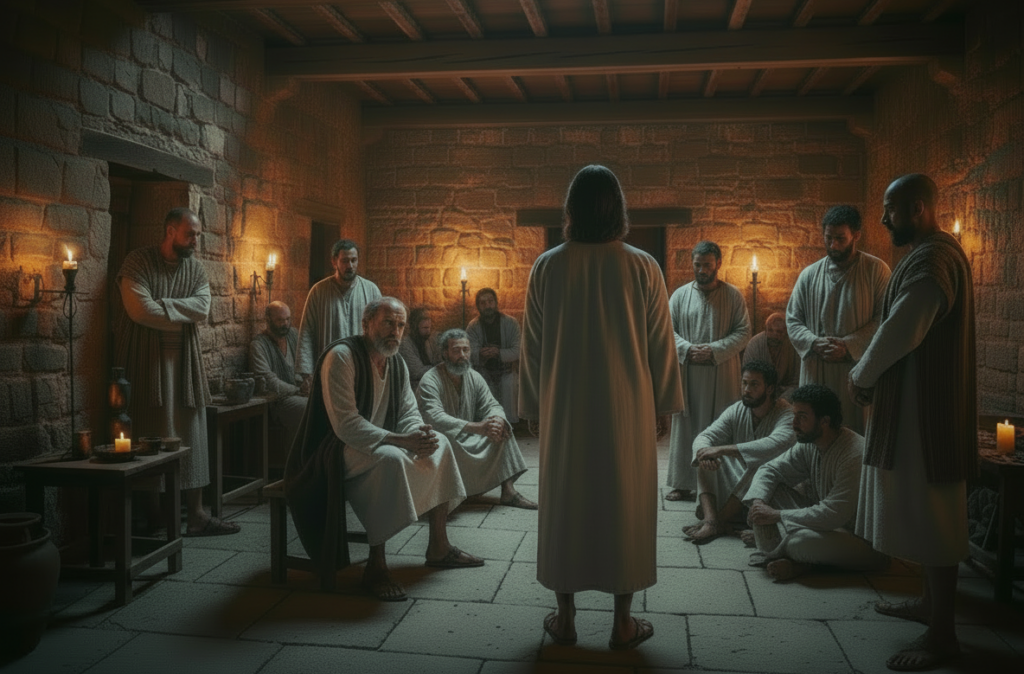

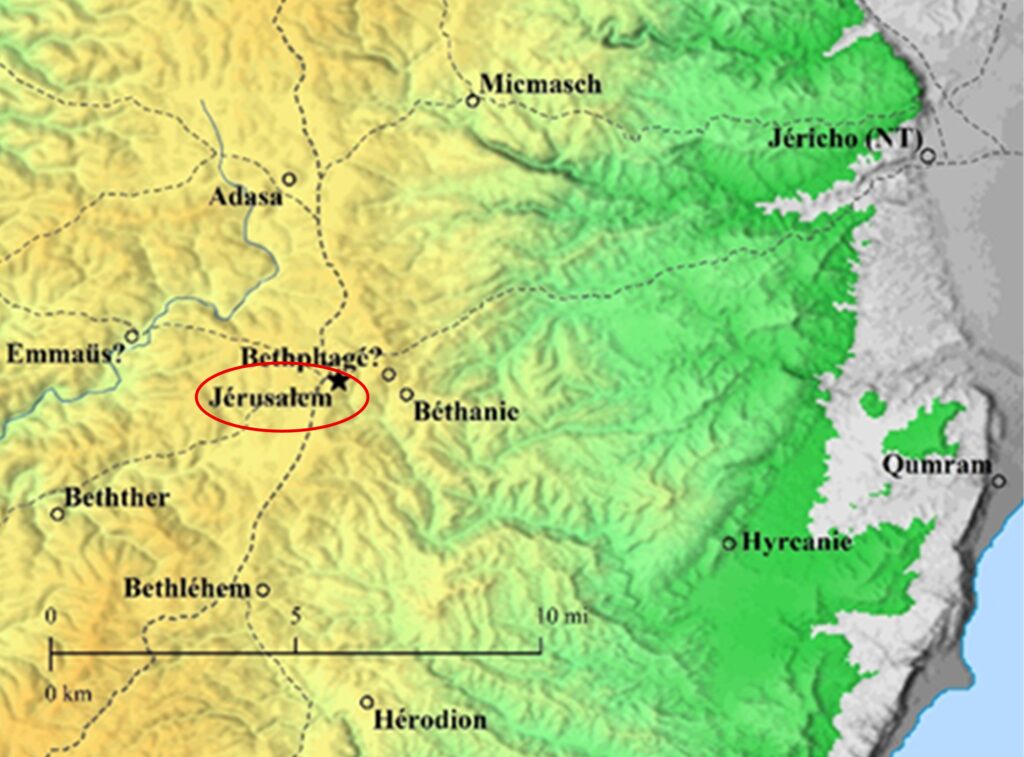

_3 The house is, in our view, that of Mary, the mother of John, surnamed Mark. Acts 12.12.
_4 The Passover meal begins on Thursday evening, after 6 p.m. It is already Friday for the Jews (Mark 14.17, Matthew 26.20, Luke 22.14-18). It is therefore not the official Seder, which will take place on Friday evening John 18.28.
_5 The meal ends on Friday morning before dawn, between midnight and 2:30 a.m.
_6 Judas Iscariot left before the end of this meal. John 13.30.
You can consult the complete chronology in the study ANN026 : The hour of the crucifixion.
Commentary:
In John 15.1-17, the Messiah Jesus continues his farewell discourse and uses the image of the vine and the branches to describe the nature of the vital relationship between himself and his disciples. This third passage relates words necessarily spoken at the end of the ministry of the Messiah Jesus.
Here it takes the form of an intimate teaching, both poetic and spiritual, in which the Messiah Jesus expresses the heart of his message before leaving his own. These words have the tone of a conclusion, of a farewell marked by gentleness and gravity, before John turns to the final events that will mark the Master’s earthly life.
The Messiah Jesus declares:
This sentence opens one of the great “I am” declarations of the Gospel according to John. By presenting himself as the true vine, the Messiah Jesus sets himself apart from the image of Israel as a vine that is often barren or unfaithful in the Old Testament (Isaiah 5.1-7, Psalms 80.8-16).
He affirms that true spiritual fruitfulness is found in him alone. The Father, as vinedresser, prunes the branches so that they bear more fruit, an image of the process of purification and sanctification that the disciples go through by the Word (John 15.2-3).
The Messiah Jesus then insists on the absolute necessity of abiding in him:
This reciprocal union is the key to the Christian life. Without living communion with Christ, no spiritual fruit is possible, for he is the source of all vitality. The invitation to abide is not passive: it implies faithfulness, obedience and love. The one who abides bears fruit, that is, concretely manifests the life of the Son within him (John 15.5, Galatians 5.22-23).
Here John highlights the continuity between faith in Jesus and God’s action through the Holy Spirit, already announced in the previous chapter (John 14.16-17). Through this image of the vine, the Messiah Jesus illustrates the intimate dependence of his disciples, but also the mission they must continue after his departure: to bear fruit, lasting and faithful fruit, to the glory of the Father (John 15.8). Jesus associates this fruitfulness with love:
Love becomes here the center and driving force of every spiritual relationship. To abide in Christ is to abide in this love, and to obey his commandments as he himself obeyed his Father (John 15.10, Philippians 2.8). The ultimate goal of this teaching is joy:
This love finds its supreme expression in the gift of oneself:
The Messiah Jesus here anticipates his sacrifice on the cross, the ultimate manifestation of divine love (John 3.16-17). He raises his disciples from the condition of servants to that of friends, because they now share his knowledge of the Father and are associated with his purpose. Divine election takes on a concrete meaning:
This is an affirmation of God’s sovereignty in salvation and mission. The disciples are sent to bear lasting fruit, in keeping with the Father’s will. This passage ends with a summary of all of Johannine theology: communion with Christ through faith, obedience to his commandments, remaining in his love, and spiritual fruitfulness in the service of the world.
These words of the Messiah Jesus resound as a final exhortation before his arrest. John places them here intentionally as a spiritual conclusion before entering the account of the last events of the Lord’s life. The Messiah Jesus presents himself as the source of life, the model of love, and the mediator of perfect joy. Through this text, the apostle conveys to us both the solemnity of a farewell and the confident peace of a mission now entrusted to his friends.