

PER295

The questions of the Pharisees and the Herodians

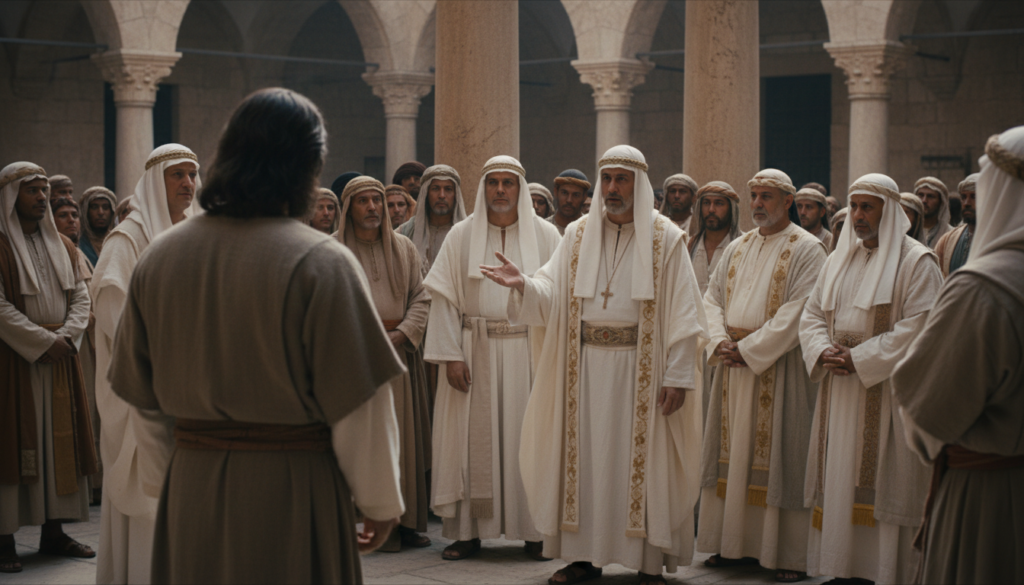
In the Temple of Jerusalem, the Sadducees try to trap Jesus with a question about the resurrection involving a woman who had seven husbands. Jesus answers by revealing their ignorance of the Scriptures and of the power of God: in the life to come, people no longer marry. He proves the resurrection from the Torah by quoting Exodus 3.6: God is the God of the living, not of the dead. His adversaries are reduced to silence.

10 min Sadducees resurrection eternal life Temple of Jerusalem controversies 13 verses 7 books

Resources

Biblical texts

Matthew
Matthew 22.23-33 (King James Version)

The same day came to him the Sadducees, which say that there is no resurrection, and asked him,

Saying, Master, Moses said, If a man die, having no children, his brother shall marry his wife, and raise up seed unto his brother.

Now there were with us seven brethren: and the first, when he had married a wife, deceased, and, having no issue, left his wife unto his brother:

Likewise the second also, and the third, unto the seventh.

And last of all the woman died also.

Therefore in the resurrection whose wife shall she be of the seven? for they all had her.

Jesus answered and said unto them, Ye do err, not knowing the scriptures, nor the power of God.

For in the resurrection they neither marry, nor are given in marriage, but are as the angels of God in heaven.

But as touching the resurrection of the dead, have ye not read that which was spoken unto you by God, saying,

I am the God of Abraham, and the God of Isaac, and the God of Jacob? God is not the God of the dead, but of the living.

And when the multitude heard this, they were astonished at his doctrine.

Mark
Mark 12.18-27 (King James Version)

Then come unto him the Sadducees, which say there is no resurrection; and they asked him, saying,

Master, Moses wrote unto us, If a man’s brother die, and leave his wife behind him, and leave no children, that his brother should take his wife, and raise up seed unto his brother.

Now there were seven brethren: and the first took a wife, and dying left no seed.

And the second took her, and died, neither left he any seed: and the third likewise.

And the seven had her, and left no seed: last of all the woman died also.

In the resurrection therefore, when they shall rise, whose wife shall she be of them? for the seven had her to wife.

And Jesus answering said unto them, Do ye not therefore err, because ye know not the scriptures, neither the power of God?

For when they shall rise from the dead, they neither marry, nor are given in marriage; but are as the angels which are in heaven.

And as touching the dead, that they rise: have ye not read in the book of Moses, how in the bush God spake unto him, saying, I am the God of Abraham, and the God of Isaac, and the God of Jacob?

He is not the God of the dead, but the God of the living: ye therefore do greatly err.

Luke
Luke 20.27-40 (King James Version)

Then came to him certain of the Sadducees, which deny that there is any resurrection; and they asked him,

Saying, Master, Moses wrote unto us, If any man’s brother die, having a wife, and he die without children, that his brother should take his wife, and raise up seed unto his brother.

There were therefore seven brethren: and the first took a wife, and died without children.

And the second took her to wife, and he died childless.

And the third took her; and in like manner the seven also: and they left no children, and died.

Last of all the woman died also.

Therefore in the resurrection whose wife of them is she? for seven had her to wife.

And Jesus answering said unto them, The children of this world marry, and are given in marriage:

But they which shall be accounted worthy to obtain that world, and the resurrection from the dead, neither marry, nor are given in marriage:

Neither can they die any more: for they are equal unto the angels; and are the children of God, being the children of the resurrection.

Now that the dead are raised, even Moses shewed at the bush, when he calleth the Lord the God of Abraham, and the God of Isaac, and the God of Jacob.

For he is not a God of the dead, but of the living: for all live unto him.

Then certain of the scribes answering said, Master, thou hast well said.

And after that they durst not ask him any question at all.

John
John (King James Version) not cited in the book

Technical details

Year AD 33

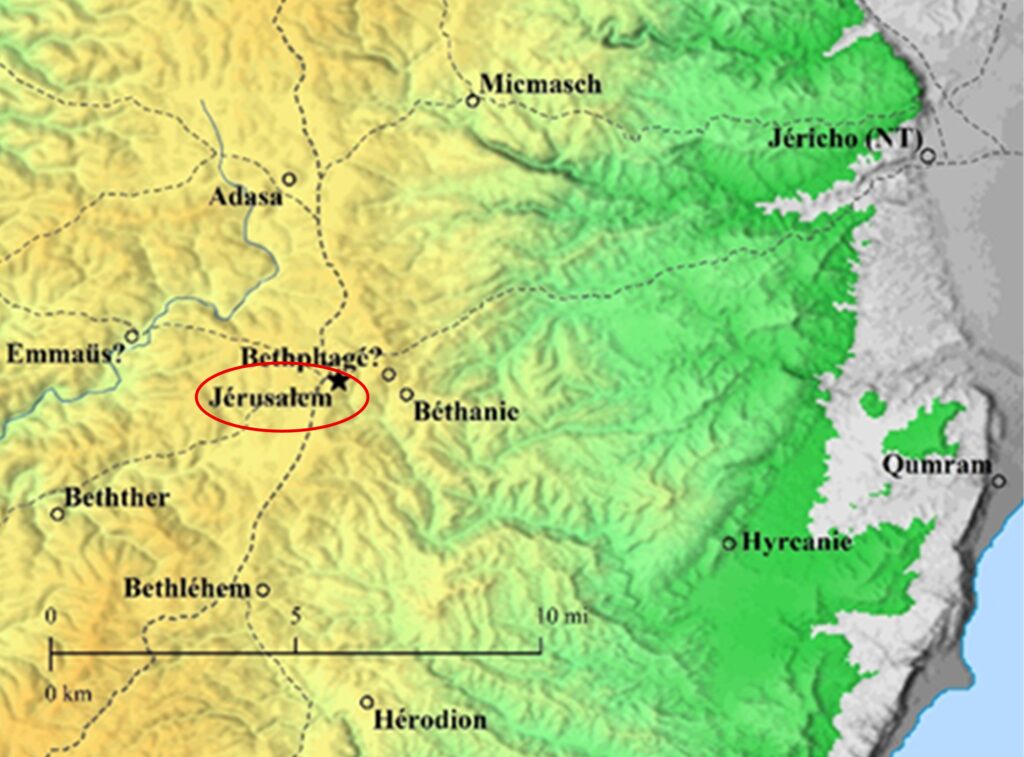
Location: The courtyard of the Temple of Jerusalem

Date: Tuesday, March 29, AD 33

Method: We continue with Mark

Note on the method: Matthew and Luke also report this discourse

Map of Jerusalem and its region
Bar graph Tuesday, March 29

The Messiah Jesus now converses with .

Comments

After the and the Herodians, it is the who step in. All of them seek to put the Messiah Jesus in difficulty. It is a true competition: each religious group sends its most learned representative to try to confound him before the people. They hope at last to find the one who will manage to silence this man from Galilee. None of their questions has a sincerely spiritual or pedagogical intention; their only aim is to trap him (Matthew 22.15).

The , who do not believe in the resurrection of the dead (Acts 23.8), have carefully prepared their question. They present it to the Master with confidence, fully determined to catch him at fault: a woman who successively had seven brothers as husbands without having a child, whose wife will she be at the resurrection? The probability of such a situation occurring is nil, but Jesus does not despise them. He agrees to answer them calmly and sheds light on their error in depth.
Jesus reminds them that their misunderstanding comes from their ignorance of the Scriptures and of the power of God (Matthew 22.29).

In the world to come, he says, people neither marry nor are given in marriage, for the resurrected will be like the angels, living for God (Luke 20.35-36). Then, to support his teaching, he quotes the , the only authority the recognize, recalling God's words to Moses: "I am the God of Abraham, the God of Isaac, and the God of Jacob" (Exodus 3.6). By these words, the Messiah Jesus shows that God is not the God of the dead, but of the living; these patriarchs are still alive in his presence (Matthew 22.32).

His answer, both simple and powerful, reduces his adversaries to silence. Some teachers of the Law acknowledge that he has spoken well (Luke 20.39), and the crowd, fascinated, admires this Galilean who is able to stand up to the greatest teachers of Israel. Never had a man of the people spoken with such authority (Mark 1.22). This dialogue reveals the divine wisdom of the Messiah and highlights true faith: believing in a living God, sovereign over life and death (Romans 14.8-9).

The eternal life taught by Jesus is not the continuation of this world, but a glorious transformation in the very presence of God (John 11.25-26).