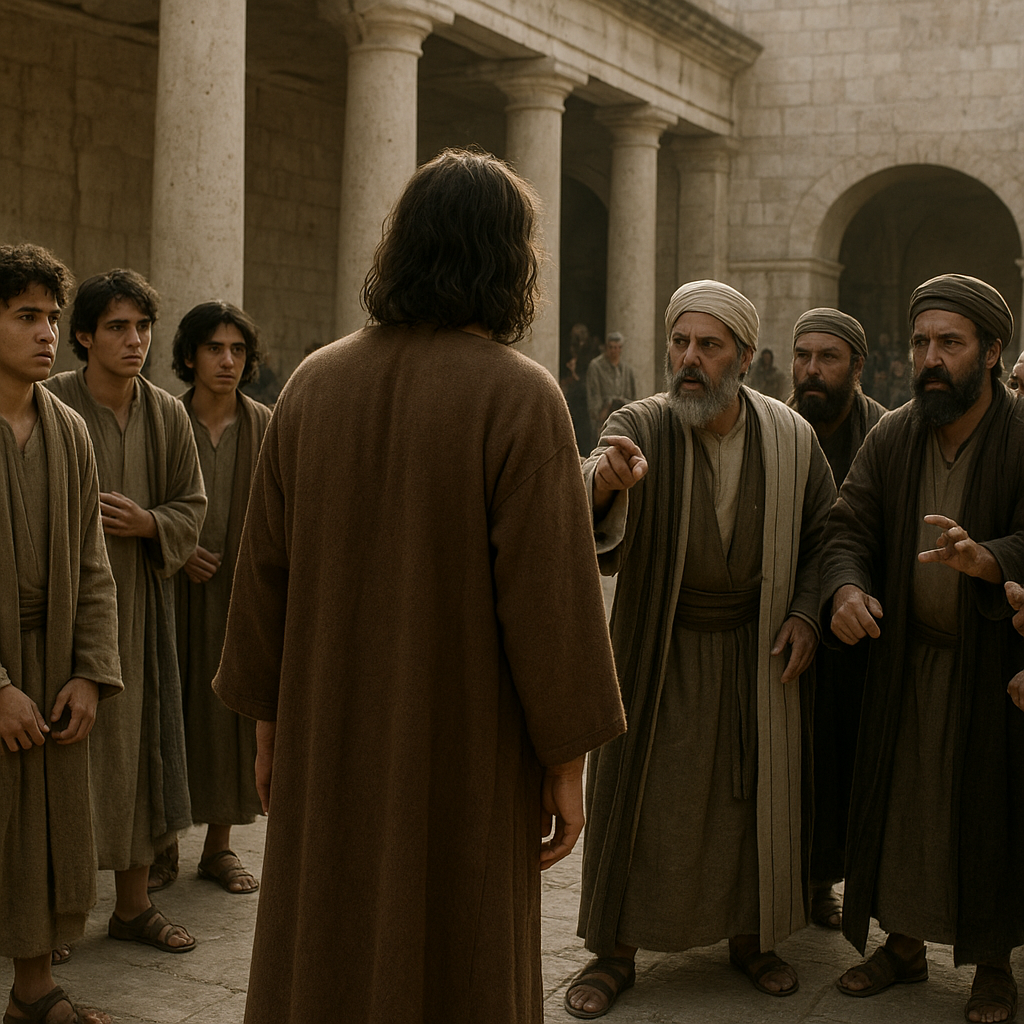

The Messiah Jesus facing the attempted arrest at the temple (John 10.31-39)
John specifies that the religious authorities were still seeking to arrest the Messiah Jesus (John 10.39).
Despite the growing tension, dialogue remains possible. The Messiah Jesus calmly sets out his arguments, showing remarkable assurance. His mastery of the situation shows that he does not merely endure events, but fully controls them.
This kind of debate was not common in Galilee; it is the proximity of the and the presence of many in Jerusalem that lead the Messiah Jesus into particularly tense exchanges, often spiritually fruitless because they are marked by unbelief.
After the powerful words of the Messiah Jesus:
The religious leaders interpret this statement as a claim to deity. At once they pick up stones to stone him, convinced that he is committing blasphemy, since in their view no man can make himself God.
The Jews regard this declaration as a grave transgression of the Mosaic Law.
Le
This passage teaches: “Whoever blasphemes the name of the LORD shall be put to death.”
Their reaction is therefore rooted in a strictly legalistic understanding, devoid of spiritual discernment. They refuse to acknowledge that the works of the Messiah Jesus, his healings, his wisdom, his compassion, testify to his divine origin.
Faced with intensifying hostility, the Messiah Jesus does not respond with violence, but with Scripture:
By citing this passage, he reminds them that even the Law grants certain men a role mandated by God (the judges, called “gods” because they exercise his authority).
How much more legitimate, then, is it for the one whom the Father sanctified and sent into the world to be recognized as the Son of God!
The Messiah Jesus invites his listeners to judge his works rather than his words:
His deeds speak for themselves: they reveal his union with the Father and the truth of his mission. But the hearts of his adversaries remain hardened; they refuse to believe, even in the face of the evidence.
Once again, the religious leaders seek to arrest him, but their plan fails. The Gospel stresses that the Messiah Jesus escaped them, not by cunning, but because his hour had not yet come. Everything is fulfilled according to the Father’s sovereign plan.
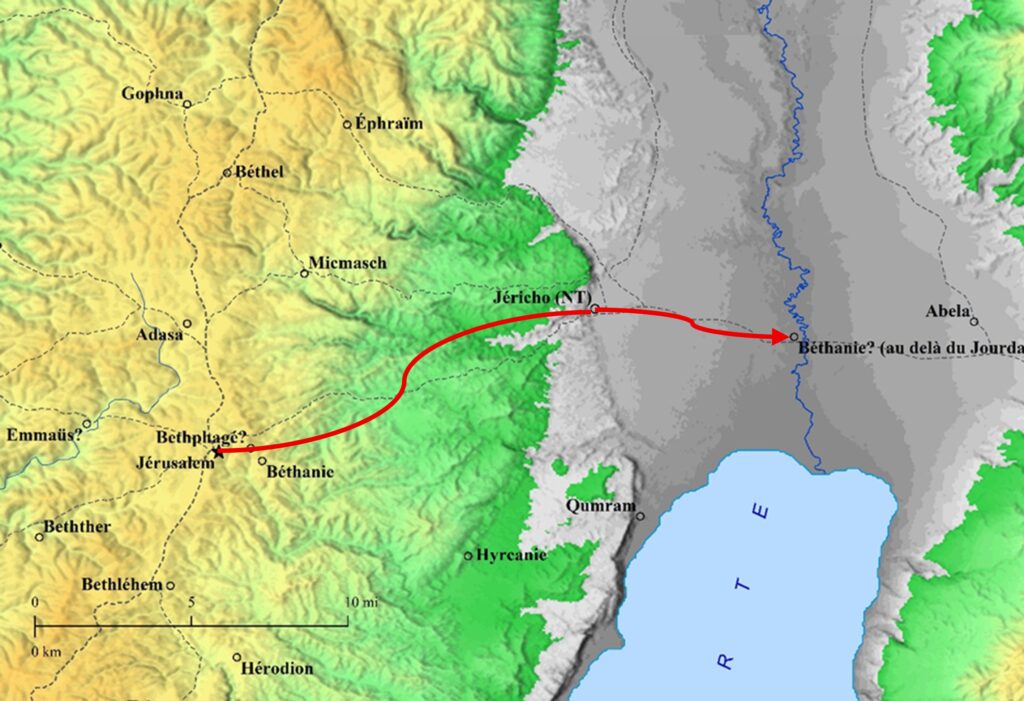
After this episode, the Messiah Jesus leaves Jerusalem and goes beyond the Jordan, to the place where John the Baptist had once baptized. There many come to him, acknowledging that everything John had announced about him has been fulfilled.
This move marks a striking contrast: in Jerusalem he meets rejection and hostility; beyond the Jordan he finds faith and welcome.
This passage reveals:
- The rejection of the Messiah Jesus’ testimony by the religious authorities;
- The clarity of his divine identity, plainly affirmed;
- His wise response, firmly anchored in Scripture;
- The inability of his adversaries to seize him, because the hour of his passion had not yet come;
- And finally, the growing faith of those who recognize him far from the official religious circles.
The or the Dedication
The pilgrimage feasts?