
It is important not to regard the text of Luke 17.22-37 as a mere repetition of the discourse delivered on the , as reported in Matthew 24.3-51, Mark 13.1-26 and Luke 21.5-38. Indeed, this is a distinct teaching that addresses the same theme, that of the coming of the Son of Man, but from a different approach.
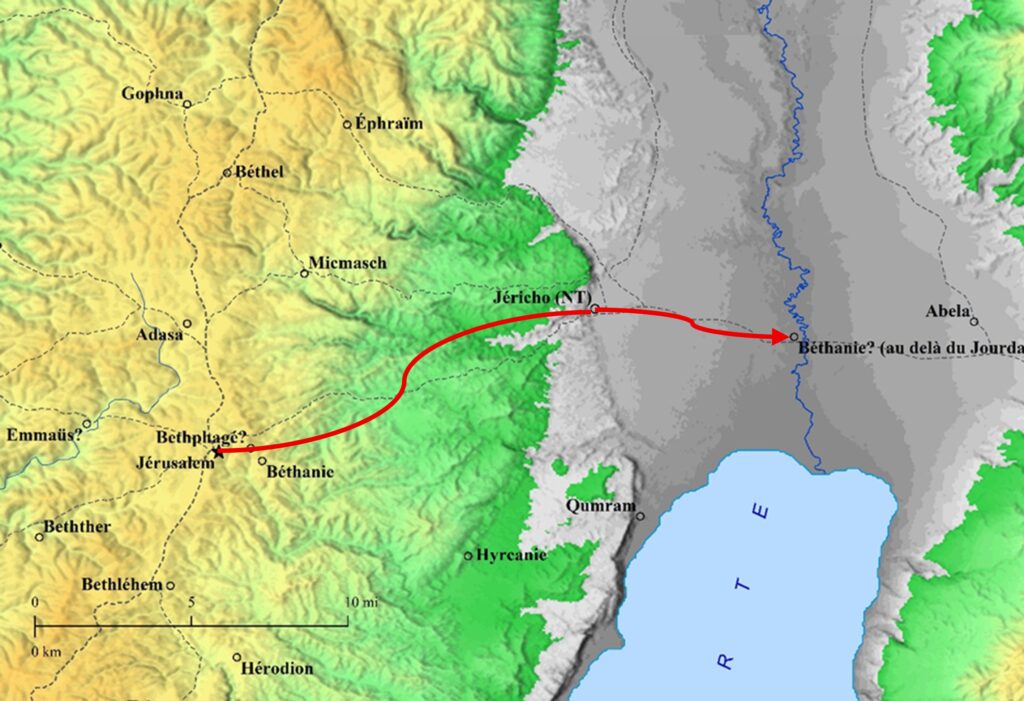
The progression of Luke’s narrative shows that this theme will be taken up again in the discourse delivered on the , opposite Jerusalem, on Wednesday, 12 Nisan 3793, which corresponds to Wednesday, 30 March 33 in the Gregorian calendar.
The text of Luke 17.22-37 is deeply connected to the other accounts in Luke about the kingdom of God. It develops the eschatological dimension of the Kingdom, its future, sudden and universal coming, complementing its presence already inaugurated.
This therefore implies his departure.
Luke presents the kingdom of God according to a well-known theological tension: already present (Luke 17.20-21): “The kingdom of God is in your midst,” not yet fulfilled (Luke 17.22-37): “Days will come… the Son of Man will be revealed”
Luke 17.22-37 continues the dialogue with the (Luke 17.20-21), this time addressing the disciples, to teach them about the future coming of the Kingdom in its fullness.
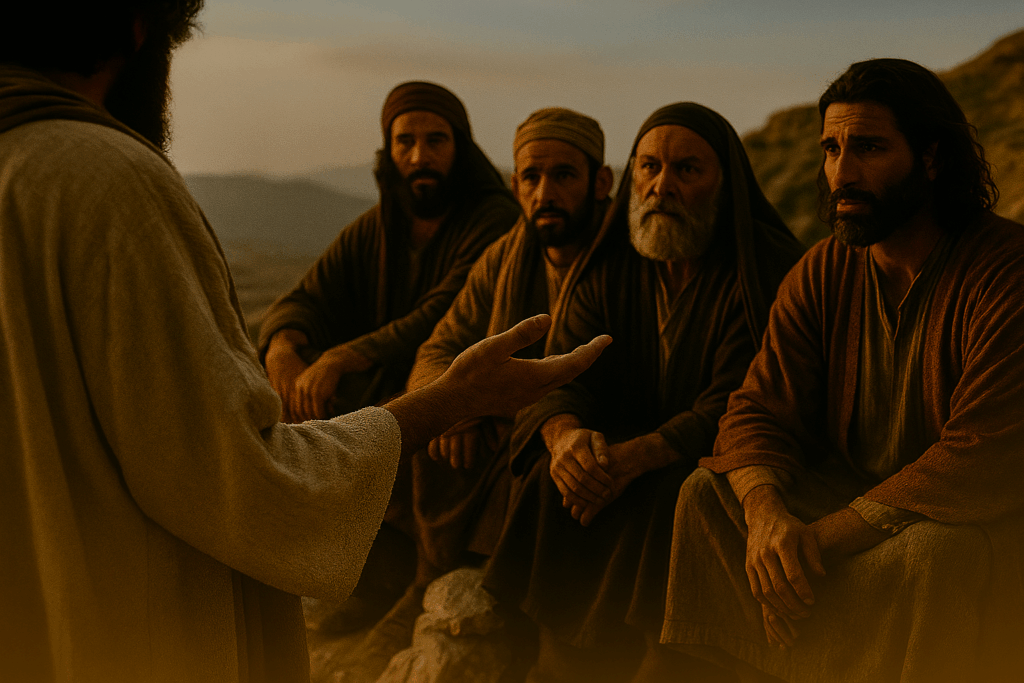
In Luke 17.22-37, the Messiah Jesus teaches his disciples about the coming of the Son of Man, stressing its suddenness, its universality, and the need for vigilance. This passage is in continuity with several other texts of Luke that address the kingdom of God from different angles:
Luke 13.18-21, with the parables of the mustard seed and the leaven, shows that the Kingdom grows in secret, invisibly yet irresistibly. This hidden development finds an echo in Luke 17.24, where the final revelation of the Kingdom will be as sudden and dazzling as lightning.
Luke 14.15-24, in the of the great banquet, emphasizes that the Kingdom is offered to all, but that many refuse it. This refusal is comparable to that of those who, in Luke 17.31-36, do not recognize the Son of Man or are too attached to their possessions and their earthly life.
Luke 16.16 states that “the Law and the Prophets were until John,” and that since then the kingdom is proclaimed. This prepares the idea that the fulfillment is still to come, as Luke 17.22-37 shows, where the Messiah Jesus speaks of future days and of an unveiling still awaited.
Luke 21.25-28, in the eschatological discourse, Luke uses a similar apocalyptic vocabulary: signs in the sky, distress of nations, and the coming of the Son of Man in glory. This passage reinforces the call to vigilance and faith, just like Luke 17.22-37.