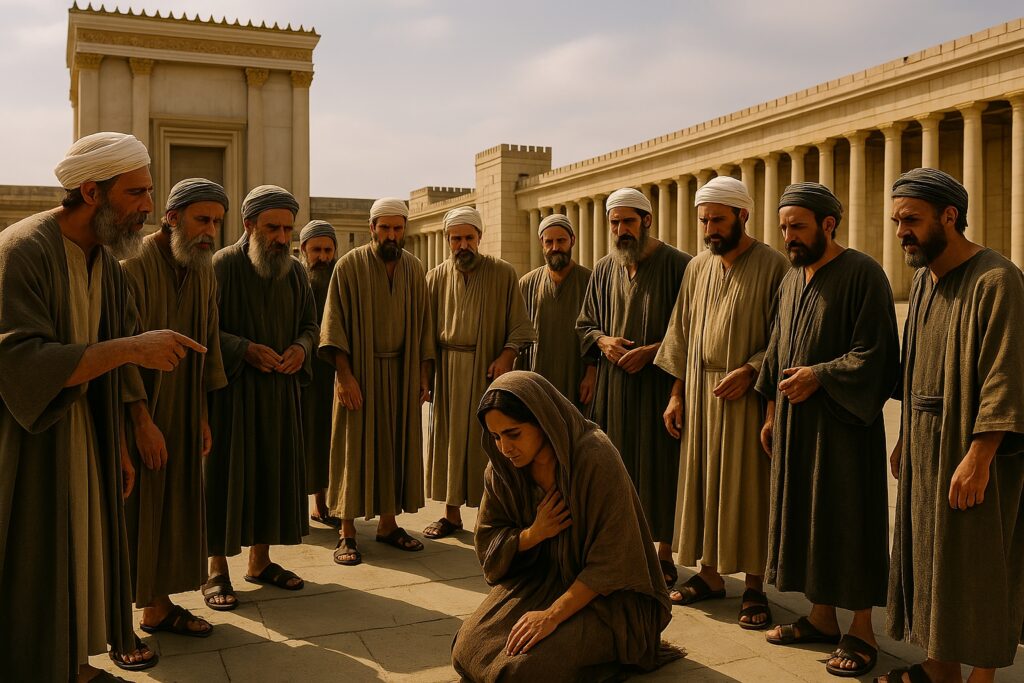

This account takes place in a calm setting, which surprises us in view of what happened previously. Indeed, the religious authorities were seeking to arrest the Messiah Jesus, and now they are talking with him. Of course, they are still looking for a flaw in order to discredit him in the eyes of the people.
There is no reason to imagine that the anger of the had subsided. Some commentators point out that this account is not found in certain manuscripts and suggest that the passage was added later. The French translation “La Colombe” expressly notes the absence of this passage in several manuscripts.
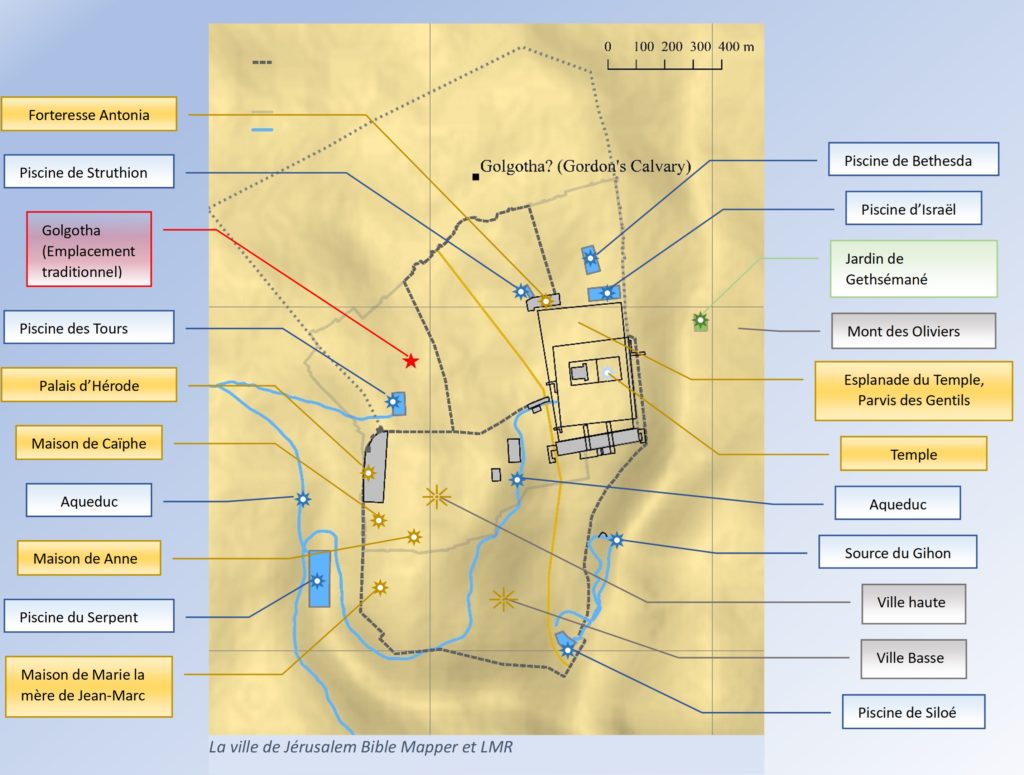
We note that the Messiah Jesus is indeed in Jerusalem and that, contrary to what we had expected, he does not return to Bethany beyond the Jordan, but spends the night on the like many pilgrims.
The situation seems strange to us, and we think that this text has been moved and is not part of the chronological sequence laid out by John. According to our analysis, the pilgrimage mentioned here is not that of . However, since we do not have enough detail to put this text back in its place, we prefer to leave it as it stands in the Gospel of John.
The story of this woman is pitiful. Being caught in the act of adultery seems very surprising. How is this possible, and at just the moment when the Messiah Jesus is present? We think that this woman was already imprisoned and awaiting the death penalty. She had surely been denounced beforehand and was obliged to confess her sin.
Nevertheless, the problem is well posed by the . Should this woman be stoned, in keeping with the law of Moses (Leviticus 20.10 and Deuteronomy 22.22-24)? The accusers bring only the woman, which is already a breach of the Law, which required both guilty parties to be judged.
If the teacher chooses the strict, uncompromising application of the law, what becomes of his message of grace? If he applies grace, what becomes of the law of Moses? The trap is well prepared and the are sure of the outcome.
The leads the accusers to withdraw.
The Messiah Jesus does not call the Law into question but illuminates its spirit, stressing that divine justice is inseparable from mercy. He acknowledges the sin but refocuses the debate by inviting everyone to examine their own imperfections before judging others. Finally, he tells the woman not to sin again and lets her go free.
John gives a summary of this event without mentioning, for example, the Messiah Jesus' traditional actions such as granting forgiveness of sins or allowing entry into the kingdom of God.
John wanted to recount this significant confrontation between Jesus, the Messiah, and the . Although this passage may seem out of place chronologically, it remains relevant because of its richness in sensitivity and wisdom, which fully justifies its inclusion.
This passage highlights the Messiah Jesus' ability to justify. He thus exercises this power, considered exclusively divine, by declaring:
No Pharisee can challenge this point, since all of them have already withdrawn.