
PER195

The disciples’ question about the prophet Elijah

After the transfiguration, the disciples ask Jesus about the prophecy concerning Elijah. Jesus reveals that John the Baptist fulfills this prophecy, a connection that the Gospels develop progressively.

7 min Elijah John the Baptist transfiguration prophecy 10 verses 4 books

Resources

Biblical texts

Matthew
Matthew 17.10-13 (King James Version)

And his disciples asked him, saying, Why then say the scribes that Elias must first come?

And Jesus answered and said unto them, Elias truly shall first come, and restore all things.

But I say unto you, That Elias is come already, and they knew him not, but have done unto him whatsoever they listed. Likewise shall also the Son of man suffer of them.

Then the disciples understood that he spake unto them of John the Baptist.

Mark
Mark 9.11-13 (King James Version)

And they asked him, saying, Why say the scribes that Elias must first come?

And he answered and told them, Elias verily cometh first, and restoreth all things; and how it is written of the Son of man, that he must suffer many things, and be set at nought.

But I say unto you, That Elias is indeed come, and they have done unto him whatsoever they listed, as it is written of him.

Luke
Luke (King James Version) not cited in the book
John
John (King James Version) not cited in the book

Technical details

Year AD 32

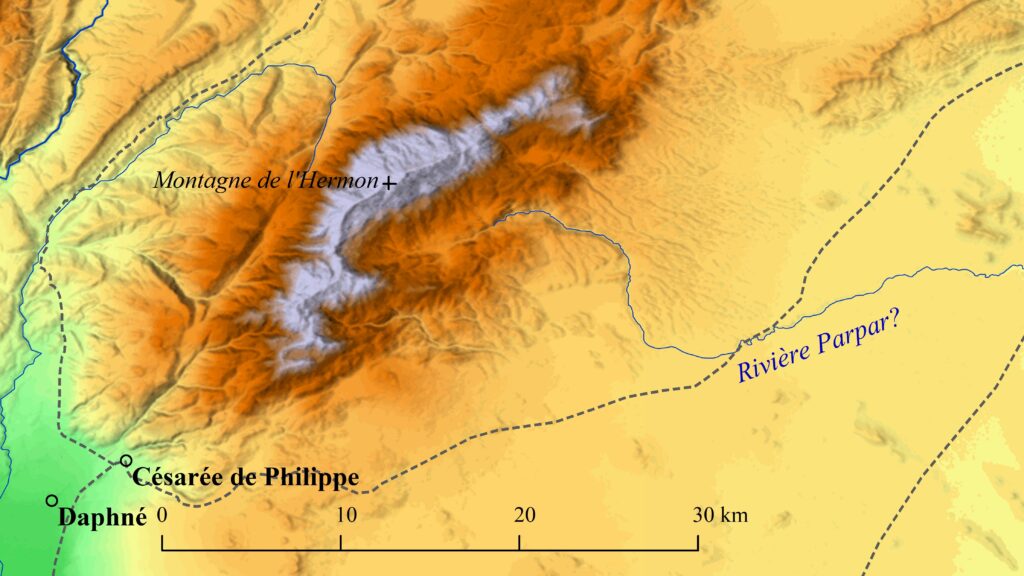
Location: Near Caesarea Philippi, at the foot of Mount Hermon

Date: August AD 32

Method: We continue with Mark

Note on the method: Matthew and Luke also report these words

Mount Hermon

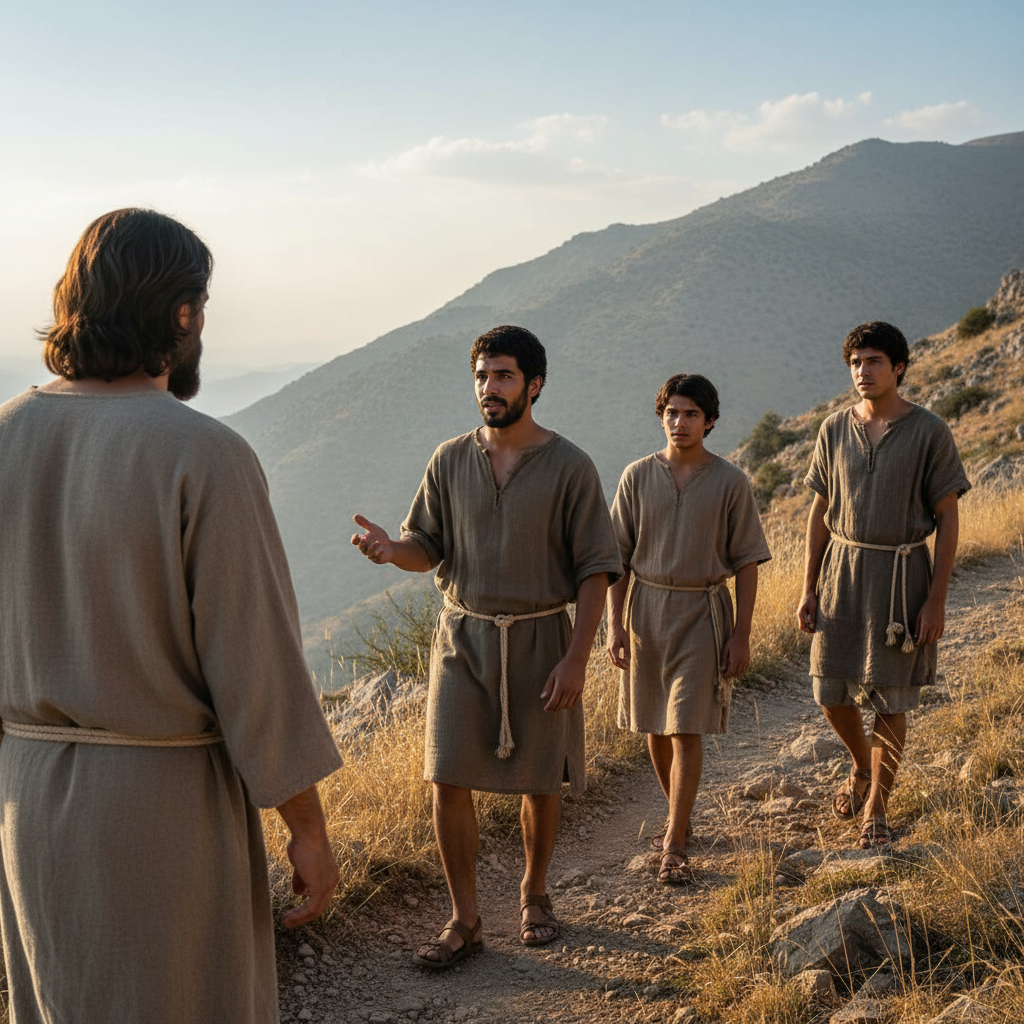
The Messiah Jesus and his disciples Peter, James and John are coming down from the mountain when a disciple asks a question.

The disciples’ question about the prophet Elijah

The disciples’ question about the prophet Elijah

Comments

We can draw a connection between the events that took place on the mountain and this question. Indeed, Peter, James and John saw Moses and Elijah (passage PER193 : The transfiguration) on this mountain, identified as Mount Hermon.

La vision du prophète Élie leur rappelle le passage de l'Écriture (

Verset(s) introuvable(s) : 23-24
) qui évoque sa venue avant celle du Messie. Il est donc probable que ce soit Pierre, Jacques ou Jean qui ait posé cette question, avec une forte probabilité pour Pierre selon nos analyses.

The Master’s answer is understood by the disciples as referring to John the Baptist.

Conformément à sa pratique habituelle, Matthieu établit le lien entre Elie et Jean le Baptiste, validant ainsi l'accomplissement de la prophétie de

Verset(s) introuvable(s) : 23-24
. Marc corrobore les affirmations de Matthieu.

This brief conversation takes place as they are coming down from the mountain. They have not yet rejoined the bustle of the crowd.

L'identification de Jean-Baptiste comme le prophète annoncé en

Verset(s) introuvable(s) : 23-24
se fait progressivement dans les Evangiles. Plusieurs passages éclairent cette révélation :

  • Luke 1.17, announces that John the Baptist will come “in the spirit and power of Elijah” to prepare the people for the coming of the Lord.
  • Matthew 11.13-14, where Jesus himself declares that John is the Elijah who was to come, if one accepts this interpretation.
  • Matthew 17.10-13, after the transfiguration, where Jesus explains to his disciples that Elijah has already come in the person of John the Baptist, but was not recognized.
  • Mark 9.13, here repeats what Matthew 17.10-13. says.

These passages show that the recognition of John the Baptist as the prophet foretold came about through the words of Jesus and the events of his ministry.