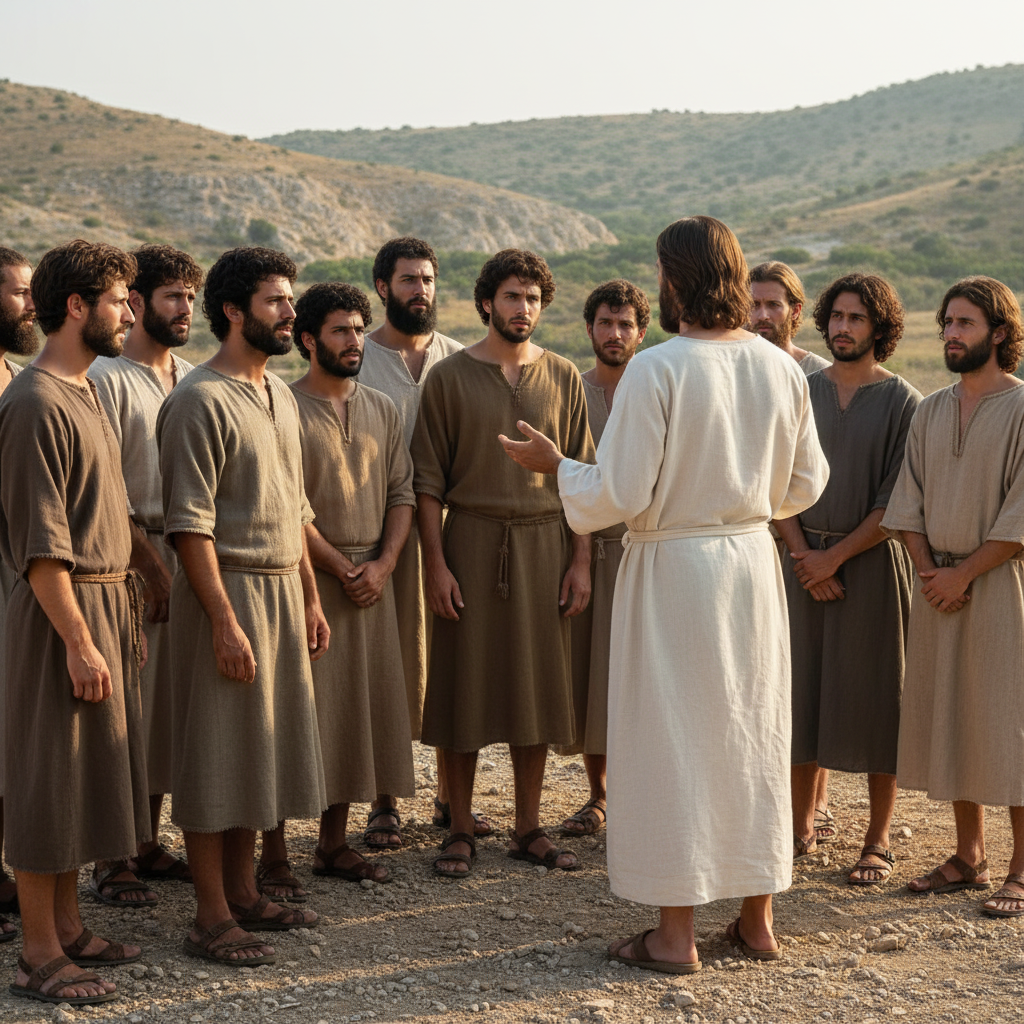

What is in view here is seeing an exceptional event, and some of those who are listening to this discourse will see it.
This event is described by Matthew as the Son of Man coming in his kingdom; by Mark as the kingdom of God coming with power; and by Luke as the kingdom of God.
It is relevant here to ask which precise event the Messiah Jesus is speaking about.
These three verses deal with a statement of Jesus according to which some of his hearers will not die before they have seen the Kingdom of God come with power. Here is a comparative analysis:
This verse announces an imminent manifestation of the reign of Christ. Several interpretations exist:
The Transfiguration: Right after this statement, Jesus is transfigured before Peter, James and John, which could be a foreshadowing of the glorious Kingdom.
The resurrection and Pentecost: Some see in this saying a reference to the resurrection of Jesus and the coming of the Holy Spirit at Pentecost.
The establishment of the Kingdom: Others consider that it announces the growth of the Church and the preaching of the Gospel.
Mark stresses the power of the Kingdom of God, which reinforces the idea of a visible and tangible manifestation. This power can be understood as:
The Transfiguration, which immediately follows this verse.
The resurrection and Christ’s victory over death.
Pentecost, when the Holy Spirit comes down upon the disciples, inaugurating a new era of the Kingdom.
Luke takes up the idea of the coming of the Kingdom, but without specifying “with power” as Mark does. This reinforces the idea that the Kingdom of God manifests itself progressively through the work of Jesus, his resurrection and the mission of the disciples.
Synthesis and understanding
These three verses are linked by the idea of the establishment of the Kingdom of God:
Matthew 16.28 emphasizes the coming of the Son of Man in his kingdom.
Mark 9.1 stresses the power of the Kingdom.
Luke 9.27 highlights the manifestation of the Kingdom without specifying how it will come about.
These passages show that the Kingdom of God is not only a future reality, but that it begins to manifest itself from the ministry of Jesus onward and through the Church.
Our conclusion is that the event in question is the one that immediately follows this text, the transfiguration.