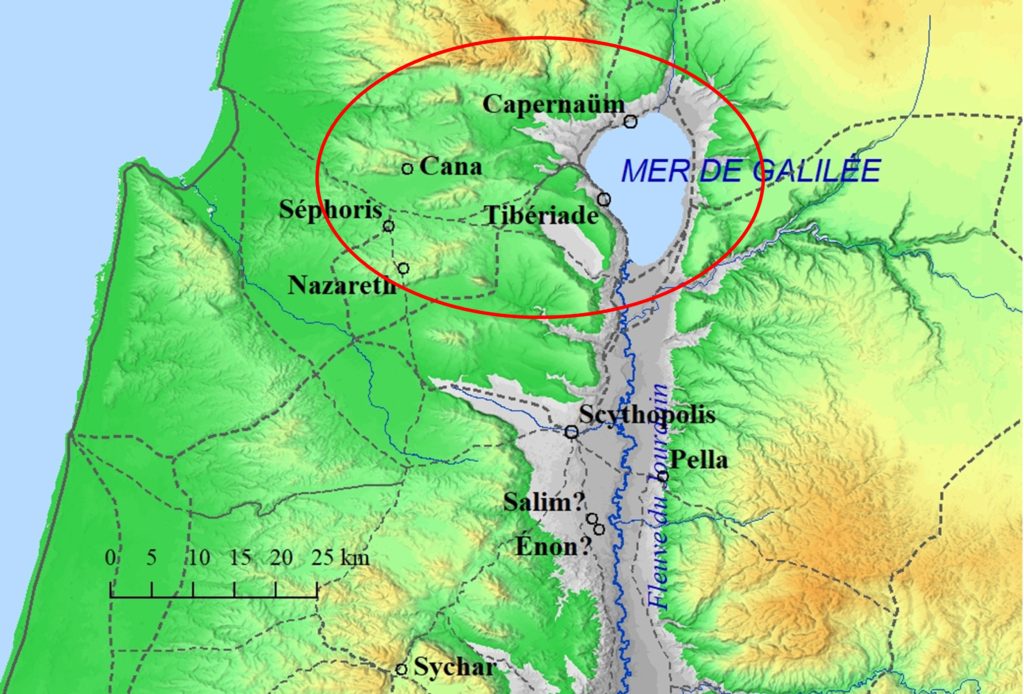
Matthew, Mark and Luke do not consider it necessary to specify explicitly where this episode takes place. Nevertheless, it seems clear that Jesus the Messiah is with his disciples in the in Capernaum.
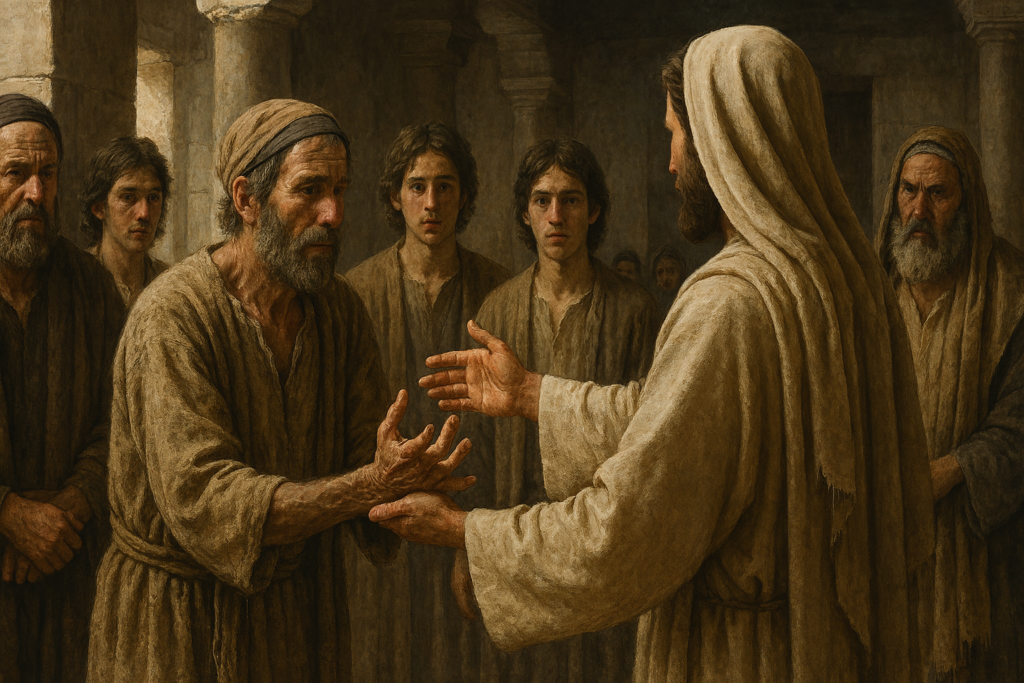
This man's healing takes on a particular significance because it occurs on a . We observe that Jesus the Messiah regularly performed healings on this specific day, in accordance with the law of Moses.
Sans attribuer au Messie Jésus une volonté systématique de provocation, nous sommes contraints de reconnaître que les réunions à la se tiennent les jours de . Les fidèles semblent profiter de cette situation pour rechercher une délivrance du Messie Jésus. Dans ce cas précis, c’est Jésus qui invite cet homme à s’approcher afin de le guérir.
We notice that the stance of the becomes more firmly rooted in opposition to Jesus the Messiah. They do not accept their rites being called into question by this new Teacher's interventions.
They do not perceive the wonders taking place before their eyes, blinded instead by hatred towards Jesus the Messiah, who challenges their cultural principles.
Pourtant, en cas de besoins personnels impératifs, ils n’hésitent pas à enfreindre leurs règles strictes concernant le respect du . Matthieu le souligne alors que Marc et Luc n’évoquent ici que leur recherche de preuves pour accabler le Messie Jésus.
Analysing the behaviour of these religious men, mainly , leads us to see their reaction simply as a defence of their socially and economically prosperous religious system.
We observe a gulf opening between these religious fundamentalists and this new, free Teacher. The year AD 31 thus ends with a break between the Jewish religious authorities and Jesus the Messiah. The people, for their part, admire and acclaim him, further intensifying the authorities' anger.