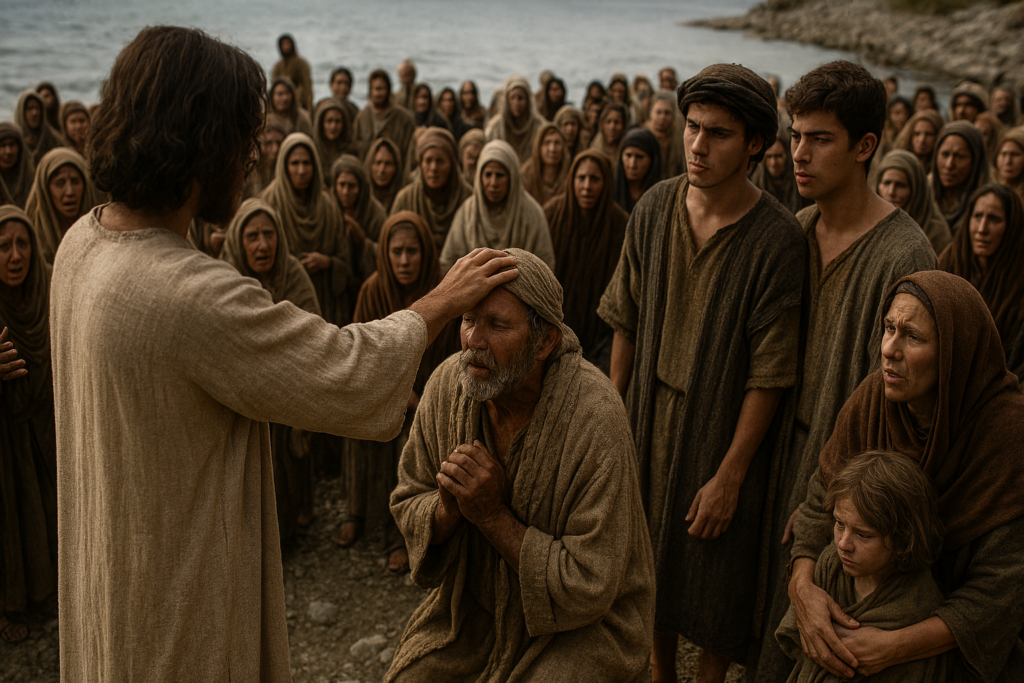

Jesus the Messiah and his disciples remain in the region of Capernaum, specifically on the shores of the . Here we observe the success of Jesus the Messiah's preaching. According to Mark, he asks his disciples to keep a small boat ready for him so that he is not overwhelmed by the crowd. We are far from sterile conflicts with the religious men; the crowd now sees Jesus the Messiah as a great liberator.
In view of these events, it is difficult to understand the position of the religious authorities, who could only acknowledge God's action. Their responsibility is great because they deliberately oppose God's work, which they are supposed to promote.
As is his custom, Matthew establishes a connection with the great Jewish prophet Isaiah 42.1-4. The king becomes a servant to proclaim the good news to the people. We notice the Trinity in Isaiah's quotation: the Father who speaks, the servant Jesus, and the Holy Spirit.
Addressing Jews, Matthew knows that these arguments may convince them, whereas Mark, aiming at Greeks and Gentiles, has omitted this reasoning.
Jesus the Messiah proclaims the message of salvation and heals many sick people, instructing them to remain discreet so that the crowd does not come solely to obtain a blessing, which is temporary nonetheless, at the expense of eternal grace.
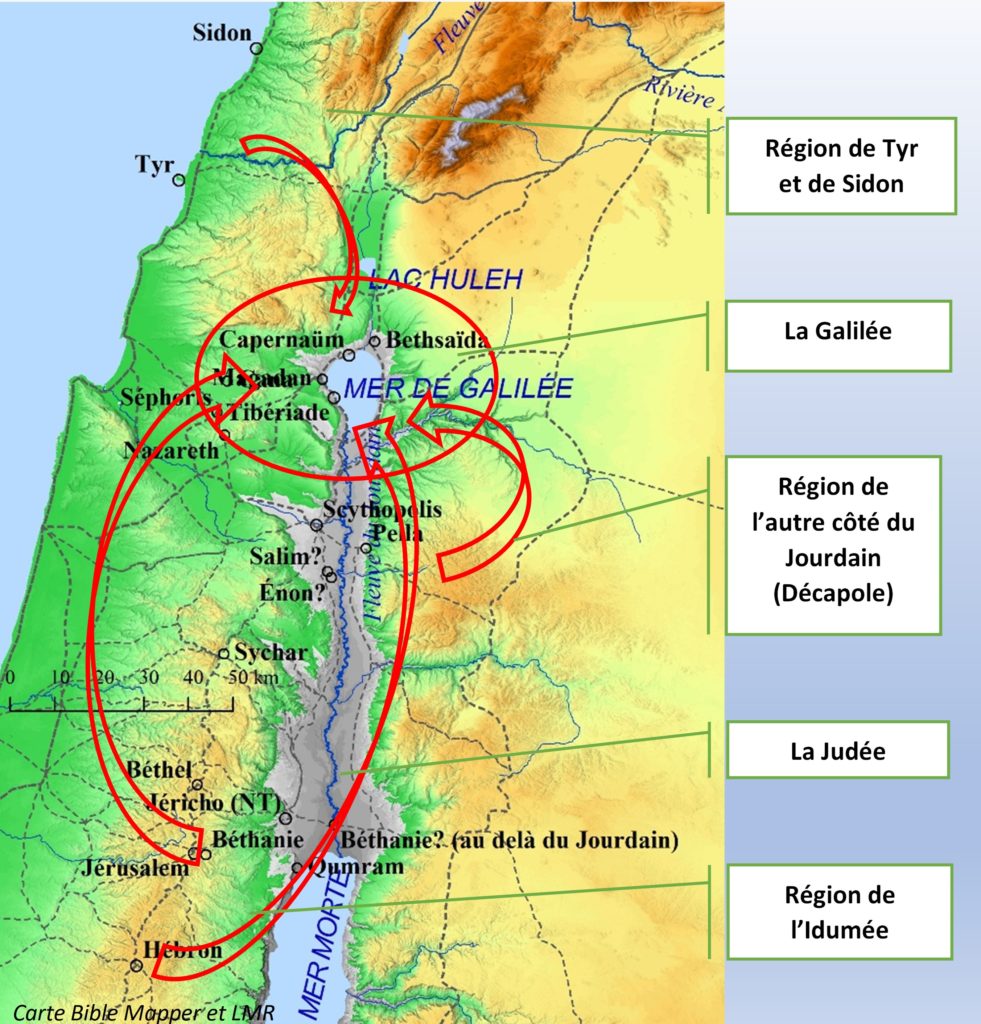
Mark specifies that the crowd comes from the various regions of Israel. Jesus the Messiah's reputation has spread far beyond Judea and Galilee. This fame will intensify the jealousy and hatred of the , who can only observe that the people are drawn towards this new teacher instead of turning to them, the legitimate representatives of the law of Moses. John the Baptist's ministry had already disrupted the functioning of their institution, but now everything takes on a scale no one could have imagined.