

PER299

The Widow’s Offering

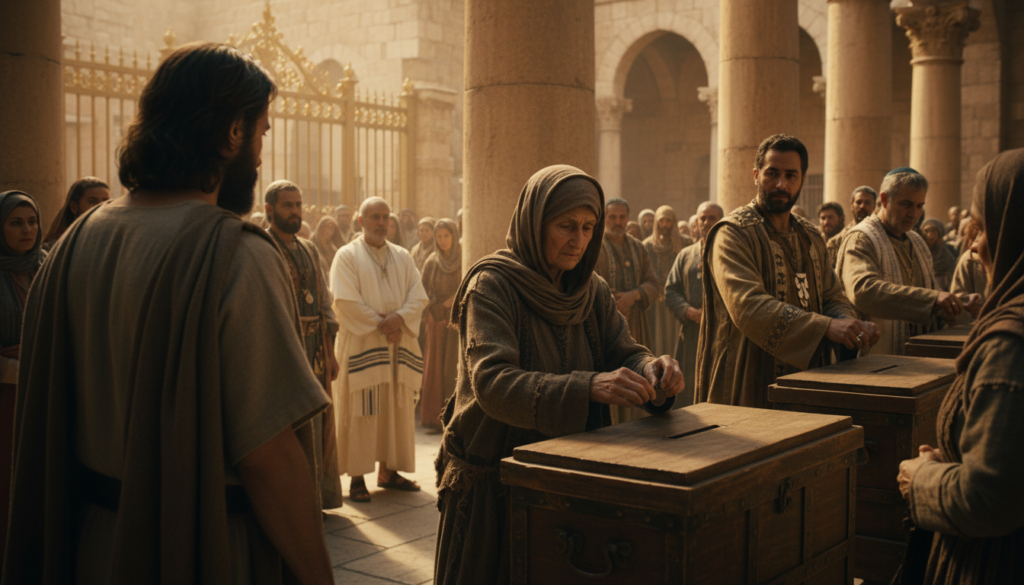
In the Temple of Jerusalem, Jesus watches a poor widow put two small coins into the treasury, all that she has. Unlike the rich, who give ostentatiously out of their surplus, she offers her entire livelihood. Jesus declares that she has given more than all the others, overturning human standards of value. This account, reported by Mark (12.41-44) and Luke (21.1-4), teaches that true generosity is measured not by the amount given, but by the disposition of the heart and the sacrifice made.

5 min poor widow offering Temple of Jerusalem generosity faith 4 verses 2 books

Resources

Biblical texts

Matthew
Matthew (King James Version) not cited in the book
Mark
Mark 12.41-44 (King James Version)

And Jesus sat over against the treasury, and beheld how the people cast money into the treasury: and many that were rich cast in much.

And there came a certain poor widow, and she threw in two mites, which make a farthing.

And he called unto him his disciples, and saith unto them, Verily I say unto you, That this poor widow hath cast more in, than all they which have cast into the treasury:

For all they did cast in of their abundance; but she of her want did cast in all that she had, even all her living.

Luke
Luke 21.1-4 (King James Version)

And he looked up, and saw the rich men casting their gifts into the treasury.

And he saw also a certain poor widow casting in thither two mites.

And he said, Of a truth I say unto you, that this poor widow hath cast in more than they all:

For all these have of their abundance cast in unto the offerings of God: but she of her penury hath cast in all the living that she had.

John
John (King James Version) not cited in the book

Technical details

Year AD 33

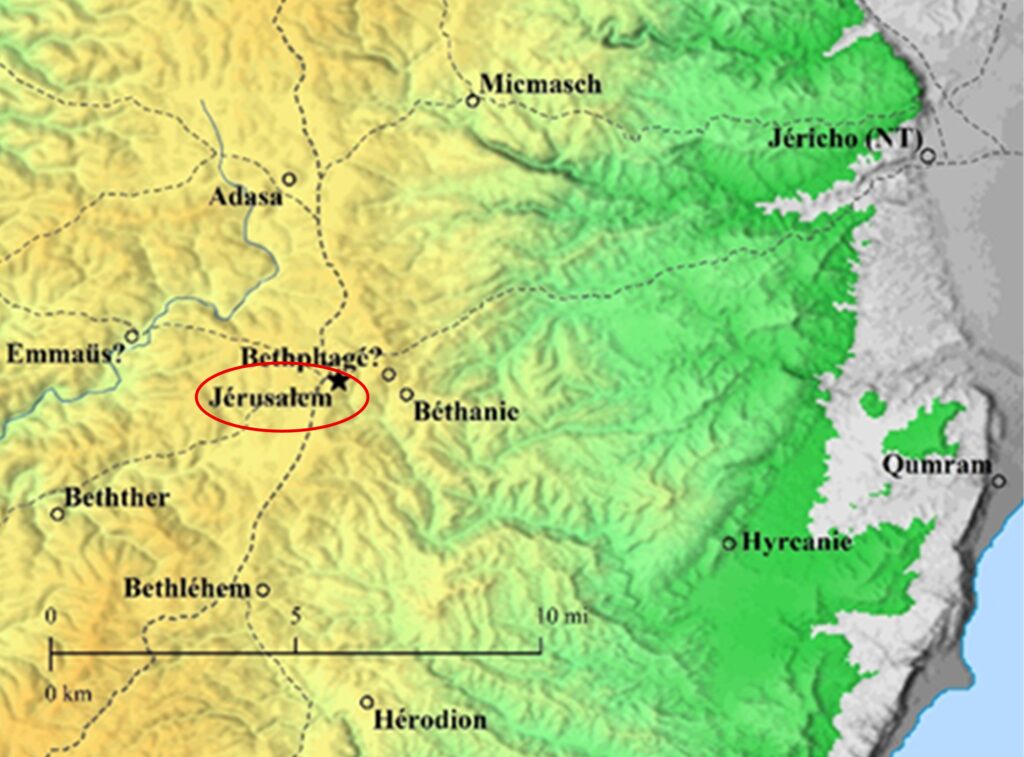
Location: The courtyard of the Temple of Jerusalem

Date: Wednesday, March 30, AD 33

Method: We continue with Mark

Note on the method: Luke also reports this event

Map of Jerusalem and its region
Bar graph for Wednesday

The Messiah Jesus watches the people giving their offerings at the Temple.

Comments

We are struck to see the Master closely observing the offerings placed in the Temple. The gifts of the rich, poured in with flourish and ostentation, could not go unnoticed.

But how could he notice this humble widow and her modest offering? Two small coins, insignificant in human eyes, were nevertheless worth more than all the rich offerings.

If, from a mathematical point of view, this reasoning seems incomprehensible, that is not how the Master views the situation. This poor widow, who remained anonymous in her time, has become famous throughout the world for her act of faith.

In Mark 12.41-44 and Luke 21.1-4, the Messiah Jesus thus watches the people putting their offerings into the Temple treasury and notices this woman who puts in two small coins, all she has to live on.

This act, insignificant in the eyes of the world, becomes for the Messiah a shining example of faith, sincerity and total giving. While the rich give out of their surplus, she offers what is most precious to her: her trust in God.

The gaze of the Messiah Jesus does not stop at the quantity, but at the quality of the gift and the disposition of the heart. Through this account, the Gospel overturns human criteria of value and greatness: true generosity is measured not by what one gives, but by what one keeps for oneself.

This widow thus becomes the symbol of pure faith, of trusting surrender and of authentic charity, inviting us to offer God not what we have left over, but what we are, in simplicity and humility of heart.

This woman, a widow and destitute, insignificant in her day, has become known throughout the world.