
The last day mentioned in John 7.37 refers to the seventh day of , Wednesday, October 13, and not to Shemini Atzeret, Thursday, October 14. Although Shemini Atzeret immediately follows , it is considered a distinct feast and not a continuation of .
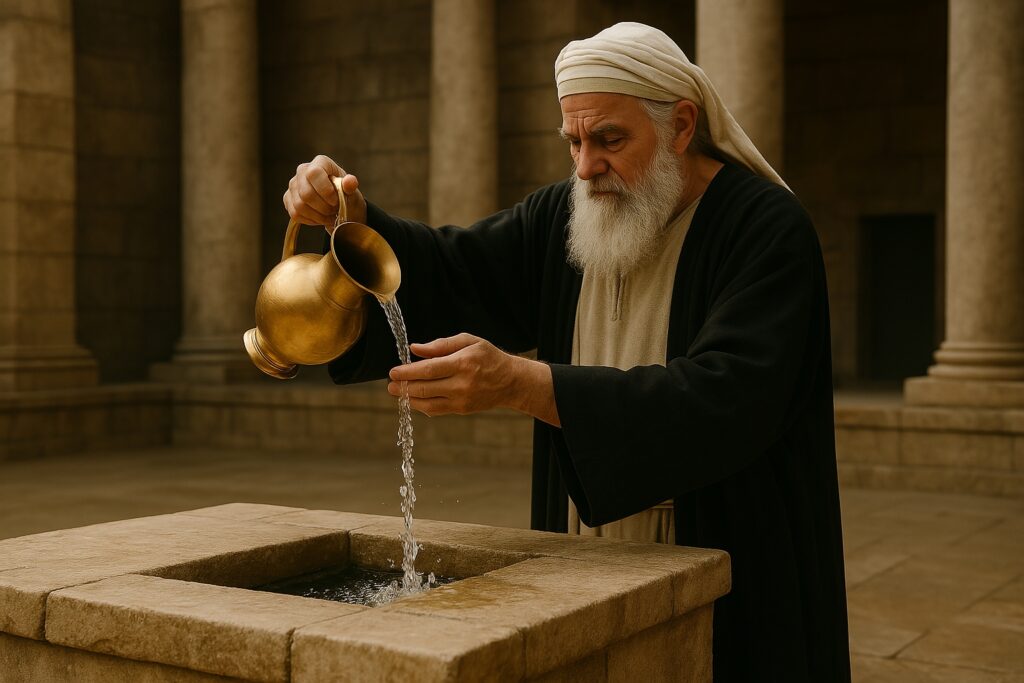
In the context of John 7.37, the last day of the feast, Hoshana Rabbah, was marked by a special ceremony in which water was poured on the altar of the Temple, symbolizing the request for rain and divine blessing. Every day of the feast of the priest pours on the altar water he has drawn from the spring of Siloam, but this last day takes on a solemn character in that the people ask God to provide water so that the harvests may be good. Water therefore represents life for this people; if it is not abundant, there will be famine.
The Messiah Jesus uses this moment to proclaim that he is the true of living water, giving a profound spiritual meaning to this tradition. He affirms that he is the true source of life and the only way to enter the kingdom of God, into eternal life with God.
Shemini Atzeret, on the other hand, is a day of solemn assembly, without the same water-related rites. Thus the “great day” mentioned in John 7.37 corresponds to the last day of , and not to Shemini Atzeret, which is a day of sacrifice described in Numbers 29.35-39.
It is observed that the Messiah Jesus used the meaning of this ceremony to deliver his discourse on the water of life. This theme had already been addressed in his encounter with the woman, as mentioned in John 4.1-26. In that episode, the woman was drawing water, and the Messiah Jesus seized the opportunity to affirm that he himself was a of living water, meaning that he could offer eternal life to those who believed in him.
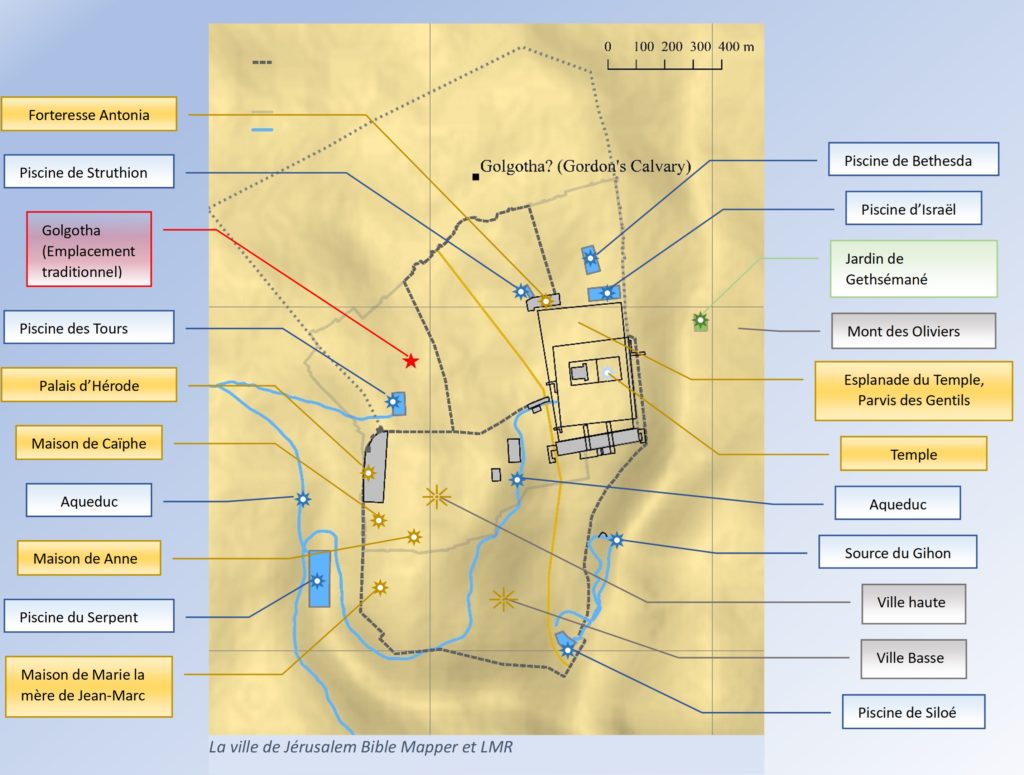
During the feast of a daily procession took place from the temple to the Gihon spring, or spring of Siloam. A priest filled a golden pitcher with water while the choir sang Isaiah 12.3. Then the procession returned to the altar to pour out the water.
This ritual recalled the episode of the water gushing from the rock during the wandering in the wilderness, mentioned in Numbers 20.8-11 and Psalms 78.15-16. The distance between the temple and the Gihon spring was estimated at between 300 and 500 meters, depending on the point of measurement. This spring was diverted by Hezekiah’s tunnel to the to supply the city with water. Previously, it flowed into the Kidron Valley.
The discourse
The Messiah Jesus stands facing the crowd, a position that contrasts with the usual posture of rabbis, who sat while teaching. The term “cried out” (John 1.15, John 7.28 and John 12.44) introduces a solemn declaration intended to capture the attention of the audience.
He declares:
He makes an offer of salvation (John 4.14, John 6.53-56). The listeners’ understanding of this statement proves difficult, as illustrated by the reaction of the in John 4.1, highlighting the difficulty of moving from a material interpretation to a spiritual one.
It is certain that this preaching differs considerably from the speeches of the religious authorities.
According to John 7.38, rivers of living water will flow from within the one who believes in Jesus the Messiah. This means that he will be continually satisfied by an inexhaustible source of life (John 4.14). When the Messiah Jesus added, “as the Scripture has said,” he could not give the precise references for his statements in this discourse. However, one can refer to Psalms 78.15-16 and Zechariah 14.8, as well as Ezekiel 47.1-11 and Revelation 22.1-2 (not yet written at that time).
The statement of John 7.39 gives us an explanation of this discourse. The Holy Spirit would be poured out on May 22, AD 33, the day of Pentecost. It was difficult for the listeners of that time to fully understand the Master’s words.
These words would be clarified in about six months.
These statements should be considered as having a prophetic scope. Although they left an impression, their meaning was fully revealed only on the day of Pentecost. This is clearly seen from the words of John 7.39.
The water ceremony at Hoshana Rabbah
The