
PER174

Teaching of the Messiah Jesus about the bread of life

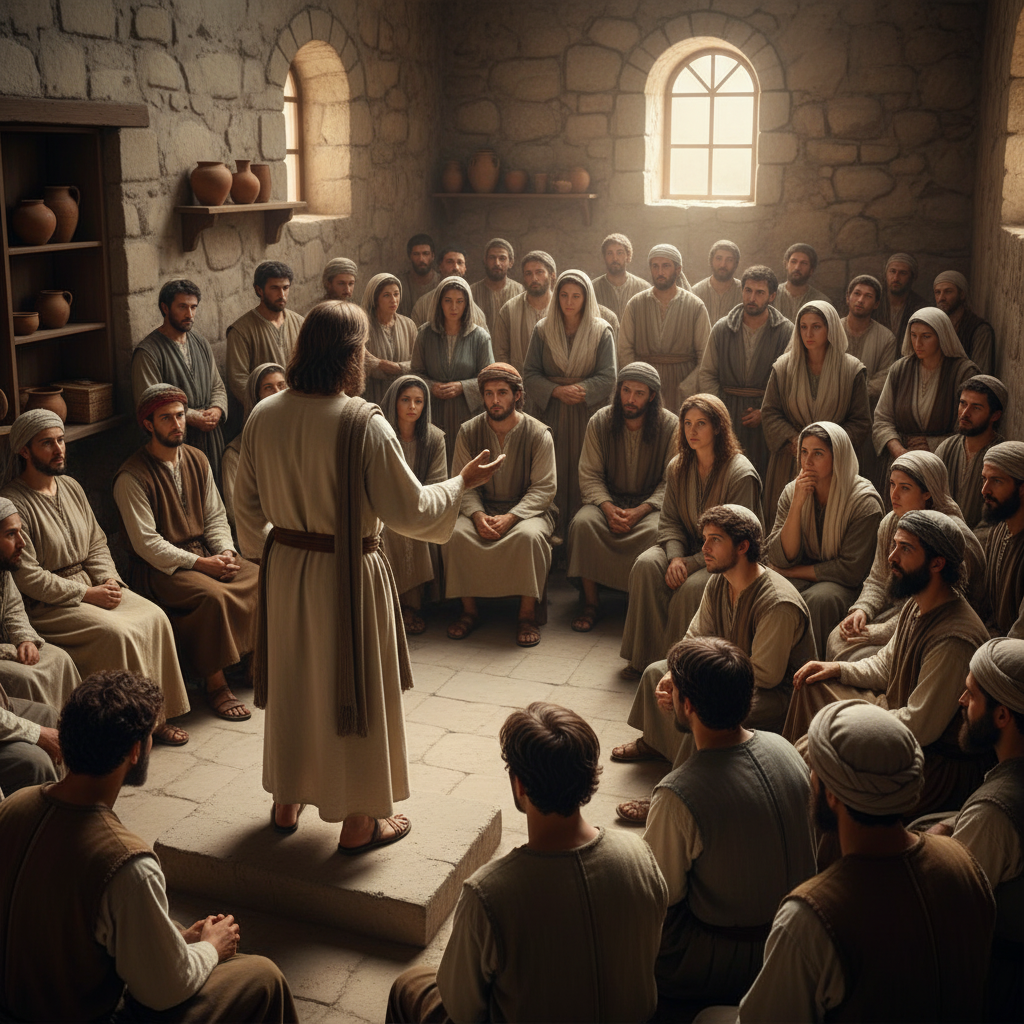
John 6.22-59 records Jesus’ discourse on the bread of life, delivered in the synagogue of Capernaum on a Sabbath in May AD 32. After the multiplication of the loaves, Jesus reveals himself as the 'bread of life', inviting the crowd to believe in him in order to obtain eternal life. This passage, found only in John, displays a major christological and eucharistic richness, in the face of the incomprehension and murmuring of his hearers.

12 min bread of life Jesus the Messiah John 6 synagogue of Capernaum discourse 13 verses 2 books

Resources

Biblical texts

Matthew
Matthew (King James Version) not cited in the book
Mark
Mark (King James Version) not cited in the book
Luke
Luke (King James Version) not cited in the book
John
John 6.22-59 (King James Version)

The day following, when the people which stood on the other side of the sea saw that there was none other boat there, save that one whereinto his disciples were entered, and that Jesus went not with his disciples into the boat, but that his disciples were gone away alone;

(Howbeit there came other boats from Tiberias nigh unto the place where they did eat bread, after that the Lord had given thanks:)

When the people therefore saw that Jesus was not there, neither his disciples, they also took shipping, and came to Capernaum, seeking for Jesus.

And when they had found him on the other side of the sea, they said unto him, Rabbi, when camest thou hither?

Jesus answered them and said, Verily, verily, I say unto you, Ye seek me, not because ye saw the miracles, but because ye did eat of the loaves, and were filled.

Labour not for the meat which perisheth, but for that meat which endureth unto everlasting life, which the Son of man shall give unto you: for him hath God the Father sealed.

Then said they unto him, What shall we do, that we might work the works of God?

Jesus answered and said unto them, This is the work of God, that ye believe on him whom he hath sent.

They said therefore unto him, What sign shewest thou then, that we may see, and believe thee? what dost thou work?

Our fathers did eat manna in the desert; as it is written, He gave them bread from heaven to eat.

Then Jesus said unto them, Verily, verily, I say unto you, Moses gave you not that bread from heaven; but my Father giveth you the true bread from heaven.

For the bread of God is he which cometh down from heaven, and giveth life unto the world.

Then said they unto him, Lord, evermore give us this bread.

And Jesus said unto them, I am the bread of life: he that cometh to me shall never hunger; and he that believeth on me shall never thirst.

But I said unto you, That ye also have seen me, and believe not.

All that the Father giveth me shall come to me; and him that cometh to me I will in no wise cast out.

For I came down from heaven, not to do mine own will, but the will of him that sent me.

And this is the Father’s will which hath sent me, that of all which he hath given me I should lose nothing, but should raise it up again at the last day.

And this is the will of him that sent me, that every one which seeth the Son, and believeth on him, may have everlasting life: and I will raise him up at the last day.

The Jews then murmured at him, because he said, I am the bread which came down from heaven.

And they said, Is not this Jesus, the son of Joseph, whose father and mother we know? how is it then that he saith, I came down from heaven?

Jesus therefore answered and said unto them, Murmur not among yourselves.

No man can come to me, except the Father which hath sent me draw him: and I will raise him up at the last day.

It is written in the prophets, And they shall be all taught of God. Every man therefore that hath heard, and hath learned of the Father, cometh unto me.

Not that any man hath seen the Father, save he which is of God, he hath seen the Father.

Verily, verily, I say unto you, He that believeth on me hath everlasting life.

I am that bread of life.

Your fathers did eat manna in the wilderness, and are dead.

This is the bread which cometh down from heaven, that a man may eat thereof, and not die.

I am the living bread which came down from heaven: if any man eat of this bread, he shall live for ever: and the bread that I will give is my flesh, which I will give for the life of the world.

The Jews therefore strove among themselves, saying, How can this man give us his flesh to eat?

Then Jesus said unto them, Verily, verily, I say unto you, Except ye eat the flesh of the Son of man, and drink his blood, ye have no life in you.

Whoso eateth my flesh, and drinketh my blood, hath eternal life; and I will raise him up at the last day.

For my flesh is meat indeed, and my blood is drink indeed.

He that eateth my flesh, and drinketh my blood, dwelleth in me, and I in him.

As the living Father hath sent me, and I live by the Father: so he that eateth me, even he shall live by me.

This is that bread which came down from heaven: not as your fathers did eat manna, and are dead: he that eateth of this bread shall live for ever.

These things said he in the , as he taught in Capernaum.

Technical details

Year AD 32

Location: of Capernaum

Date: A in May AD 32, after the Passover of Monday, April 12, AD 32

Method: We return to John

Note on the method: John is the only one to report this event

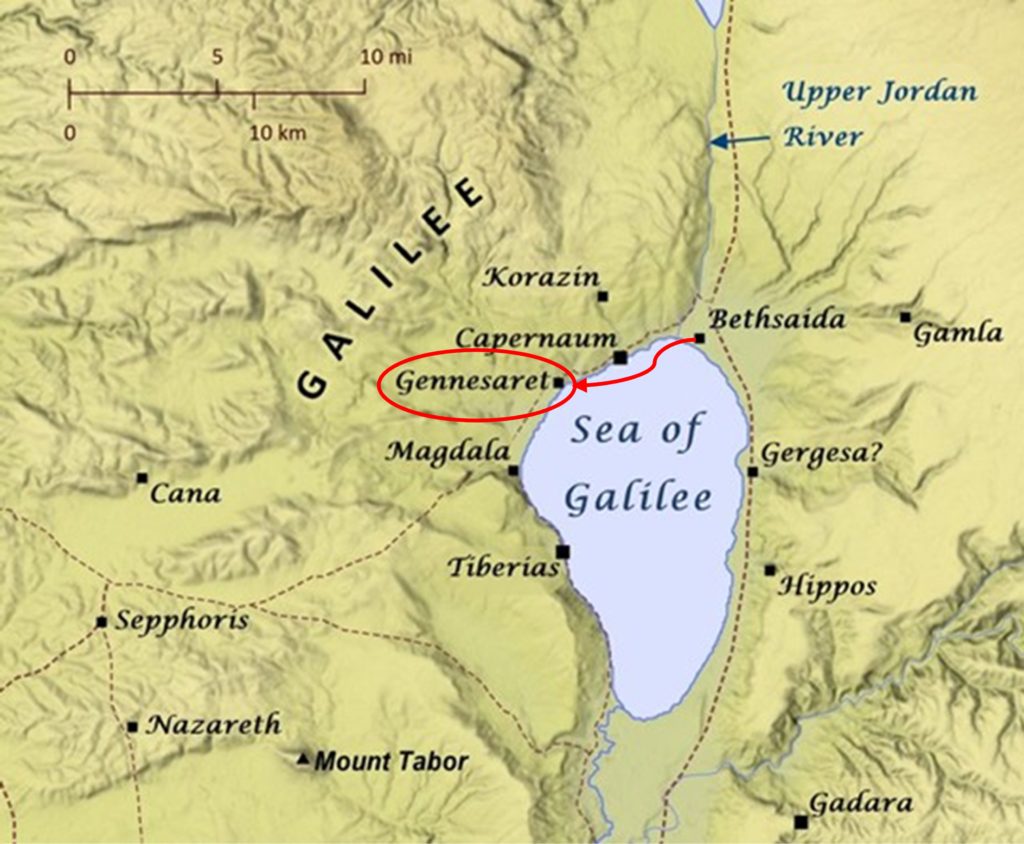
Gennesaret

The Messiah attracts crowds, and on the , he proclaims his message in the of Capernaum.

Teaching of the Messiah Jesus about the bread of life

Teaching of the Messiah Jesus about the bread of life

\n Analysis of the Text\n

John reports that the crowd was trying to locate the Messiah Jesus and his disciples. It is specified that they had noticed that the disciples had taken the only boat available, whereas the Messiah Jesus had not gone with them. John then states that these people decided to go to Capernaum, knowing that this town was the residence of the Messiah Jesus and his disciples.

John probably obtained this information from people who had arrived in Capernaum.

There, the crowd finds Jesus. He does not answer their question: “Rabbi, when did you get here?” John may not have recorded this dialogue because he did not consider it relevant to his account. He will deliver a discourse on the theme of the “bread of life” the following in the of Capernaum.

Thus, he establishes a direct correlation between the performed the day before and the divine food. The argument is complex, prompting several questions the hearers.

\n Analysis of the Text\n

The text of John 6.25-50 can be broken down into several important sections:

Encounter with the crowd (John 6.25-34)

Historical and cultural context: After the miracle of the , the crowd seeks to find the Messiah Jesus again. They hold a messianic conception tied to material miracles.

Theology: The Messiah Jesus rebukes them for seeking signs instead of the spiritual truth he brings. He introduces the concept of “labor for the food that endures forever.”

Jesus as the Bread of Life (John 6.35-40)

Christology : The Messiah Jesus reveals himself as the “bread of life,” a declaration that underscores his unique role in salvation.

Theology of the Incarnation: He insists on the necessity of believing in him in order to have eternal life, which underscores faith as the response to the incarnation of God in Jesus.

Response of the Jews (John 6.41-50)

Conflict and misunderstanding: Some Jews murmur against Jesus because they do not understand how he can claim to have come down from heaven.

Heresy and orthodoxy : These verses confront the orthodox beliefs of the time with the new revelation in Jesus.

Theological Implications

Christology: John 6.25-50 underscores the divine identity of the Messiah Jesus and his unique role in salvation.

Eucharist: This passage is often interpreted in relation to the Lord’s Supper (the Eucharist), although the text does not explicitly mention this sacrament.

Faith and Unbelief: The passage shows the division between those who believe in Jesus the Messiah and those who reject him, a recurring theme in the Gospel of John.

It is worth observing the reactions of the crowd, and in particular the questions asked, in order to analyze the impact of this discourse.

  • John 6.25: “Rabbi, when did you get here?”
  • John 6.28: “What must we do to do the works God requires?”
  • John 6.30-31: “What miraculous sign, then, do you perform,” they asked him, “so that we may see it and believe you? What do you do? Our ancestors ate the manna in the wilderness, as it is written: He gave them bread from heaven to eat.”
  • John 6.34: “Lord, give us this bread always!”
  • John 6.41-42: The Jews murmured about him because he had said, “I am the bread that came down from heaven,” and they were saying, “Is this not Jesus, the son of Joseph, whose father and mother we know? How then can he say, ‘I have come down from heaven’?”
  • John 6.52: At that, the Jews began to argue sharply among themselves, saying, “How can he give us his body to eat?”

We identify two types of questions: the first, constructive in nature, presumably asked by members of the local population (points 1, 2 and 4). The second category is more technical and critical, probably raised by religious men from Jerusalem (points 3, 5 and 6).

Most of the religious leaders regarded the Messiah Jesus as a figure who challenged their religious system. They would do everything to discredit him in the eyes of the people, who regarded him as a great prophet blessed by God.

As Jesus’ renown grew among the people, the attitude of the became increasingly hostile, leading to confrontations that were at times threatening. Although these men were a very small minority, they would try to exert influence on some of their compatriots. It is nevertheless observed that the great majority of the crowd supported the Messiah Jesus.

The theme addressed here by the Messiah Jesus is understandable today thanks to the passages on the Lord’s Supper written by Paul (1 Corinthians 11.23-34). It is therefore natural to draw a link between the death of the Lord and the bread and wine of the Lord’s Supper (the Eucharist). However, one must acknowledge how difficult it was for these people to understand the words of the Messiah Jesus. We have written a special appendix to explain this discourse reported by John (ANN108 : The Bread of Life).

However, the reactions of individuals match their initial positions regarding the Messiah Jesus. Indeed, those opposed to the Messiah Jesus will see in this difficult teaching an opportunity to criticize him and to proclaim that he is talking nonsense, whereas those who appreciate him will seek to understand. This discourse thus proves divisive, bringing out the true motivations of each person.