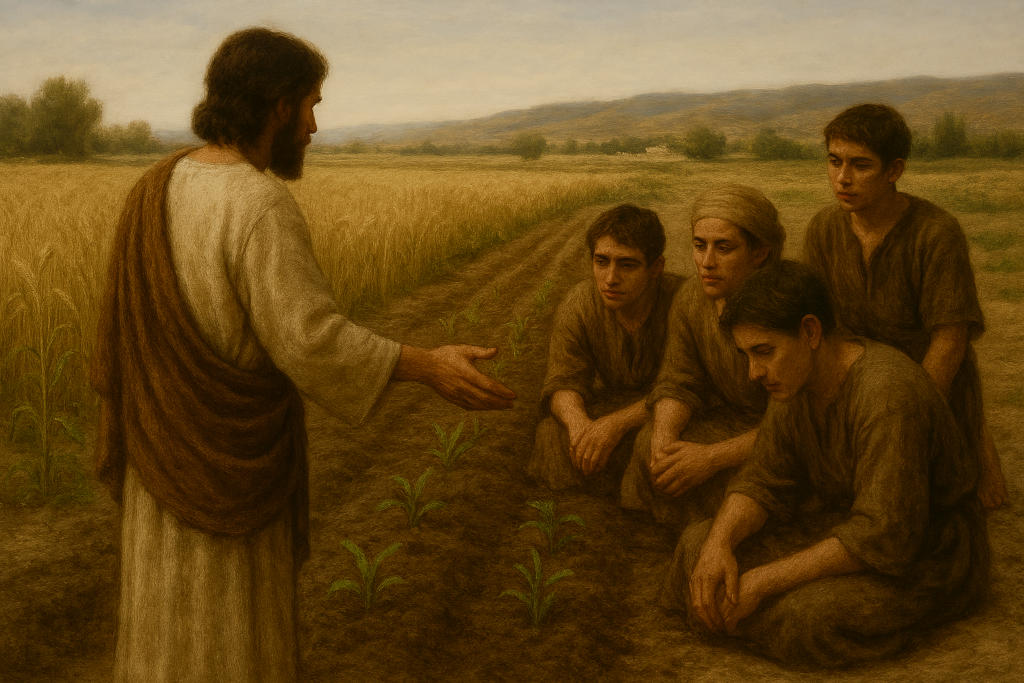

This is the only found exclusively in the Gospel according to Mark. This illustration is easily understood by most of the audience, composed mainly of people cultivating a small plot of land to provide for their families.
Interpretation and main lessons
Mystery of growth: The highlights the mystery of the growth of the kingdom of God. Just as the farmer does not know exactly how the seed sprouts and grows, we do not always understand how the kingdom of God grows and develops. There is a mysterious, divine dimension at work.
Human work and divine action: The farmer plays a role in sowing the seeds, but growth itself is the result of God's action. This emphasizes that, although we have a role to play in God's work, it is ultimately God who brings about growth.
Gradual process: The seed grows in stages: first the blade, then the ear, then the grain. This shows that spiritual growth and the development of the kingdom of God happen gradually and in stages. There is a time for everything, and patience is needed.
Harvest: The ends with the harvest, which symbolizes the end of time and the final judgment. This reminds us that, although the growth of the kingdom of God is mysterious and gradual, there will ultimately be a time of harvest and judgment.
The of the seed growing secretly teaches us about the mysterious, divine nature of the growth of the kingdom of God, the importance of our role as sowers, and the need for patience in the spiritual process. It also reminds us that, although growth is largely beyond our control, there will be a day of harvest when the fruits of that growth will be gathered.
Here, then, is a simple but deeply meaningful .