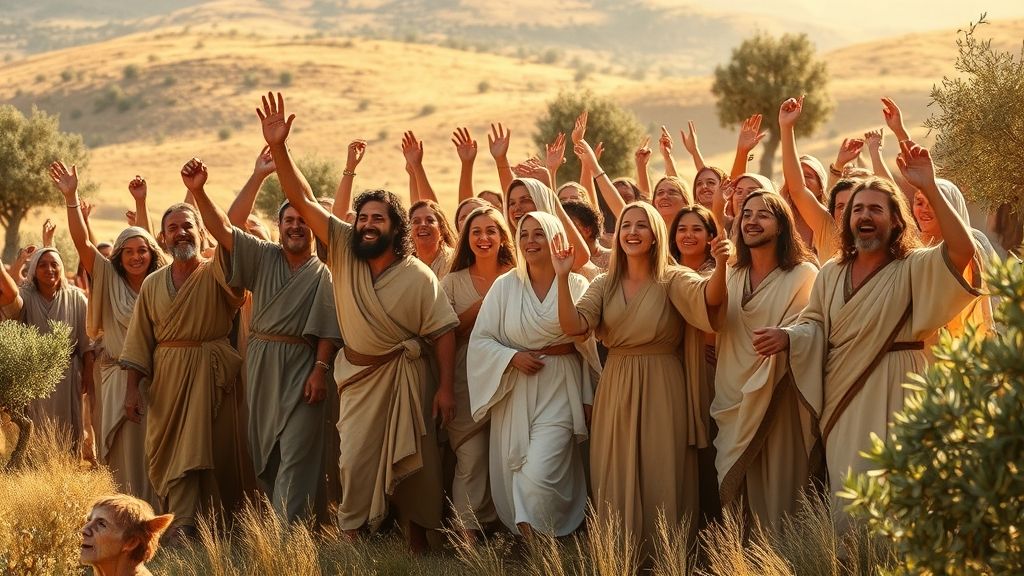


Matthew is the only one to conclude this long discourse. The disciples and all the listeners are struck by the Master’s teaching, noticing a clear difference from the preaching of the that they heard every in the .
The apostle John aptly illustrates this reality by quoting the astonished saying: "No one ever spoke like this man" (John 7.46).
Jesus’ listeners were struck by the exceptional authority with which he spoke (Mark 1.22, Luke 4.32, Matthew 7.28-29), an observation Peter also made in John 6.68.
This long discourse, chiefly recorded by Matthew, had a profound impact on the crowd and the many disciples. The true disciple’s path is now clearly laid out, leaving each person to choose whether to follow it, which will determine their entry into the Kingdom of God.
Matthew’s conclusion might seem surprising, because the Messiah Jesus has set out standards that are difficult to attain and often opposed to the teachings of the who dominated the people. Yet all these individuals, mainly disciples, did not react as some others did by saying: "These words are hard; who can listen to them?" (John 6.60).
The crowd therefore longs for this new life and sees in Jesus more than a mere prophet: clearly, according to our analysis, the Messiah. It glimpses the foundations of a new society led by this Master whom it regards as remarkable.
Through these 23 points, the Messiah Jesus has outlined the ideal portrait of a disciple, which differs fundamentally from intrinsic human nature. It therefore appears that living up to this portrait is practically impossible without a profound transformation. This is undoubtedly why the discourse is addressed primarily to disciples, as mentioned in Luke 6.17, and then to a wider audience.
This brings the Sermon on the Mount to a close.