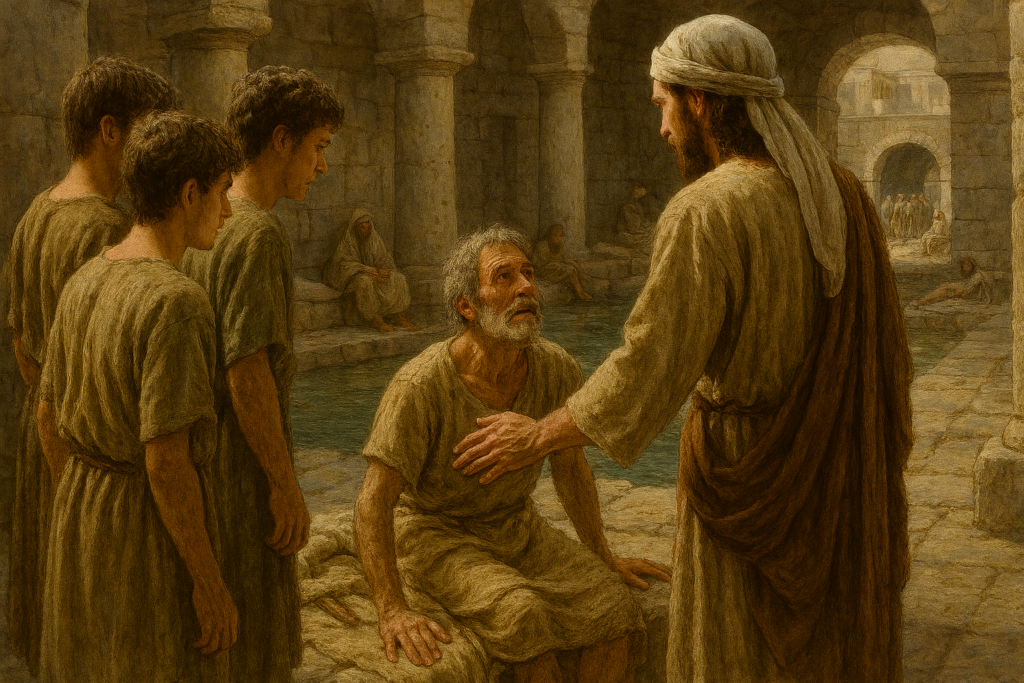

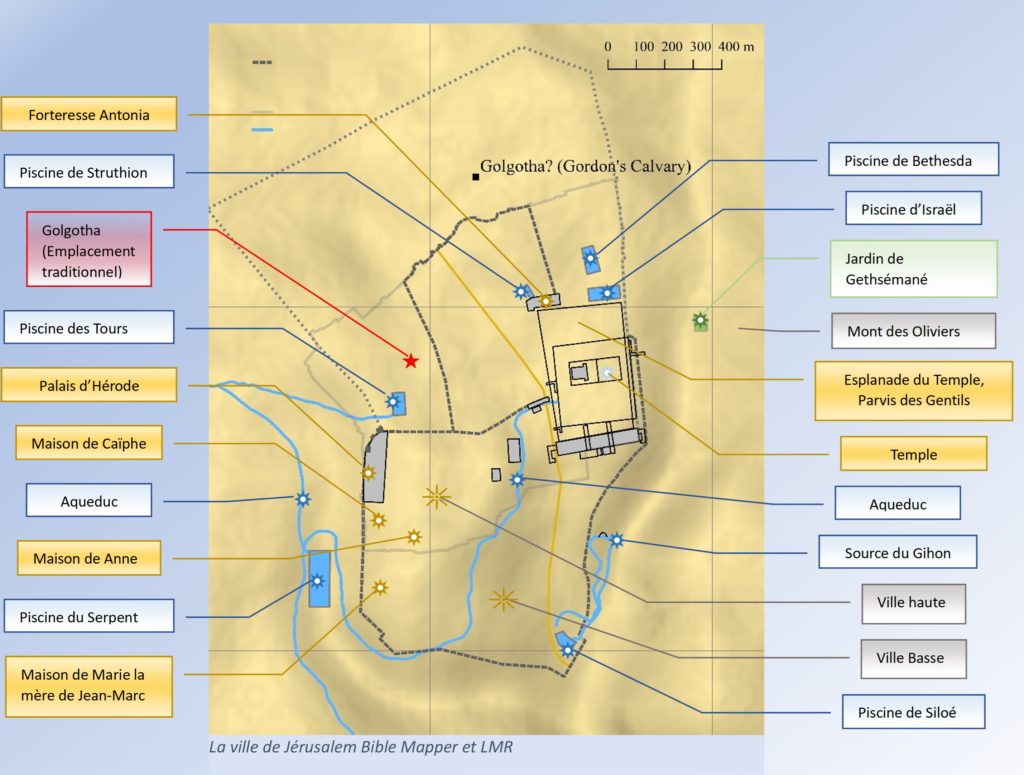
We continue our study following the chronology established by John. The event takes place at the , situated in Jerusalem near the Sheep Gate, close to the Temple, according to John's indications.
Two questions arise:
Did Jesus the Messiah deliberately choose to heal this man precisely on a ?
Was he trying to provoke the , at the risk of causing a conflict?
It is important to observe that Jesus the Messiah was staying in Jerusalem throughout that week. He could therefore have chosen another day to go to the , particularly since the sick were always present there. By acting on this particular day, he highlights his position as Lord of the . From then on, the religious leaders have only two options: enter into conflict with him or recognise him as God's Messiah.
Their refusal to acknowledge Jesus' messiahship leads them to misinterpret the situation. They now see this Teacher as a threat to Judaism, their ancestors' religion, of which they consider themselves guardians.
The logical consequence of their choice is an unequivocal condemnation of the actions of Jesus the Messiah, who nevertheless opposes not Judaism itself but only the political and religious system that stems from it.
In this account, John seeks to highlight the absurdity of these distortions of Judaism advocated by the . These religious men, who were awaiting a messiah, now see him with irrefutable evidence, yet they reject him and even want him dead, as John reports!
Observance of ancestral rites, particularly the , originally instituted by God, appears more important than God's own will, manifested in Jesus the Messiah. We are therefore inclined to think that Jesus the Messiah deliberately chose to heal this disabled man on the to demonstrate his position as Lord of the .