PER006

Mary's praise, or the Magnificat

This article examines Mary's Magnificat, a hymn of praise in which she expresses her gratitude to God, acknowledging her role in the plan of redemption. An analysis of Luke 1:46-55.

2 min Magnificat Mary Praise Hymn 1 verse 1 book

Resources

Biblical texts

Matthew
Matthew (King James Version) not cited in the book
Mark
Mark (King James Version) not cited in the book
Luke
Luke 1.46-55 (King James Version)

And Mary said, My soul doth magnify the Lord,

And my spirit hath rejoiced in God my Saviour.

For he hath regarded the low estate of his handmaiden: for, behold, from henceforth all generations shall call me blessed.

For he that is mighty hath done to me great things; and holy is his name.

And his mercy is on them that fear him from generation to generation.

He hath shewed strength with his arm; he hath scattered the proud in the imagination of their hearts.

He hath put down the mighty from their seats, and exalted them of low degree.

He hath filled the hungry with good things; and the rich he hath sent empty away.

He hath holpen his servant Israel, in remembrance of his mercy;

As he spake to our fathers, to Abraham, and to his seed for ever.

John
John (King James Version) not cited in the book

Technical details

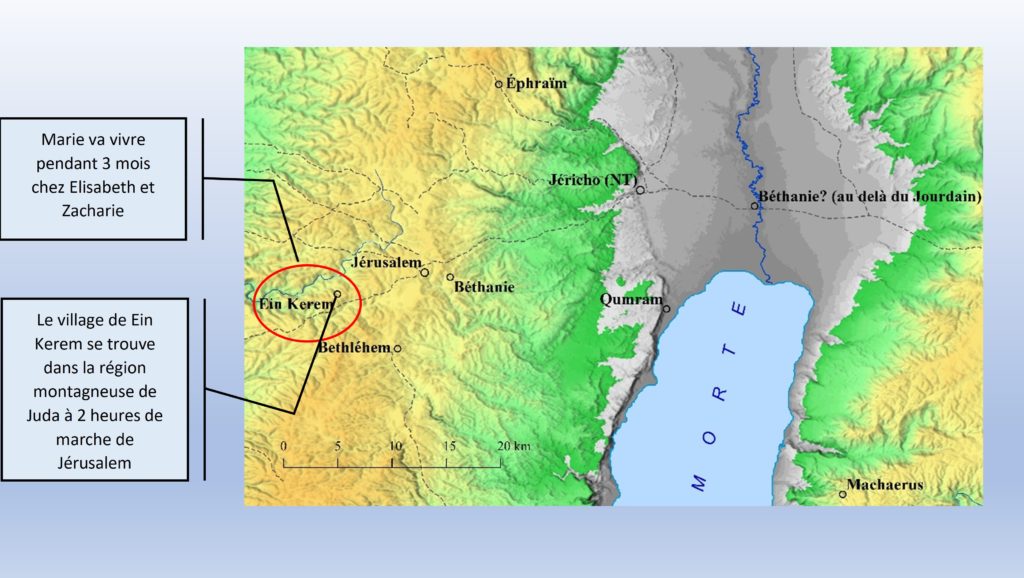
Location: Most likely Ein Karem, near Jerusalem in Judea

Date: January -2 BC

Method: We continue with Luke

Note on the method: Luke alone records this episode

Mary's praise, or the Magnificat

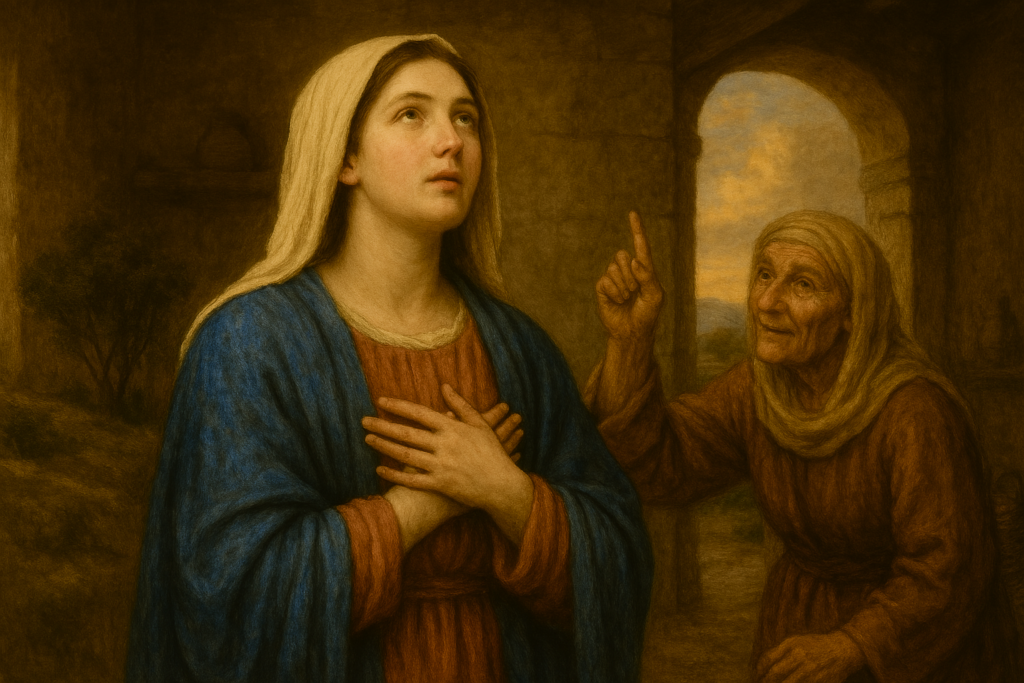
The pregnant Mary is going to visit her aunt Elizabeth in Ein Karem.

Mary's Magnificat

The Magnificat

Comments

We are in the presence of an exceptional woman, quite unlike the widespread image of a somewhat naïve teenager who remains passive in the face of events. She listens, understands, knows, submits, believes, sees and remains discreet, viewing herself as a mere instrument in the hands of the one and only Supreme Authority, God.

She sees God as the master of history, that of humanity and consequently that of the Jewish people, and acknowledges that it is he who guides and orders it so that his plans may be fulfilled. She takes her place within this purpose.

The name “Magnificat” comes from Mary's opening words: “My soul magnifies”. The choice of Mary to bear the Messiah seems wise. She possesses all the virtues needed to carry out this mission. Mary is a remarkable and even admirable woman who will then return to a normal life.