On 3 September 2025, a tragic accident involving the Gloria funicular in Lisbon claimed the lives of 16 people and left 20 seriously injured. Being at the scene, my wife and I heard many witnesses express their shock and their sense of vulnerability, often repeating: “I could have been in that car and been among the victims.”
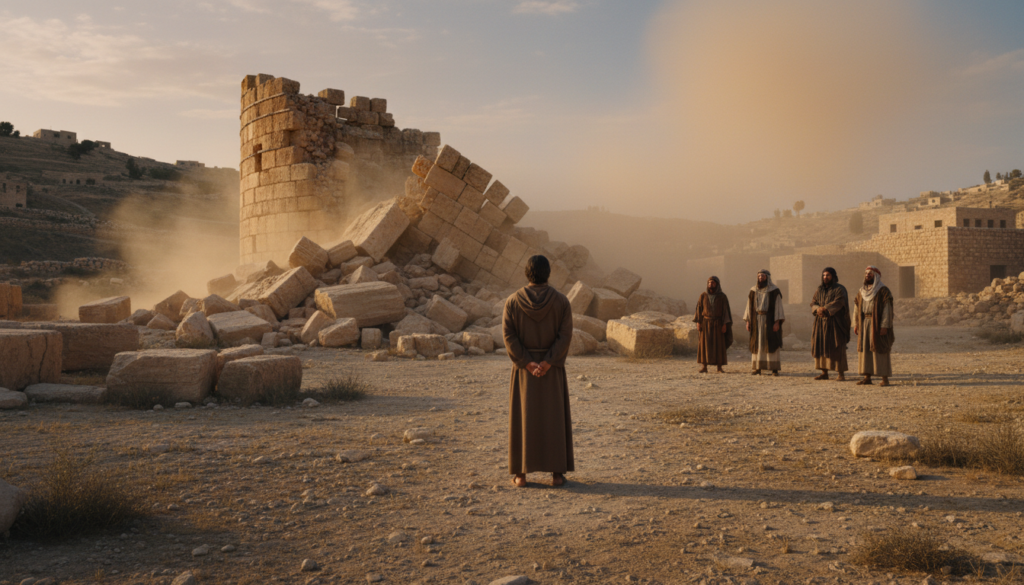
This tragedy recalls a similar event reported in the Gospels: the collapse of the tower of in Israel, in the time of Jesus the Messiah, which claimed 18 victims. Faced with this disaster, the question was raised: “Were those people who died greater sinners?” This question illustrates a human tendency to associate calamities with the faults of the people concerned, as John 9.2 also suggests. However, the is unambiguous: “No, I tell you; but unless you repent, you will all likewise perish.”
It would be wrong to think that Jesus the Messiah lacks compassion toward the victims and their families. In fact, he is often “moved with compassion” before the crowds who come to him to be healed (Matthew 9.36, Matthew 14.14, Matthew 15.32 and Mark 6.34). However, faced with such situations, he invites a deeper reflection: “No, I tell you; but unless you repent, you will all likewise perish.”
Reading the Gospels shows that Jesus the Messiah has a unique perspective on events. For example, when he arrives before Jerusalem (Luke 13.34), he does not dwell on the beauty of the site as Flavius Josephus does, who describes a Temple resplendent with magnificence. Likewise, the Babylonian Talmud (tractate Sukkah 51b) stresses the exceptional beauty of Herod’s Temple. But for Jesus the Messiah, the essential question lies elsewhere:
Jesus the Messiah sees a crowd opposed to God. In the text cited, he does not perceive an assembly come to listen to him, but people lost for eternity (Luke 23.28-31). According to him, physical death is only a passage to another form of life, whose quality depends on the choices made here below. Human beings pity the fate of the victims, but often neglect to consider the place where they will spend eternity.
What matters most to Jesus is entering the kingdom of God. The quality of earthly life, however high, cannot compete with a place in the divine kingdom. The appearance of Jerusalem, however beautiful, matters little compared with the fundamental spiritual stake (1 Samuel 16.7).
To stress the importance of the kingdom of God, he declares:
“What good would it do a man to gain the whole world, if he lost his soul? What would a man give in exchange for his soul?” (Mark 8.36-37)
Through words accessible to all, Jesus shows that eternal life in the kingdom of God far surpasses the best of lives on earth. Thus it is wise to follow the advice of Paul and Silas:
Dominique Lormier