
Here Luke presents accounts that do not follow a formal chronology. He offers an argument structured according to a precise logic. This theme is developed in the section titled: . It is worth considering Luke's purpose when studying these chapters.
L’
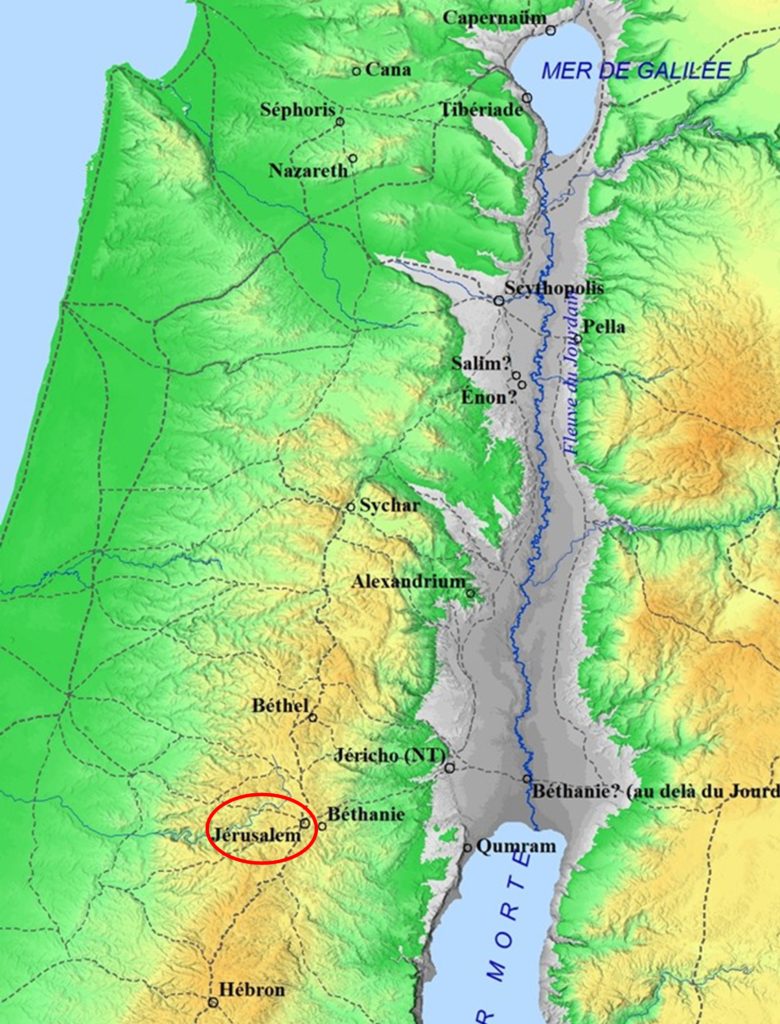
In the time of the Messiah Jesus, Jerusalem had about 480 synagogues. This large number explains Luke’s use of the expression “one of the synagogues” rather than “the ”. This detail suggests that it was probably a place chosen from the multitude that existed in the city, and not a single central building.
Synagogues fulfilled several essential roles: they were the setting for the reading of the Law, communal prayer and teaching. Unlike the Temple, they therefore served as educational and spiritual centers for the people. Some synagogues were founded by professional groups, such as the coppersmiths, or by foreign communities settled in Jerusalem.
Thus, the wording of:
supports this reality. The existence of several synagogues in the city explains the choice of this phrasing and seems to indicate that Luke was referring to Jerusalem, for had it been a matter of different localities, he would probably have simply written: “in the ”.
The freedom of action enjoyed by the Messiah Jesus is linked to the changing approach of the , who are now seeking to gather evidence to support their accusation in the context of a possible trial.
The served mainly as a place of teaching, unlike the Temple, which was intended for sacrifices. According to several biblical passages (Luke 13.10-17, Luke 6.6-11, John 5.1-18, John 9.1-41, Luke 14.1-6, Mark 1.21-28 and Mark 1.29-31), the Messiah Jesus is reported to have performed miracles on a daily basis, including on the .
Each time, the religious authorities were indignant, because they considered that such an act violated the law of the . They should rather have rejoiced at the deliverance of this person who had been ill for 18 years. The Messiah Jesus never failed to point out the contradictions in their accusations.
The result appears to be much the same every time. The religious authorities are outraged and the crowd is full of admiration. However, we observe that the tone used by the Messiah Jesus remains direct and straightforward.
This woman’s healing would not have taken place had Jesus strictly applied the recommendations of the . It should be noted that no explicit provision of the law concerning the (Exodus 20.8-10; Deuteronomy 5.12-15) forbids doing a good deed on this day of rest, whose main purpose is to remember God. However, some interpreters give priority to tradition over the direct application of the divine commandment, even when this may affect others.
We note an exceptional fact: the opponents of the Messiah Jesus were filled with shame on hearing his words (Luke 13.17). Usually, it was rather anger and hatred that drove them.
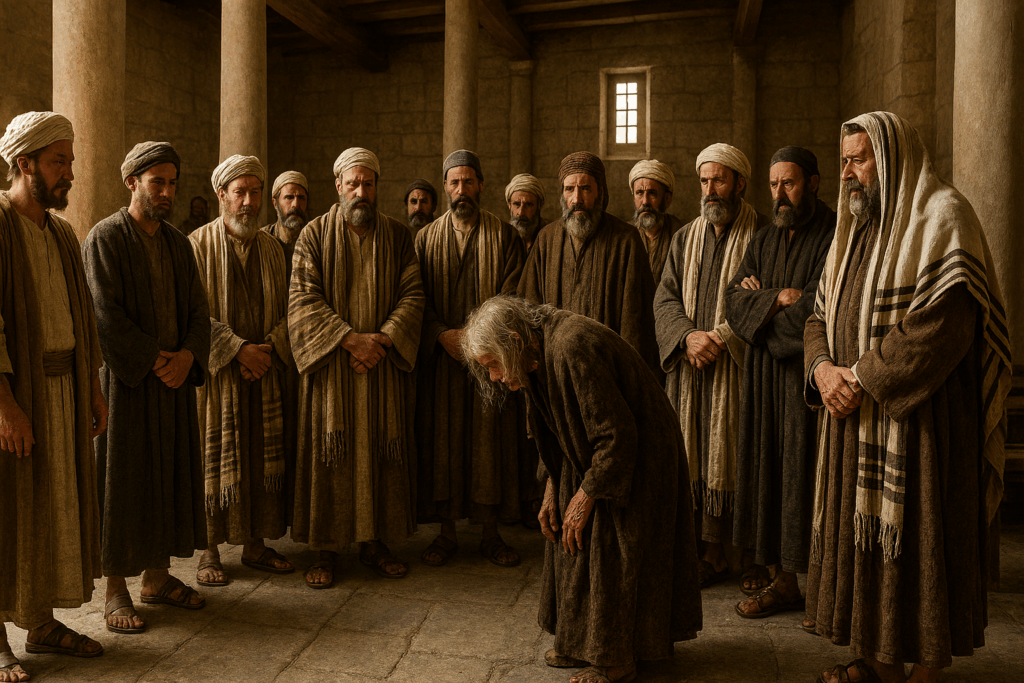
This woman had been ill for eighteen years, yet she kept her faith and went to the . Despite her humiliating condition, she continued to attend the house of God—and fortunately so, for this day of became for her a day of deliverance and salvation.
In Jewish tradition, the number 18 is associated with the word chai (חַי), which means “life”. Ironic, since this woman seemed deprived of life… until the Messiah Jesus fully restored her.
This account highlights the lack of compassion of the religious leaders who opposed the Messiah Jesus.