
Lazarus, a man of Bethany, falls gravely ill. He lives with his sisters, , in a house where the Messiah Jesus is often welcomed with affection. The two women, aware of the deep love the Messiah Jesus has for their brother, send him a simple, trusting message: “He whom you love is sick.” They make no specific request, convinced that his love is enough to move him to act.
The Messiah Jesus receives the news, but he declares that this sickness will not lead to final death: it will serve to display the glory of God. Despite his attachment to this family, he stays two more days where he is. This delay is not a lack of love, but a deliberate decision, part of a greater purpose.
After these two days, the Messiah Jesus tells his disciples that he is going back to Judea. They are alarmed, because the region is dangerous: there was a recent attempt to stone him (PER219, PER260, PER274). The Messiah Jesus answers that whoever walks in the light has nothing to fear. He then explains to them that Lazarus “has fallen asleep,” a way of speaking about death that expresses both gentleness and hope. The disciples take the expression literally, and the Messiah Jesus has to make it plain that Lazarus is really dead. He adds that he is glad, for their sake, that he was not there, so that they may believe in him all the more.
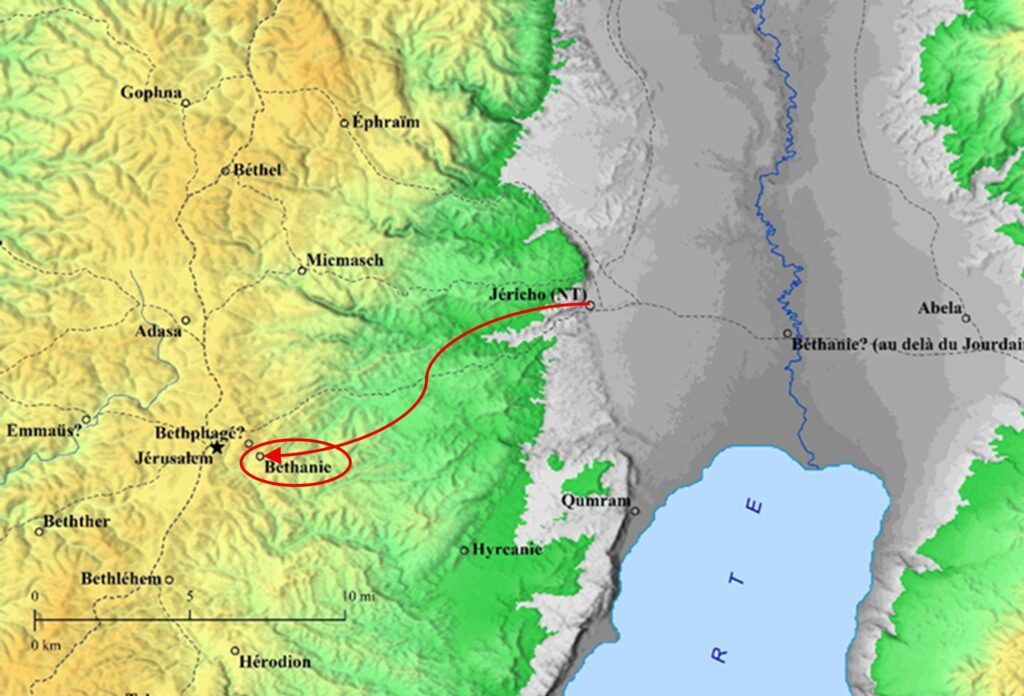
As he comes near Bethany, the Messiah Jesus learns that Lazarus has already been in the tomb for four days. Many Jews have come to comfort in their mourning. Martha goes out to meet the Messiah Jesus and tells him that if the Master had been there, her brother would not have died. Yet she keeps a deep trust: she knows that God will grant the Messiah Jesus whatever he asks. He answers her that her brother will rise again. Martha thinks of the final resurrection, but the Messiah Jesus reveals to her something greater: he presents himself as “the resurrection and the life,” the one who gives life even beyond death.
Mary then joins the Messiah Jesus. She falls at his feet weeping, repeating the same words as her sister. He is deeply moved on seeing Mary’s grief and that of the people who came to comfort her. He is troubled within himself and weeps himself. This moment shows his full humanity, his real compassion, his sincere love for his friends. Some witnesses are astonished at his tears, others murmur that he could have prevented Lazarus’s death.
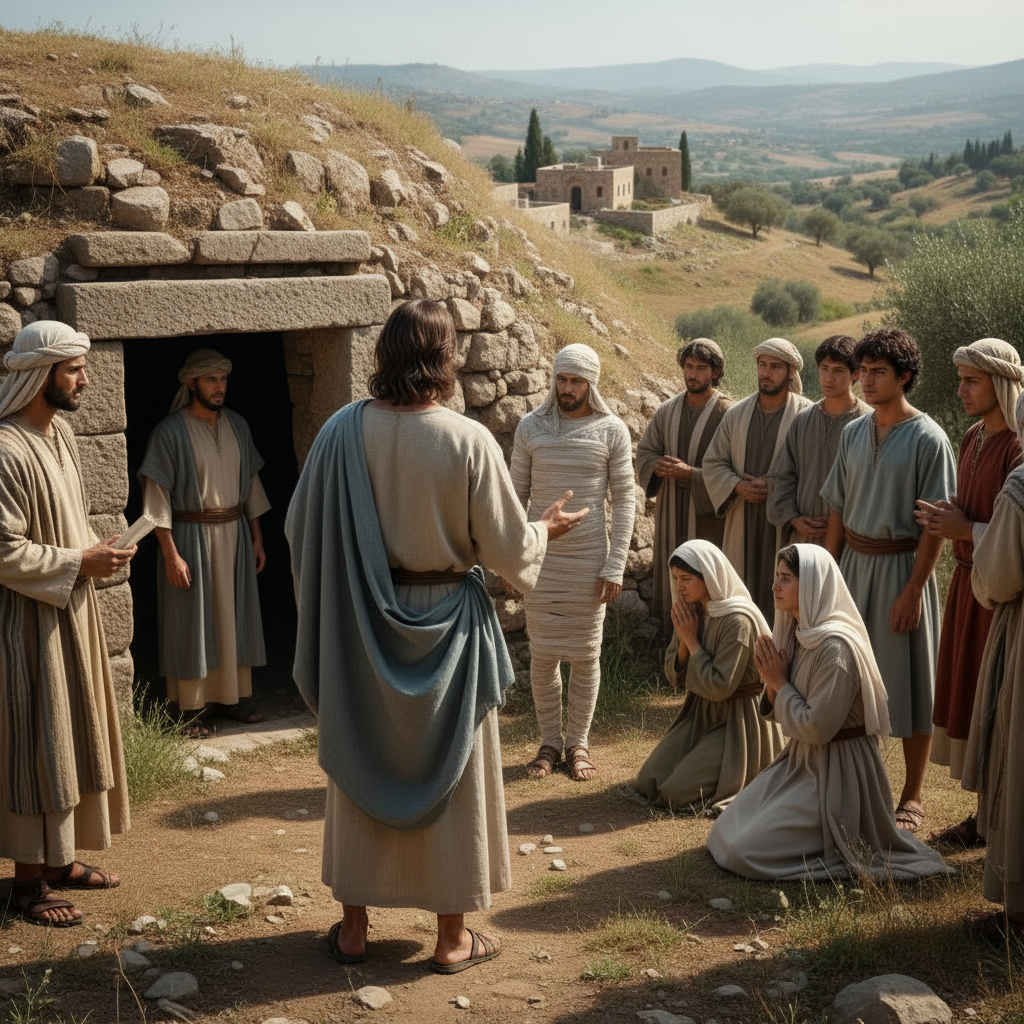
The Messiah Jesus then goes to the tomb, a cave closed by a stone. He asks that it be taken away. Martha hesitates: after four days, the body must already be decaying. The Messiah Jesus reminds her that she will see the glory of God if she believes. The stone is removed. The Messiah Jesus lifts his eyes and prays to his Father, not to be heard, for he knows he is always heard, but so that the crowd may understand that the Father has sent him.
Then he cries out in a loud voice: “Lazarus, come out!” The dead man comes out, still wrapped in grave clothes and with his face covered by a cloth. The Messiah Jesus orders that he be unbound and let go. This miracle, the most spectacular reported by John, shows both the divine power of the Messiah Jesus and his authority over death.
Many witnesses believe in him after seeing this. Others go and report the event to the religious authorities, which will trigger the official decision to put the Messiah Jesus to death. The raising of Lazarus thus becomes the ultimate sign that reveals the glory of the Son, but also the event that hastens the Passion.