
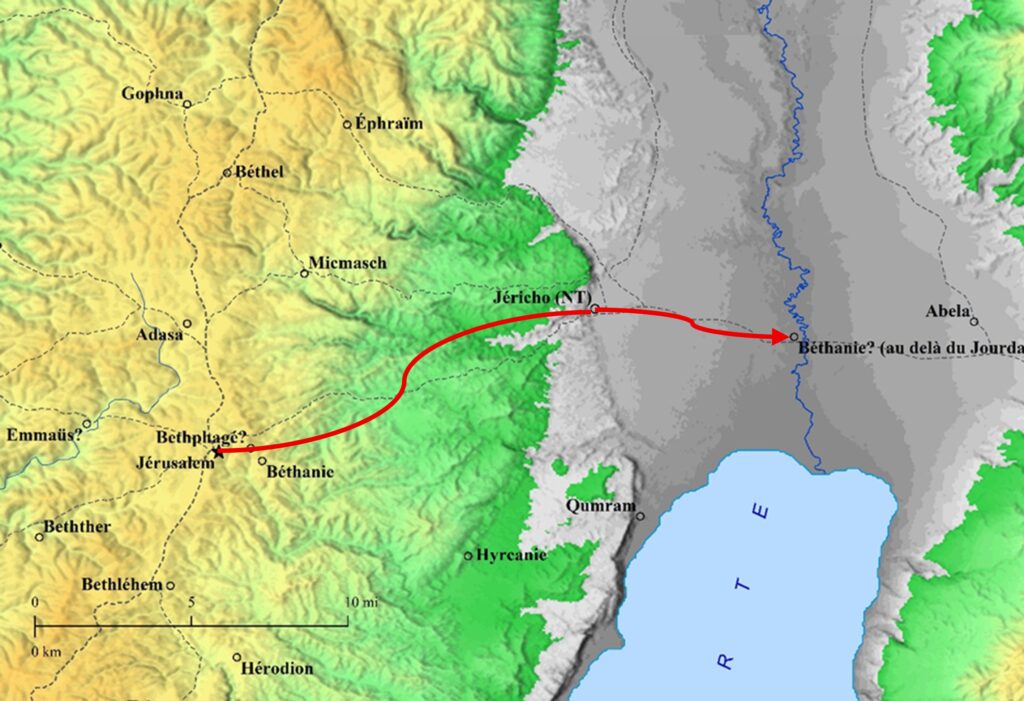
The discourse reported by Luke may be set at different times and in various places, which suggests that no strict chronology is followed in his narrative. It even seems very likely that Luke deliberately chose this point in the account to gather several teachings together. This approach allows him not only to omit certain contextual elements in order to make his account more concise, but also to enrich and develop his argument on the theme of the kingdom of heaven.
Thus, Luke presents accounts that do not necessarily follow a formal chronological order. On the contrary, he arranges his material according to a precise logic, structured around his theological aims. This organizing principle is explored further in the section titled “The ”. It is therefore essential, in studying these chapters, to take into account the author’s intention in the composition and structuring of his gospel.
L’
For further information, please consult the study on the parables: PAR034: The prodigal son, as well as PAR000: The parables. You can also read appendix ANN078: The parables. We have decided to follow Luke’s development in order to understand his argument well.
The of the prodigal son:
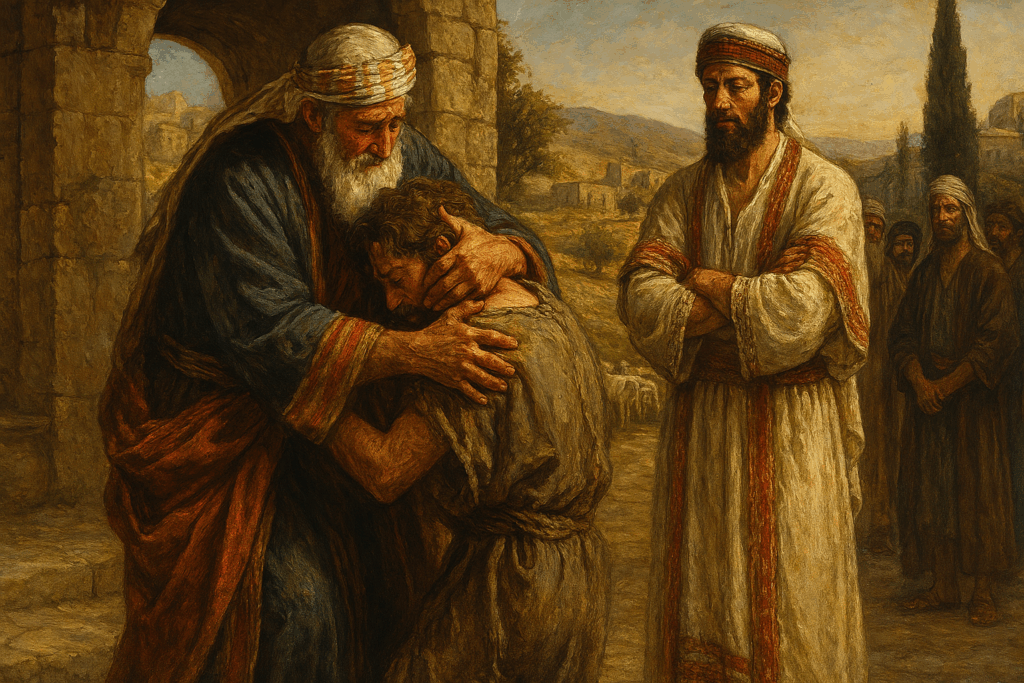
The of the prodigal son is the last of the three parables which, in the Gospel of Luke, address the central theme of the search for the kingdom of heaven. After illustrating this theme with the example of the lost sheep (Luke 15.3-7), then with that of the lost coin (Luke 15.8-10), Luke here presents an account centered on the son of a well-off family (Luke 15.11-32).
This account stands out for its length: Luke devotes twenty-two verses to it, whereas the of the sheep had five and that of the coin three. This difference in treatment inevitably raises questions about the particular role of this third .
It is clear that this is the centerpiece of the exposition of chapter 15. The three parables of this chapter highlight God’s attitude toward those who remain outside the kingdom of heaven. However, the last , by presenting a wealthy family, makes the overall understanding easier by offering a concrete and accessible picture.
The account places the two sons at the heart of the reflection. The figure of the Father, common to the three parables, appears here again as compassionate, welcoming and full of love. The reader’s attention is therefore directed to the two brothers, members of the same family.
The message associated with the younger son is easy to understand. After going astray, he repents, returns to his father and receives forgiveness from him, thus regaining his original place. This dynamic recalls the goodness of God, who is always seeking those who are lost.
The figure of the elder son, however, introduces an additional dimension. His attitude, disapproved of by the Father, brings to light his lack of understanding and his refusal to accept the father’s generosity toward his erring brother. The elder son points to the difference between his own faithfulness and the conduct of his younger brother, who renounced his status.
The elder son thus symbolizes the one who believes that his own righteousness and good works are enough to enter the kingdom of heaven. He thinks himself blameless, but his brother’s return reveals the evil inclinations of his heart. In reality both brothers need repentance, even if the elder is not yet aware of it. The father runs to the younger son (Luke 15.20), but he also pleads with his elder son (Luke 15.28).
The does not give the elder son’s final reaction. Jesus, the Messiah, simply affirms that the door of the kingdom of heaven remains open.