

Here Luke presents accounts that do not follow a formal chronology. He offers an argument structured according to a precise logic. This theme is developed in the section titled: . It is worth considering Luke's purpose when studying these chapters.
L’
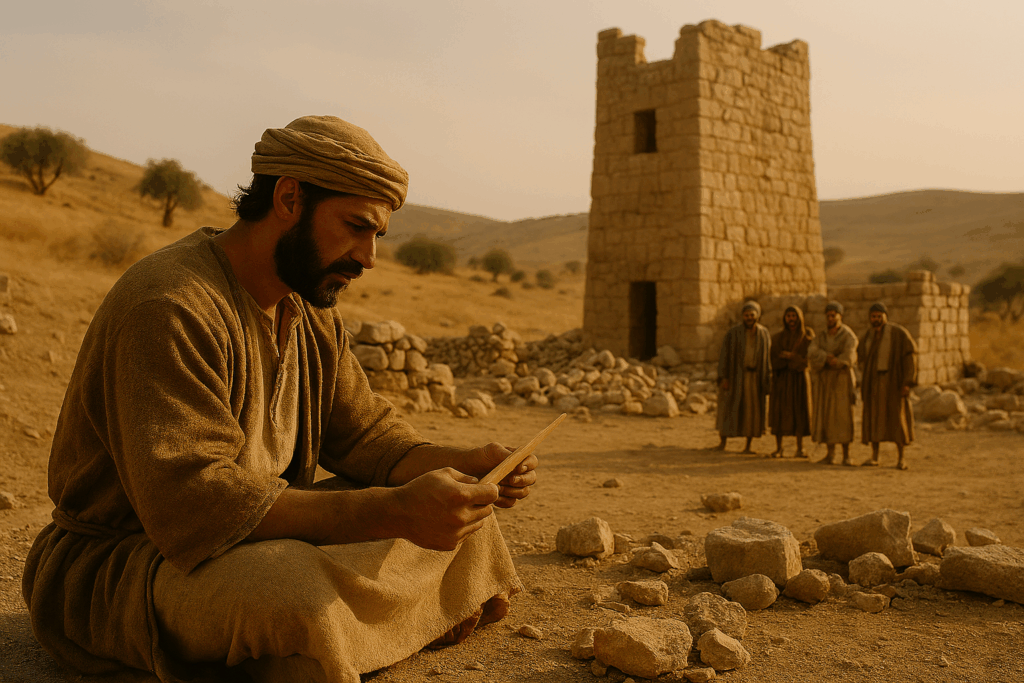
Read the study on the parables: PAR029 : The Unfinished Tower, and PAR000 : The Parables
With Luke's account we have a whole series of teachings on various themes in the form of .
It remains uncertain whether Luke follows a strict chronology or arranges the teachings according to criteria that make his text easier to read. However, it seems more likely that the author chose to group the eleven parables together, even though they were spoken at different times and in different places. Moreover, this principle allowed him not to describe the context, which would have needlessly lengthened his text, where brevity was required.
After the of the presumptuous guest, this is the second of the passage. In chapters 14 to 18 of the Gospel according to Luke, there are eleven parables in all.
Immediate context
This text is part of a discourse on the cost of being a disciple (Luke 14.25-35). Jesus addresses a large crowd and invites them to reflect seriously before following him. He is not looking for enthusiastic but thoughtless disciples; he calls for a clear-sighted and committed faith.
Verse-by-verse analysis
“if one of you wants to build a tower…”
Taking the time to reflect: The image of the builder evokes the need to plan and to calculate, in short, not to rush.
The tower as an ambitious project: Following Jesus is a total commitment, comparable to undertaking a work of great scale.
The expense: a metaphor for the price to be paid, personal renunciations, risks, faithfulness in trials.
“if he is not able to finish it…”
The foundations represent the initial impetus: but what follows demands perseverance.
Public failure: there is a social and symbolic aspect to abandoning the project: shame, ridicule.
“This man began to build, and was not able to finish.”
Irony and the judgment of others: underscores the impact of a commitment not kept.
Moral lesson: the authenticity of faith is measured by its constancy, not by its launch.
Spiritual meaning
Considered commitment: The Messiah Jesus values a faith that knows what it involves, not a passing enthusiasm.
Personal responsibility: the disciple is invited to examine his inner resources and his will.
Preventing superficiality: this passage warns against hasty or emotional decisions made without maturity.
This discourse may seem demanding and might discourage some individuals. However, it is part of the Messiah Jesus' desire to encourage a considered commitment, fully embraced and founded on a thorough understanding.