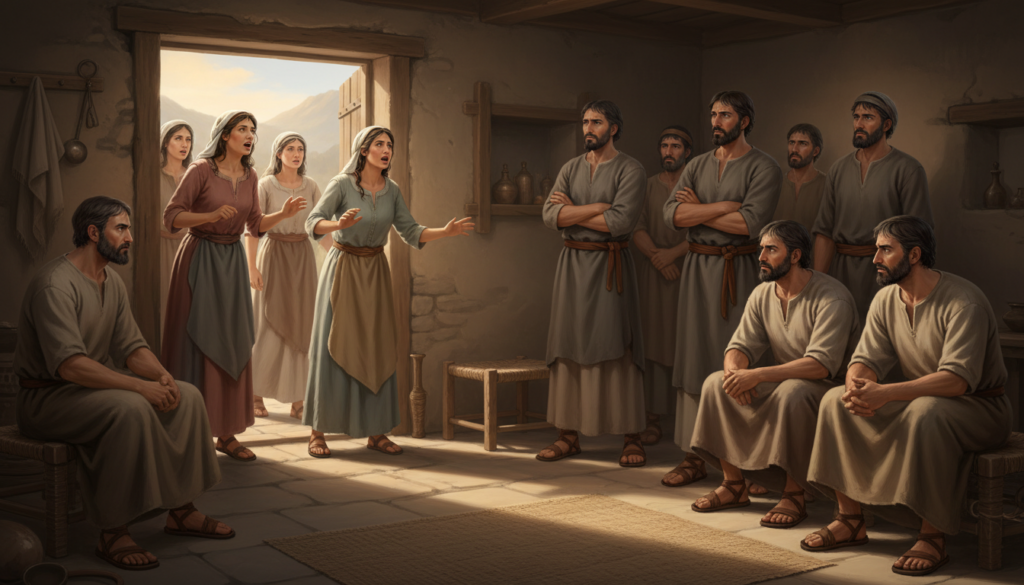
On Sunday, April 3 of the year AD 33, very early in the morning, some women went to the tomb where Joseph of Arimathea and Nicodemus had laid the body of the Messiah Jesus. However, when they arrived, they found that the tomb was empty. They hurried to inform the apostles and the disciples of what they considered to be momentous news: the resurrection of their Master.
The reaction is blunt: “their words seemed to them like idle tales, and they did not believe the women.” A few hours later they would realize their mistake. Yet this attitude toward events that go beyond us seems natural.
“It seems too good to be true,” says a saying. Yet this event had been foretold by Jesus, the Messiah. The religious authorities who had condemned Jesus were well aware of this prediction. That is why they had asked Pontius Pilate to have the tomb guarded by soldiers, so that the disciples would not steal the body and claim a resurrection.
In reality, the disciples were far from imagining such a scheme; they were crushed, bewildered, lost.
Yet on hearing this good news they should have leapt for joy. They did not believe, and even considered these women to be mad, according to some translations.
It is observed that the salvation offered by God to humanity is often seen as nonsense by those who do not understand it, even though they are on the path to perdition. This news should delight them, yet they remain in their distress. They prefer to stay in their difficult situation and cannot bring themselves to believe this extraordinary announcement. As a result, they often regard the bearers of this news as disturbed individuals, like the apostles who reacted with skepticism when they listened to these women.
What interests us in particular is that the apostles experienced an extraordinary event. That very evening, Jesus, regarded as the Messiah, appeared in their midst in the house of Mary in Jerusalem. The scene remains striking; although they were frightened at first, they finally accepted this reality: their Master had truly risen.
The apostle John writes in his book of Revelation 3.20: “Behold, I stand at the door and knock. If anyone hears my voice and opens the door, I will come in to him and eat with him, and he with Me.”
Thankfully, He knocked several times at the door of His disciples’ hearts. In the end they believed, so much so that they went on to proclaim this wonderful message to their generation at the risk of their lives.
We do not always realize this fact: God knocks at the door of our heart. At times we are troubled by events that astonish us, and we struggle to understand this reality. God has spoken to me, not in an audible way, but through events.
One day, each person will have to give an account to God, so imagine for a moment a man standing up and being able to say to God: you never knocked at the door of my heart. What an injustice that would be. The reality will be quite different, for at that moment everyone will recall these experiences and there will be no possible excuse.
What follows is interesting:
He also speaks to us through dreams.
The overall impression is that God is shouting and man is covering his ears
Dominique Lormier